

Tiny rooms feel cramped and small windows make the problem worse. Most people screw curtain rods right into the window trim. This mistake suffocates your space.
It drags your eyes down and makes your ceilings look incredibly low. It blocks natural light and makes a room feel like a dark box. You do not need to knock down walls to fix this issue.
This curtain placement guide shows you how to hang curtains to make a room look bigger. You can use simple hanging tricks and basic math to transform your space today.
Position Your Rod Higher and Wider to Fake Extra Height

To make a small space feel grand, you must trick the eye because human eyes naturally follow lines. Placing your curtain rod right above the window frame stops the eye right there.
Hanging hardware near the ceiling creates a vertical optical illusion that pulls the eyes upward.
Design experts at Studio McGee suggest mounting your rods roughly 3 to 5 inches below your ceiling line or crown molding. Do not place them right on the window trim.
If you have extra tall ceilings that are 9 or 10 feet high, drop the rod 8 to 12 inches above the window trim. This helps bridge the empty gap naturally.
Now you need to fix the width. Design authority Emily Henderson points out a common mistake where people make the rod the exact width of the window glass. Instead, you should extend the rod 4 to 10 inches past the window frame on each side.
This extra space is called stack width. When you open the fabric, the panels sit entirely on the wall instead of blocking the glass. This lets in all the natural light and tricks your brain into thinking the window footprint is massive.
Knowing exactly how high to hang curtain rods changes the whole feel of a wall. Here is a quick tip to save time. Cut a piece of stiff cardboard into a perfect right angle.
Mark your target height and width numbers on it. Hold it up to your window corners to mark your screw holes instantly. This saves you from using your tape measure every single time.
Also, designer Rebecca Robeson says to buy a rod that is at least 1 inch thick. Thin rods sag under fabric weight and look cheap.
| Ceiling Type | Rod Height Placement | Rod Width Extension |
| Standard 8 Foot Ceiling | 3 to 5 inches below ceiling line | 4 to 10 inches past window frame |
| Tall 9 or 10 Foot Ceiling | 8 to 12 inches above window trim | 4 to 10 inches past window frame |
Why Floor Length Curtains Make Bare Walls Disappear
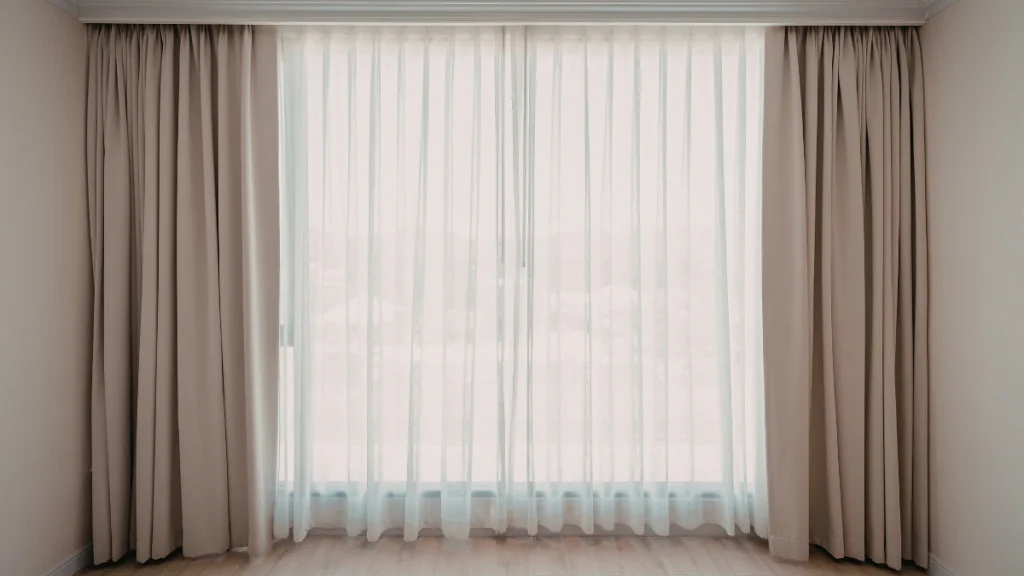
Short curtains break up your walls and create harsh horizontal lines that chop a room into small pieces. You want an unbroken vertical line from the top rod all the way down to the ground. That is why you always need floor length curtains.
There are three main ways your fabric can interact with the floor. You can choose the style that fits your daily life best.
| Style Name | Floor Distance | Best Description |
| The Slight Float | Less than 1/2 inch above floor | Ideal for homes with pets or frequent vacuuming |
| The Kiss | Barely grazes the floor surface | Clean look that stretches the wall perfectly |
| The Puddle | Pools on the floor by a few inches | Highly traditional style that gathers dust quickly |
The Kiss style is superior for small spaces. It looks deliberate and high quality. Never buy panels that hover 4 or more inches off the ground.
If your store bought panels are too short, do not lower your rod to accommodate them. It is always better to buy a longer panel and hem it down to size.
The 2X Fullness Math That Adds Instant Luxury

Skimpy curtain panels ruin the illusion of space. When you pull flat panels shut, they look like a tight bedsheet stretched across your window. This makes the room feel flat and cheap.
Proper fullness adds visual depth and a luxury feel. You must do some basic math before you shop. This formula ensures your fabric has elegant folds even when the curtains are closed.
The operational framework for perfect fabric fullness
Measure the exact width of your target structural window frame casing to establish your horizontal foundation coordinates.
Compute fabric volume constraints: Multiply that number by 2 or 2.5 to guarantee a premium, beautifully stacked curtain gather.
Determine allocation volume. Divide that total number by the width of the individual panels you want to buy.
This simple math is a secret trick on how to hang curtains to make a room look bigger. The extra fabric creates deep shadows and highlights. Those vertical folds add structural texture to a plain wall.
| Window Frame Width | Required Total Fabric Width | Recommended Panel Setup |
| 40 inches wide | 80 to 100 inches | Two 50 inch width panels |
| 60 inches wide | 120 to 150 inches | Two 75 inch width panels |
| 80 inches wide | 160 to 200 inches | Two 100 inch width panels |
Choose Fabrics and Colors That Erase Visual Boundaries

Color contrast changes how big a room feels. When you put dark drapes on a light wall, you create a visual blockade. Your peripheral vision stops at the edge of the dark fabric which chops your walls into tiny segments.
Instead, use a matching color strategy. Pick fabric colors that match your wall paint closely. Look for light neutrals like cream, ivory, or soft gray.
When the curtain color matches the wall, the boundaries of the room seem to disappear. The eye flows across the space without stopping.
You also need to think about fabric weight. Avoid heavy fabrics like thick velvet or dark canvas. These materials absorb light and make a room feel closed in.
Instead, choose lightweight materials. Linen, linen blends, and sheer cotton are excellent choices. They allow natural light to filter through the room while still providing privacy. This strategy keeps the atmosphere bright and open.
Change Your View with Better Placement

Hanging your curtains the right way does not cost more money than hanging them poorly. It just requires a simple change in how you think. Stop dressing the small window frame and start dressing the entire wall.
By learning how high to hang curtain rods, you lift the ceiling. By extending the width, you expand the walls. These small changes combine to form a massive difference in your home.