
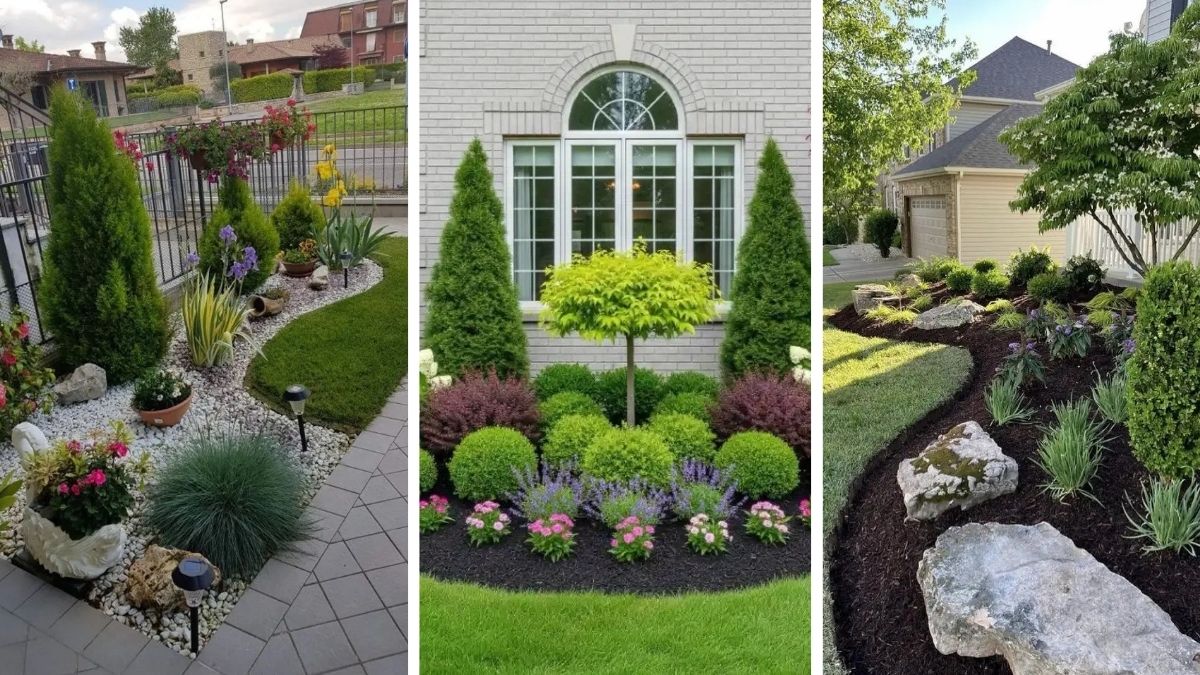
A tiny front yard can make the whole house feel forgotten. Patchy grass, bare steps, and one lonely shrub turn the entry into an afterthought. Every flaw shows because there is nowhere for clutter or weak planting to hide.
That first strip of land sets the mood before anyone reaches the door. When it feels bare or messy, the house can look smaller, older, and uncared for.
These small front yard landscaping ideas focus on clean edges, layered plants, smart paths, and quick curb appeal. Use them to make a small plot feel polished, welcoming, and worth slowing down for.
Frame the Entry
Build the front yard around the path, porch, or door so the eye knows where to land first. Low edges, fuller shrubs, and one strong entry shape give a small yard depth without crowding it.
Scale
Keep taller plants near walls or corners so the yard feels open from the street.
Color Anchor
Repeat one flower or foliage color near the door, walkway, and porch pots.
Texture
Mix soft grasses, matte leaves, rough stone, and fresh mulch for a layered look.
Budget Tip
Clean edging and dark mulch can make tired beds look sharper in one afternoon.
1. Curved White Gravel Border with Cone Evergreens and Solar Path Lights
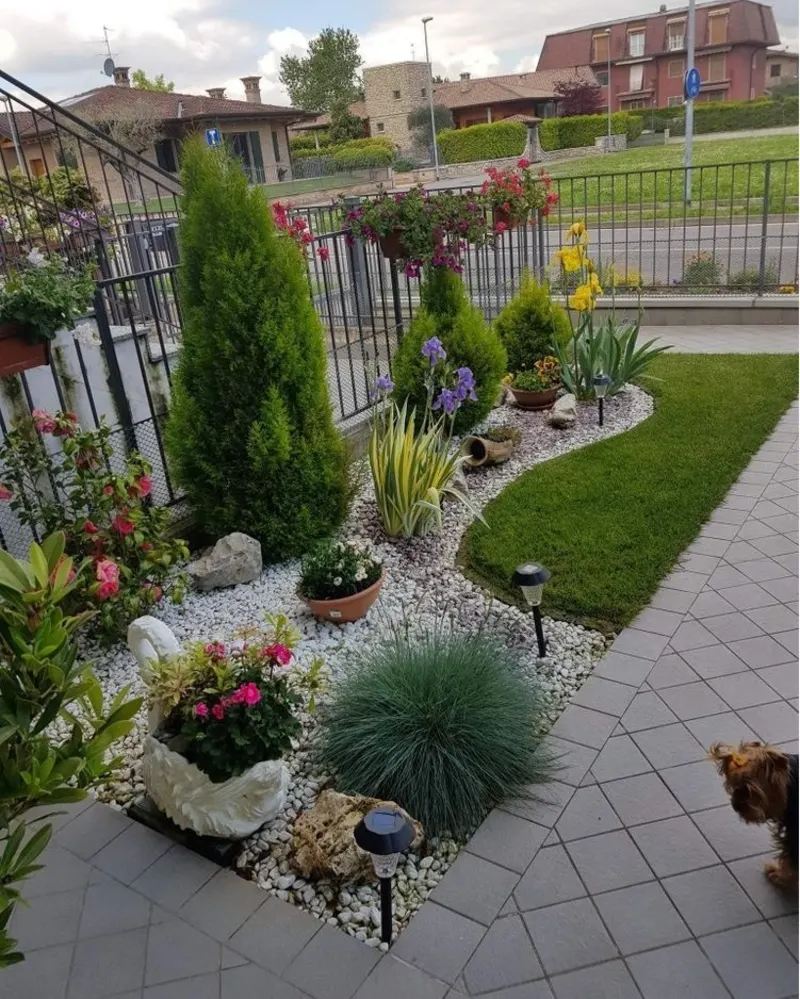
This compact front yard uses a curved white gravel bed beside a tight square of green lawn. Tall cone evergreens, purple irises, yellow blooms, and potted pink flowers create height without swallowing the walkway. Black solar lights repeat along the edge, giving the border a clear rhythm after dark.
A small yard feels larger when planting follows one clean curve.
Keep the tallest greenery near the fence or back edge, then step down with grasses, flowers, and low pots toward the path. The white gravel brightens the planting bed and cuts down on visible bare soil, while the curved line softens all the hard tile around it.
2. Arched Window Foundation Bed with Boxwood Mounds, White Hydrangeas, and Black Mulch
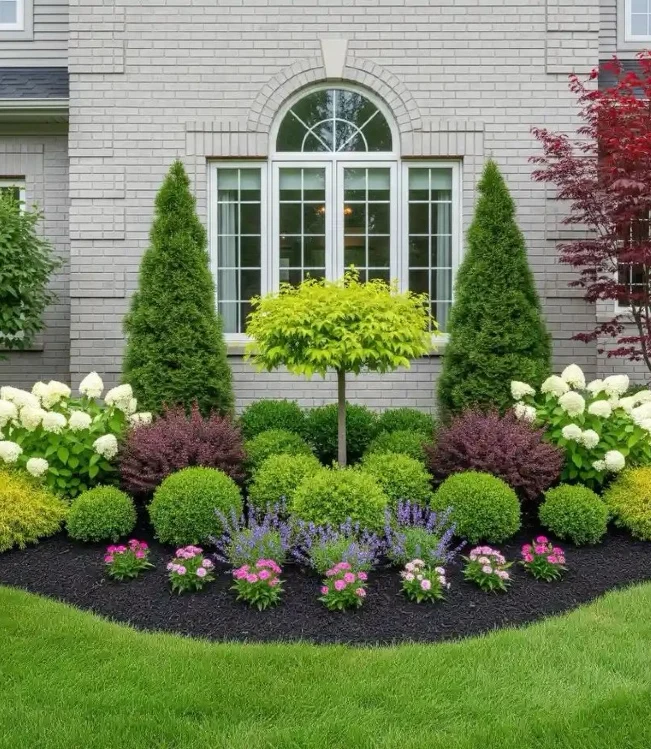
This front yard bed uses a strong curved edge to frame the house with order and color. Two tall evergreens anchor the arched window, while round boxwoods, white hydrangeas, burgundy shrubs, and a small chartreuse tree fill the middle with layered shape.
Strong symmetry makes a modest front yard look polished fast.
Start with a pair of upright shrubs to frame the window or entry, then add rounded forms below to keep the bed full without feeling heavy. Dark mulch helps every leaf color read more clearly, and the repeating mounds make the whole planting feel calm, neat, and easy to follow.
3. Dark Mulch Curve with Limestone Boulders, Boxwood Columns, and a White Flowering Tree
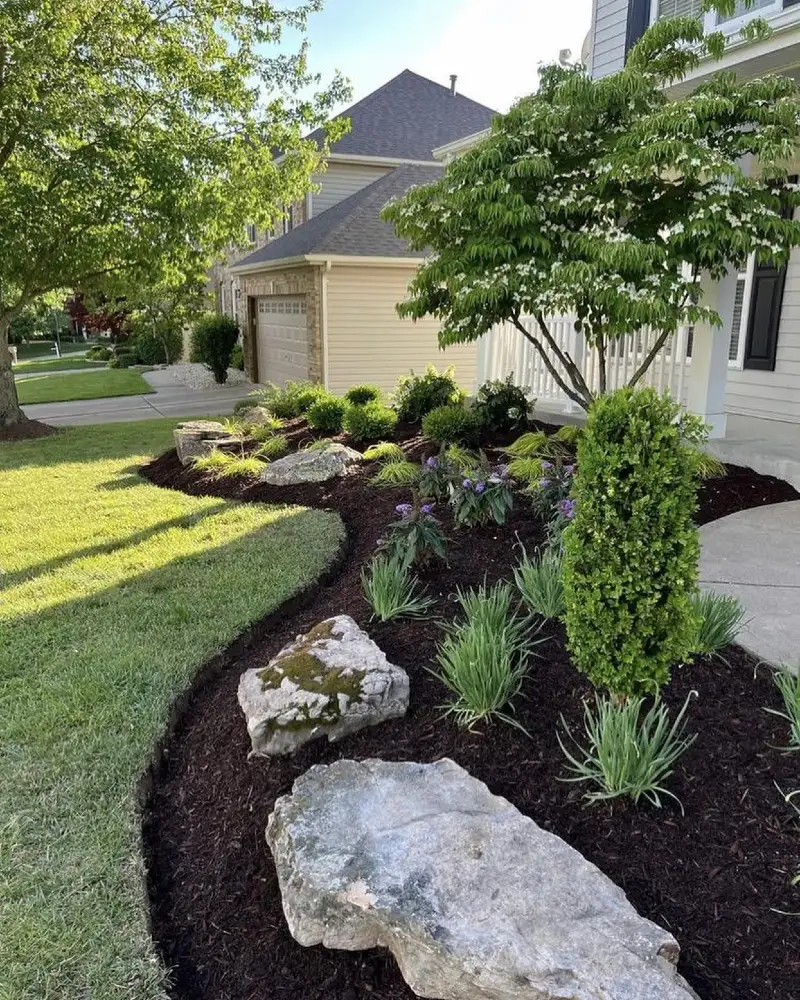
This front bed runs in a long, soft curve beside the lawn, with dark mulch making each plant stand out. Large pale limestone rocks sit low through the bed, while clipped boxwood, strappy grasses, and small purple flowers fill the lower layer. A white flowering tree spreads filtered shade near the porch and adds height without blocking the house.
Natural stone makes new landscaping feel grounded from day one.
The layout works because it mixes structure with loose planting. Boxwood gives the yard a neat backbone, while grasses and flowering perennials keep the bed from looking stiff or too formal.
Why This Works
- Stone Weight: The pale boulders break up the dark mulch and make the bed feel established.
- Layering: Tall tree canopy, mid-height shrubs, and low grasses create depth in a narrow strip.
- Soft Edge: The curved lawn line pulls the eye toward the house and makes the front yard feel wider.
4. White Pebble Square with Spiky Yucca, Dark Mulch, and Bright Border Flowers
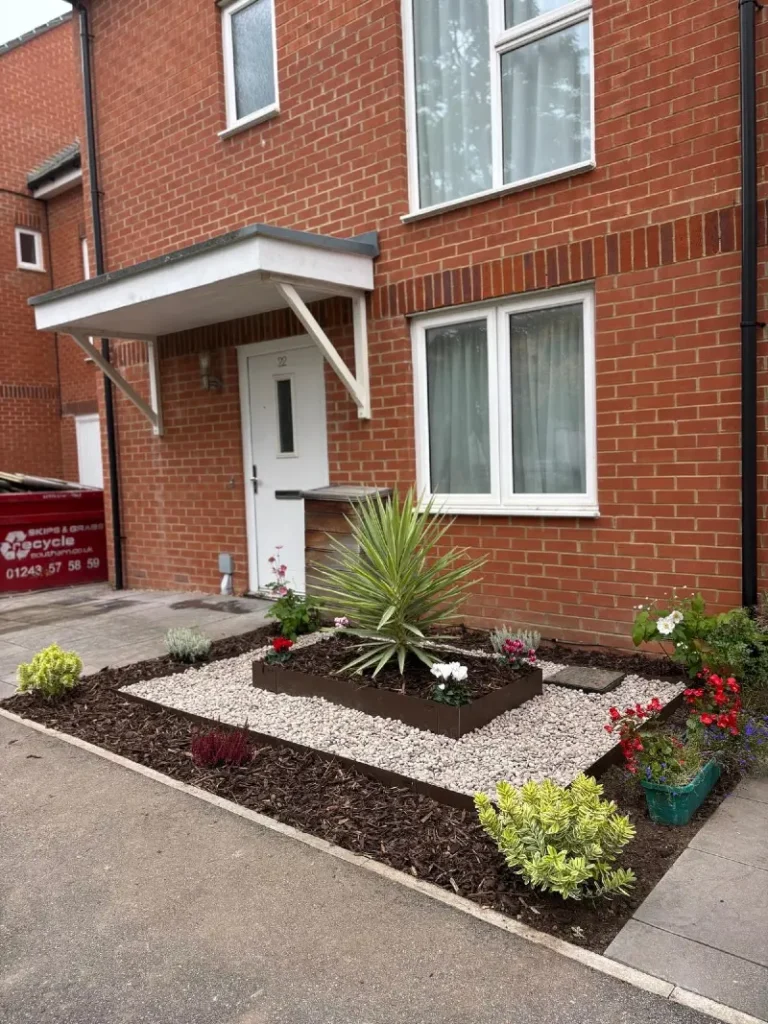
This small front yard uses a sharp square layout against the red brick house. A spiky yucca sits in the raised center bed, surrounded by white pebbles, dark bark mulch, low shrubs, lavender sprigs, and red and white flowers. The crisp edges make the tiny plot feel controlled instead of crowded.
Clean geometry gives a small front garden instant order.
Use one bold plant as the center point, then keep the rest low so the bed does not fight the front door or windows. Pale gravel brightens the space, while dark mulch adds contrast and keeps the planting areas easy to read from the sidewalk.
5. Curved Artificial Turf Lawn with River Rock Borders and a Young Front Yard Tree
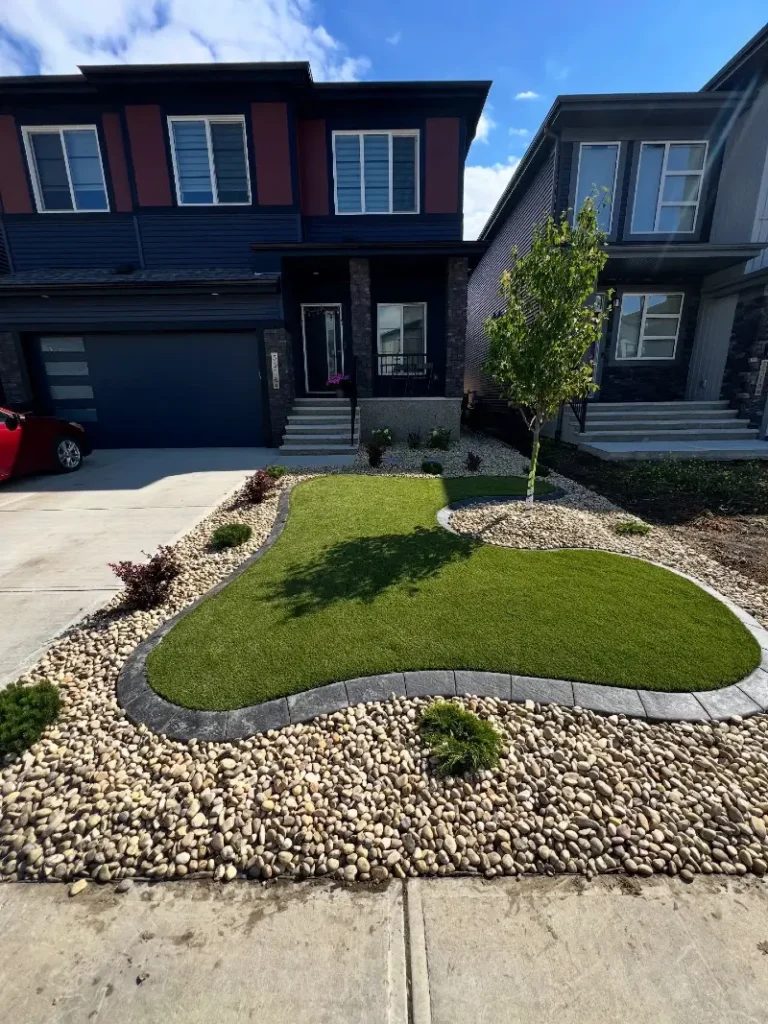
This front yard uses a sweeping patch of deep green turf framed by gray pavers and pale river rock. Small shrubs sit in the stone border, while one young tree gives the yard height and a soft shadow across the lawn. The dark modern house makes the bright grass and rounded edges feel crisp.
A curved lawn shape can make a narrow front yard feel wider and more planned.
The payoff comes from contrast. Smooth turf, rounded stone, and sharp paver edging each do a different job, so the yard feels full without needing heavy planting.
Quick Decorating Tips
- Budget version: Use river rock only along the main curb edge, then fill back areas with mulch.
- Renter tip: Recreate the green center with a small outdoor turf rug and large planters.
- Pro move: Add low path lights along the curve to trace the shape at night.
6. Concrete Slab Walkway with White Pebble Gaps and Boxwood Rows
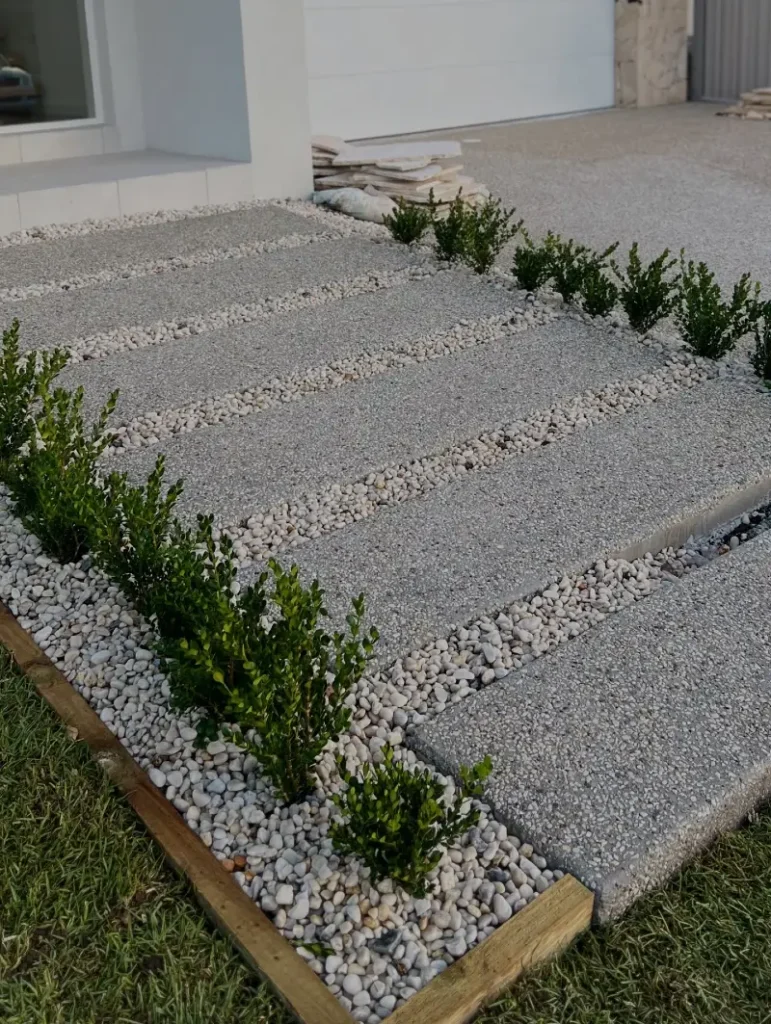
This front path uses wide gray concrete slabs separated by narrow bands of white pebbles. Small boxwood shrubs run along both sides, giving the walkway a fresh green edge without crowding the entry. Timber borders hold the stone in place and keep the design crisp against the lawn.
Repeated gaps make a plain path feel thoughtful and custom.
The look works because every material has a clear role. Concrete gives a steady walking surface, pebbles add light texture, and the shrubs soften all the hard lines.
Why This Works
- Pattern: Even spacing between slabs creates rhythm before guests reach the door.
- Texture: Smooth concrete and rounded pebbles give the small entry area more depth.
- Green Edge: Low boxwood keeps the path tidy while leaving the walkway open.
7. Gravel Courtyard Garden with Clipped Topiary, Brick Edging, and Weathered Benches
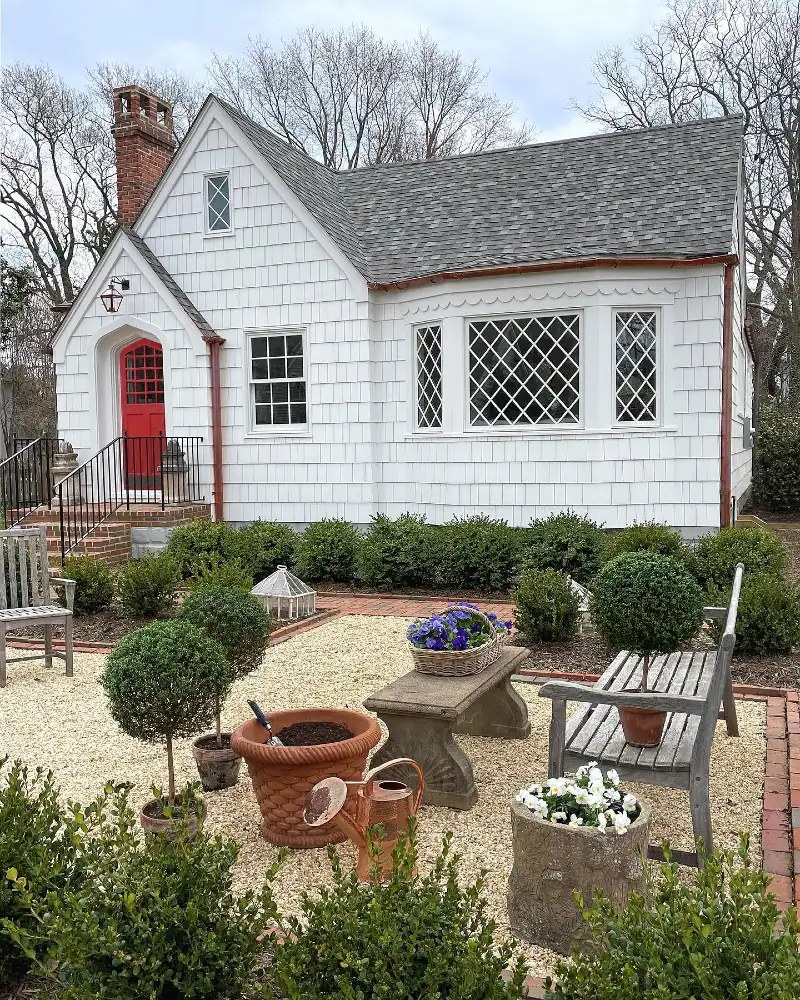
This small front yard feels more like a garden room than a lawn. Pale gravel covers the ground, brick edging draws clean paths, and clipped green topiary gives the space tidy shape. Weathered wooden benches, terracotta pots, a stone table, white flowers, and a bright red front door add cottage charm against the white shingled house.
A front yard can trade grass for seating and still feel lush.
Use gravel when the space is too small or shaded for a full lawn, then bring in greenery through pots, shrubs, and clipped trees. The brick border keeps the gravel from spreading, while the benches turn the entry garden into a place to pause, not just pass through.
8. Black Mulch Foundation Bed with Curved Lawn Edge and Young Shrub Rows
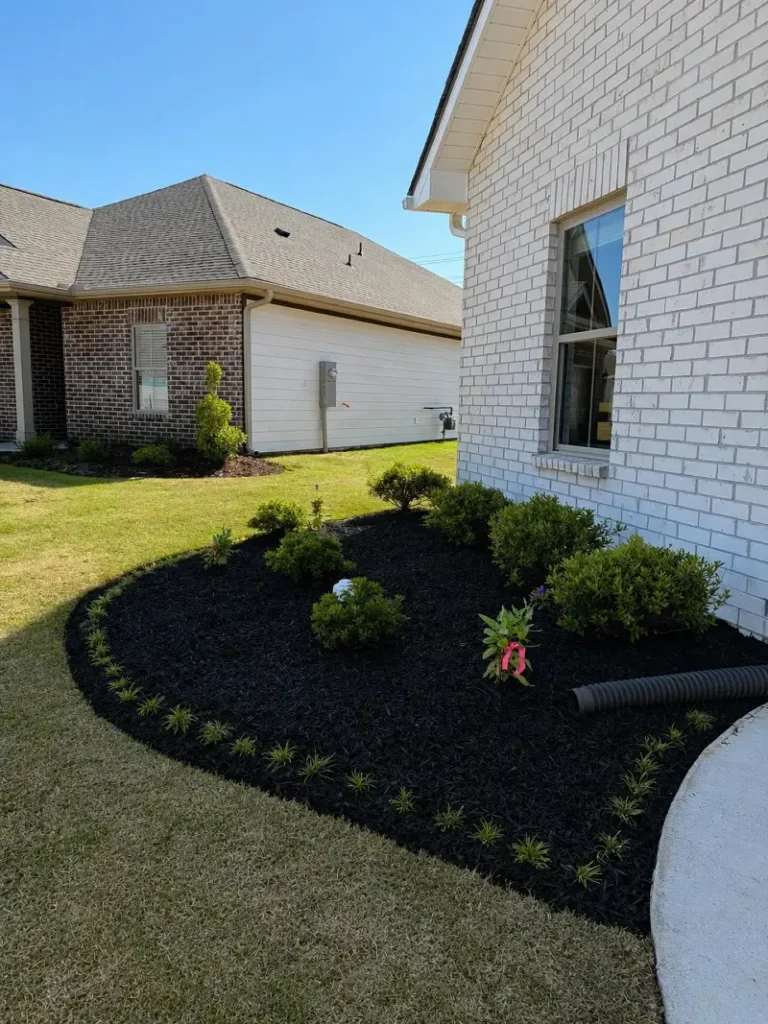
This narrow front yard bed uses black mulch to create strong contrast against the white brick wall and pale concrete path. Small green shrubs sit in loose rows, with a neat line of young border plants tracing the curved lawn edge. The rounded bed shape keeps the side yard from feeling flat or boxy.
Dark mulch makes young landscaping look sharper before the plants fill in.
Let the curve do the heavy lifting when the planting is still small. As the shrubs grow, they will soften the brick wall, hide the bare soil, and give the front path a fuller, more finished look.
9. White Gravel Front Bed with Clipped Hedge, Faux Lawn, and Window Box Planters
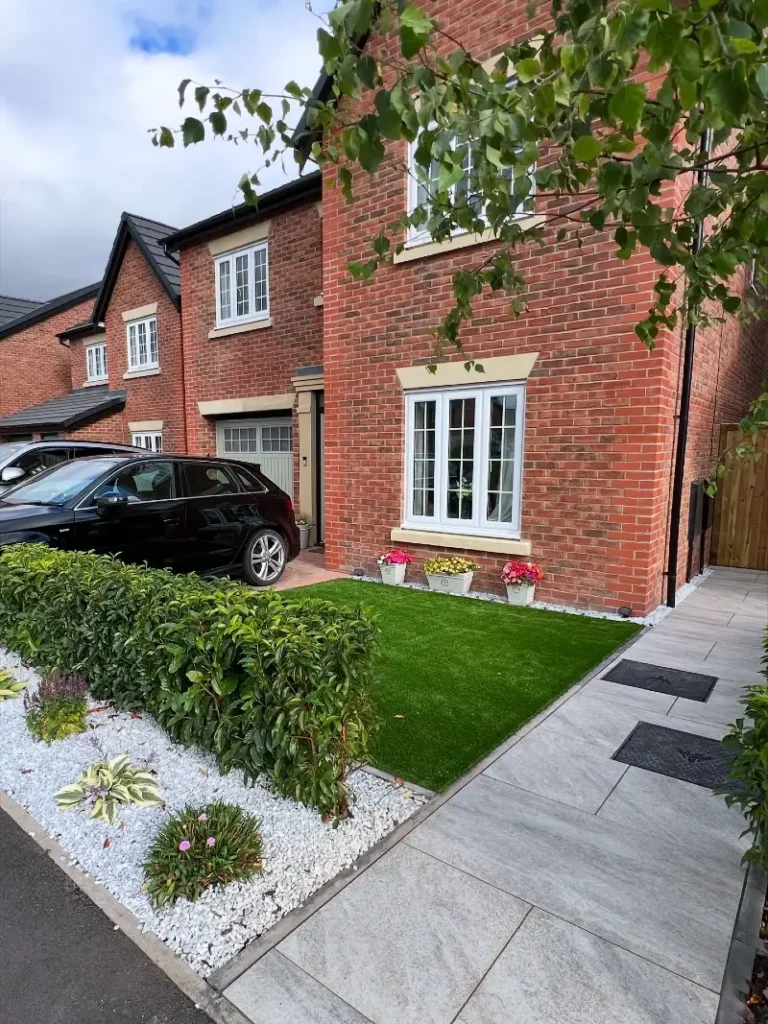
This compact front yard pairs a tight green lawn with a white gravel planting strip along the curb. A dense clipped hedge screens the driveway, while variegated hostas, small flowering clumps, and pale planters add color near the red brick wall. Large gray paving slabs keep the side path clean and modern.
A small front yard feels calmer when each zone has a clear job.
The lawn creates a soft green pause, the hedge gives privacy, and the gravel bed adds texture without needing much space. Window-level planters pull color closer to the house, which helps the brick facade feel more welcoming from the street.
Why This Works
- Privacy Hedge: The clipped green wall shields the parked car and gives the tiny yard a stronger boundary.
- White Gravel: Pale stone brightens the front edge and makes each plant stand out.
- Path Contrast: Smooth gray slabs balance the rough gravel and keep the entry easy to walk through.
10. Square Tree Island with Boxwood Globes, Black Spotlights, and a Wide Green Lawn
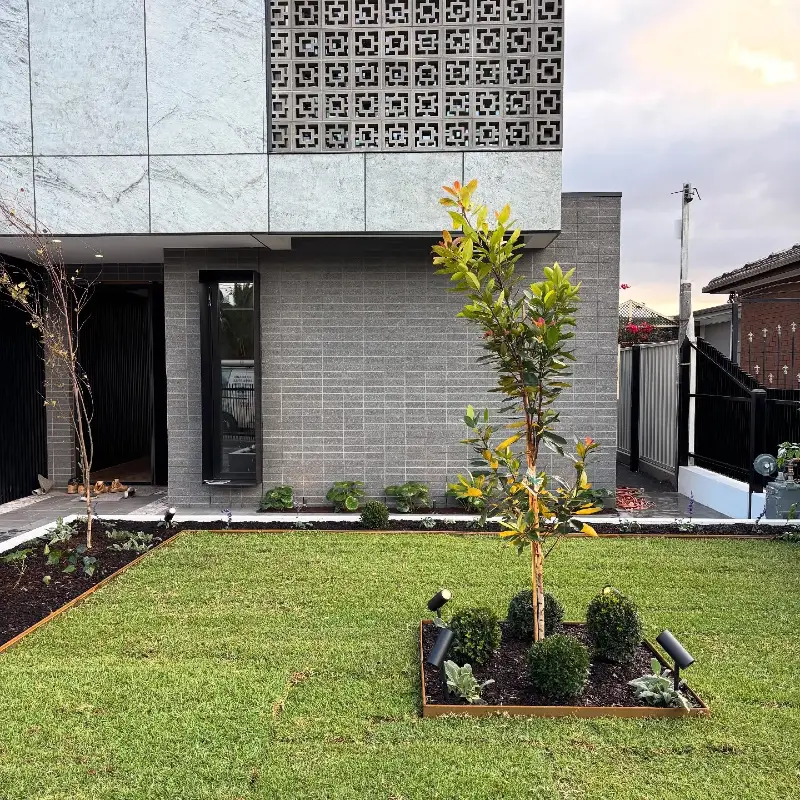
This front yard keeps the lawn open and places the main planting in one square island bed. A young ornamental tree rises from dark mulch, circled by clipped boxwood globes, soft silver foliage, and black cylindrical spotlights. Slim border beds near the gray house add low greenery without stealing space from the grass.
One planted island can give a flat lawn a clear focal point.
Keep the center bed tight when the yard is small, then repeat the same edging material along the house for a pulled-together look. Spotlights make the tree feel intentional at night, while the clipped shrubs hold their shape through every season.
Quick Decorating Tips
- Budget version: Start with one young tree, mulch, and four small shrubs before adding lighting.
- Renter tip: Use a large square planter box on the lawn edge to create a similar focal point.
- Pro move: Aim lights upward through the tree canopy for soft evening drama.
11. Cottage Entry Garden with Sage Green Door, Hydrangeas, and Layered Terracotta Pots
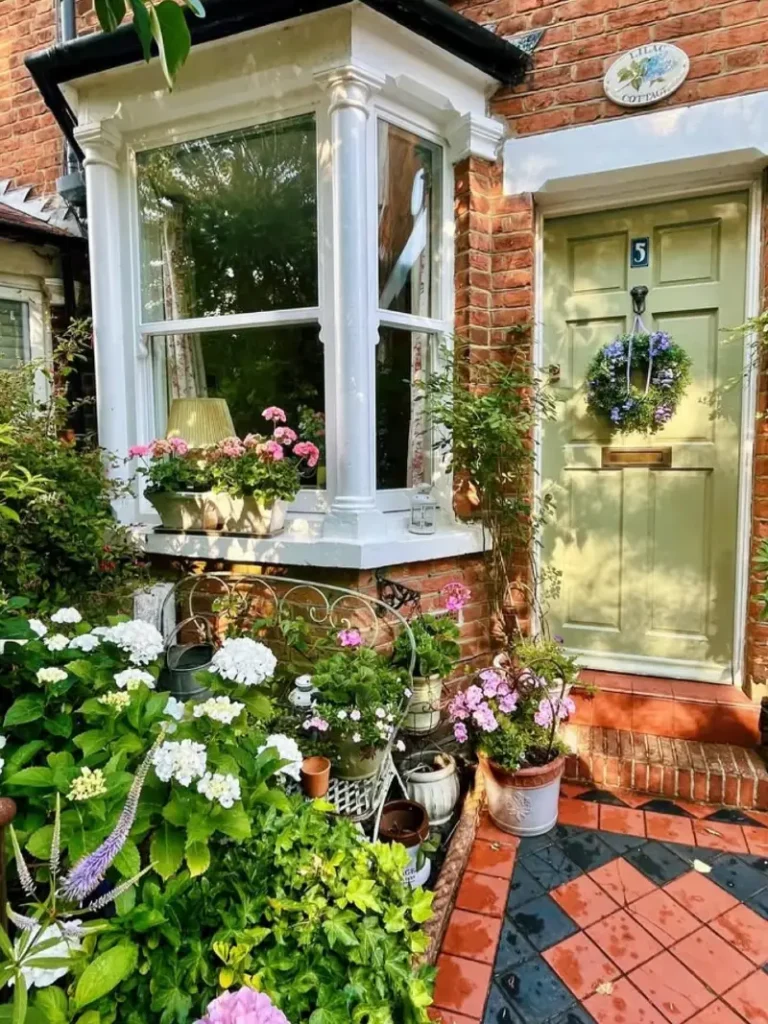
This tiny front garden feels full in the best way, with white hydrangeas, glossy green shrubs, pink geraniums, and trailing pots packed around the bay window. A sage green front door with a floral wreath softens the red brick, while the red and black tile path adds old cottage character.
Layered pots can make a small front step feel like a real garden.
Start with one bigger shrub or hydrangea at ground level, then build upward with window boxes, hanging wreaths, and mixed planters near the door. Keep the flower colors repeated, like pink, white, and purple here, so the busy planting still feels calm.
12. White Farmhouse Porch with Sage Door, Black Gravel, and Raised Planting Boxes
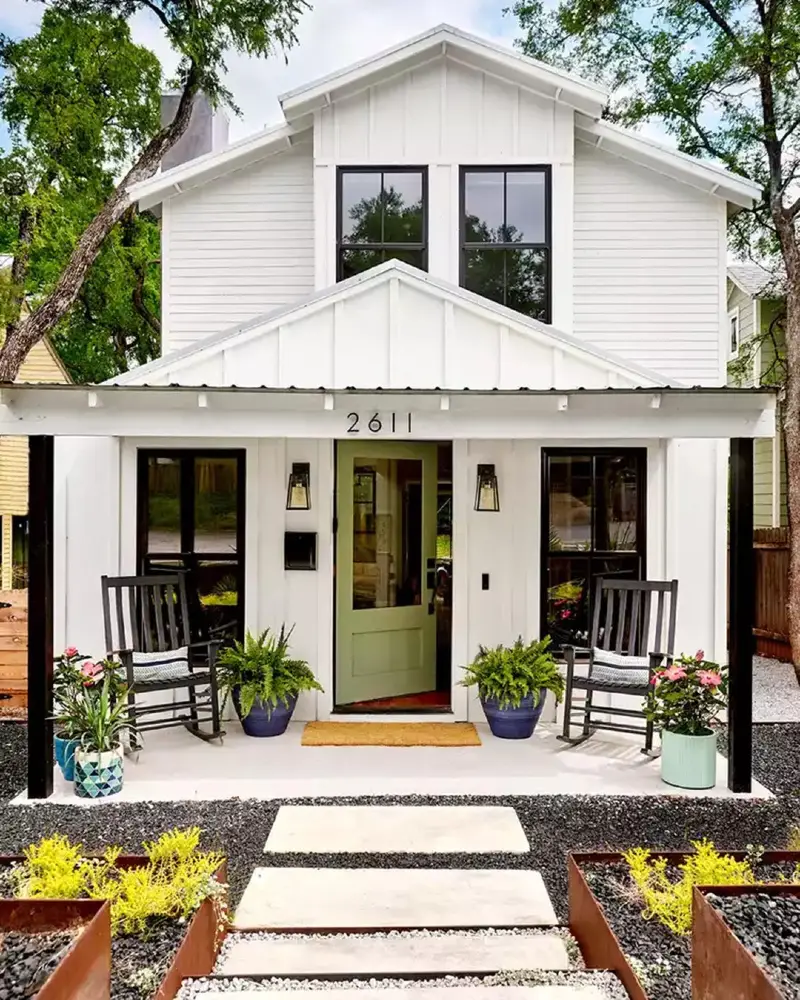
This small front yard uses strong contrast to make the white house feel crisp and welcoming. A sage green door sits between black framed windows, with matching rocking chairs, blue fern pots, and pastel planters softening the porch.
High contrast landscaping can make a simple porch feel sharp without adding clutter.
The design works because the planting stays low and the porch does the visual heavy lifting. Black gravel defines the path, pale slabs keep the entry bright, and repeated green accents connect the door, ferns, and garden beds.
Why This Works
- Color Repeat: The sage door, fern pots, and low plants tie the porch and yard together.
- Ground Contrast: Black gravel makes the pale stepping stones and white siding stand out clearly.
- Porch Symmetry: Matching chairs and planters create balance without filling every inch.
13. Raised Gray Stone Beds with Black Mulch, Purple Salvia, and a Young Front Yard Tree
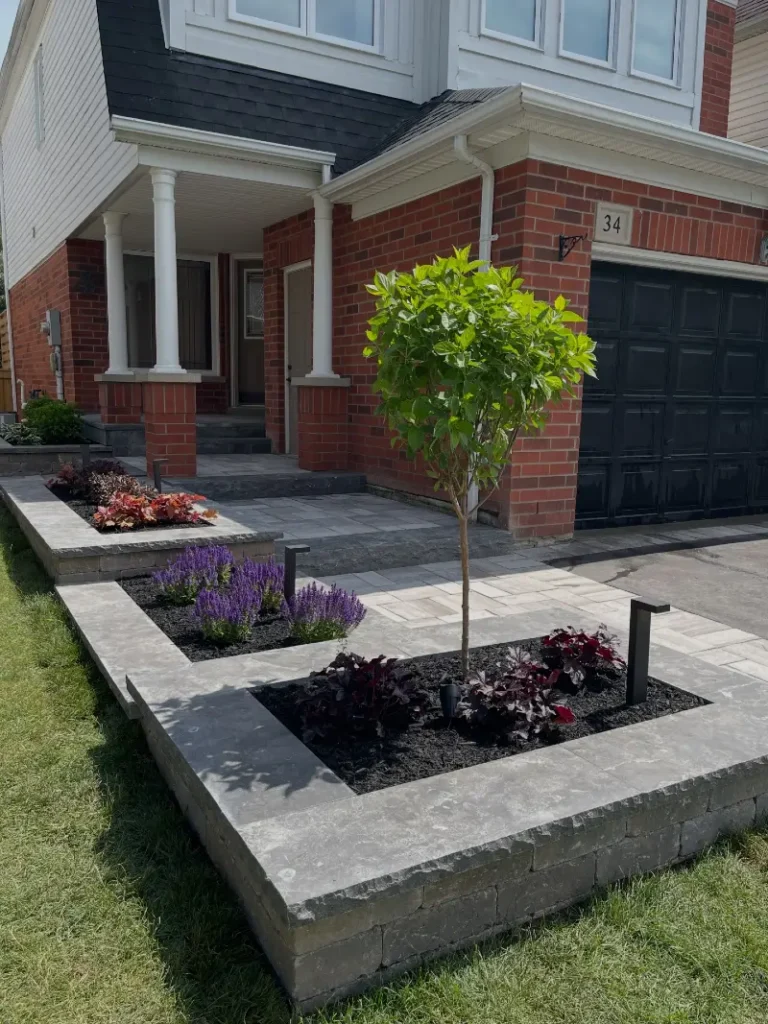
This front yard uses raised gray stone beds to turn a flat entry into a clean layered landscape. A young tree sits in the front square bed, surrounded by dark mulch, burgundy foliage, and slim black path lights. Purple salvia and warm orange leaves add color in the back beds without making the brick house feel busy.
Raised beds make small front yard planting feel crisp, contained, and more expensive.
Use this idea when the lawn edge or walkway needs more structure. The stone ledge gives the planting weight, while black mulch and repeat lighting keep every bed tied together from driveway to porch.
14. Stone Cottage Front Garden with Black Railings, Gravel Bed, and Bay Tree Standard
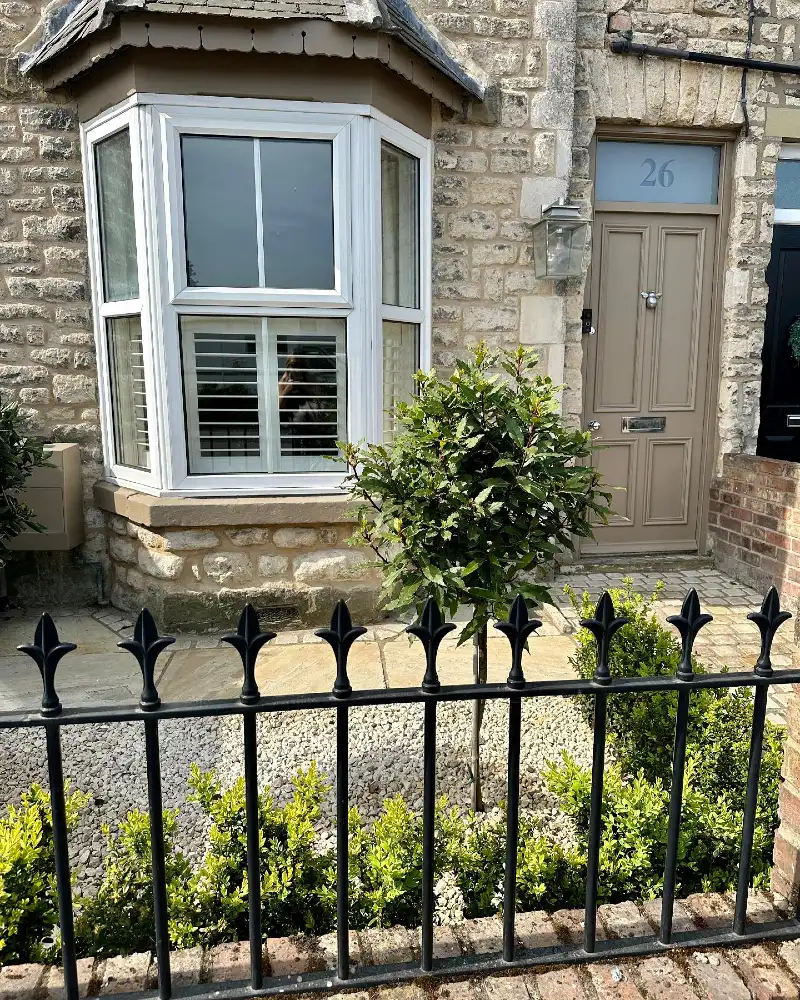
This small front yard uses pale gravel, low boxwood, and one clipped bay tree to frame the stone cottage facade. A black iron railing adds strong contrast along the front edge, while the taupe door, wall lantern, and cobbled path keep the entry soft and classic.
One shaped tree can give a tiny front garden real presence.
Use a standard tree near the door or window when there is no room for wide planting beds. Keep the base planting low, like the clipped hedge here, so the entry stays open and the house details remain visible from the street.
15. Curved Brick Edging with Dark Mulch, Lavender, and Climbing Greenery
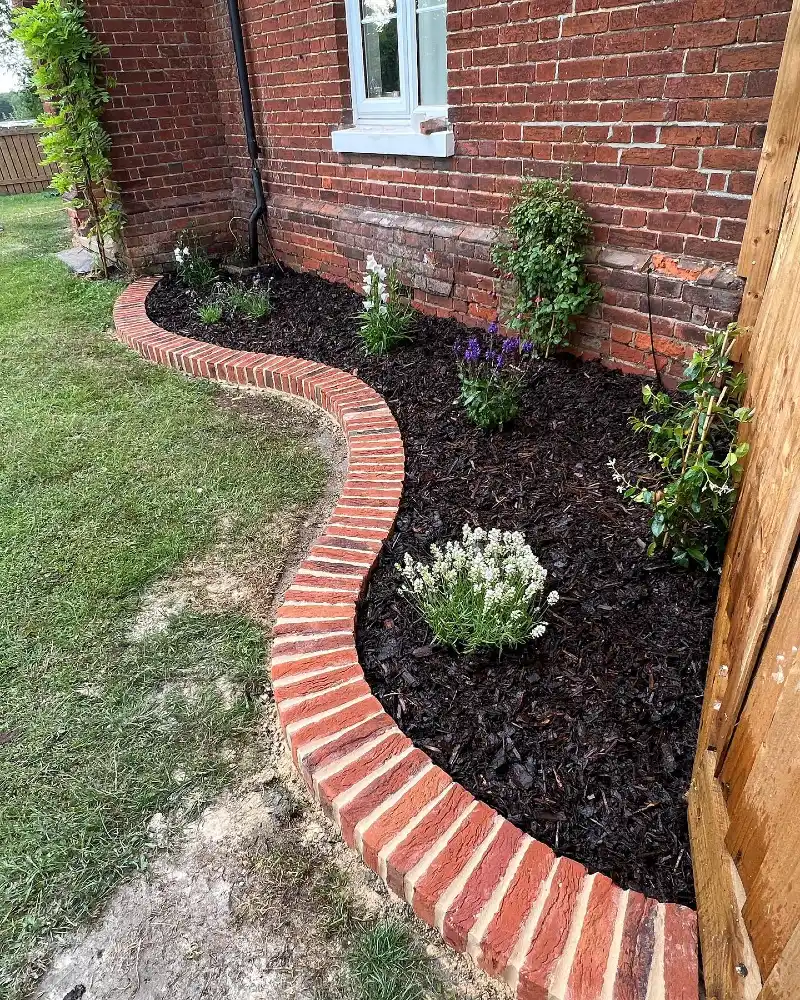
This narrow side front bed uses a curved brick border to soften the long red brick wall. Dark mulch fills the planting strip, with white lavender, purple blooms, young shrubs, and climbing greenery placed against the house and timber fence. The warm brick edge gives the bed a finished line where the lawn meets the planting.
Brick edging makes a small border look intentional before the plants mature.
Use this idea when the house wall feels bare but there is not much planting depth. The curve gives movement, while the dark mulch holds moisture, hides bare soil, and makes small plants easier to notice.
Quick Decorating Tips
- Budget version: Reuse reclaimed bricks to build the curved edge and spend more on healthy starter plants.
- Renter tip: Create the same look with movable trough planters lined along the wall.
- Pro move: Add two climbing supports near the brick wall to bring greenery upward.
16. Gravel Courtyard with Black Planters, Boxwood Balls, and a Timber Ledge
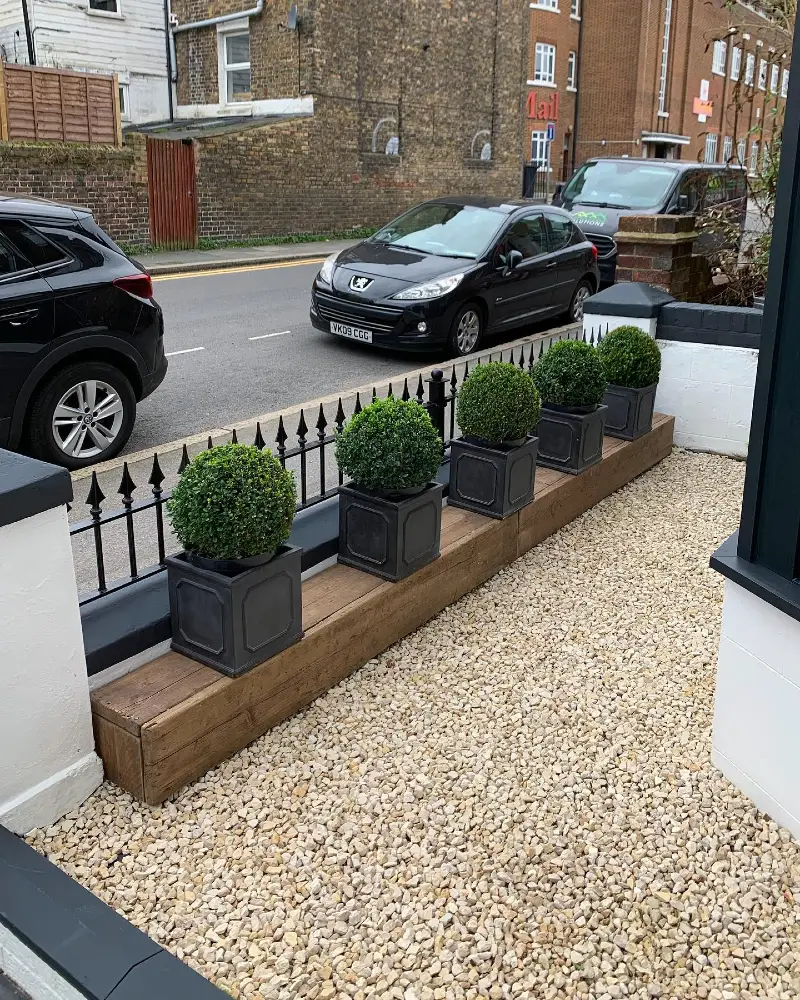
This tiny front yard turns a narrow street-facing space into a crisp gravel courtyard. Pale stone covers the ground, while a thick timber ledge runs along the black iron railing and holds matching charcoal planters. Round clipped boxwood balls repeat in a row, giving the small area strong shape without blocking the view.
Repetition is the fastest way to make a tiny front yard feel planned.
Use matching planters when the ground space is too tight for deep beds. The gravel keeps the area low maintenance, the timber adds warmth, and the clipped boxwood gives year round green structure right at the street edge.
17. Urban Front Garden with River Rock, Cone Evergreens, and a Yellow Door
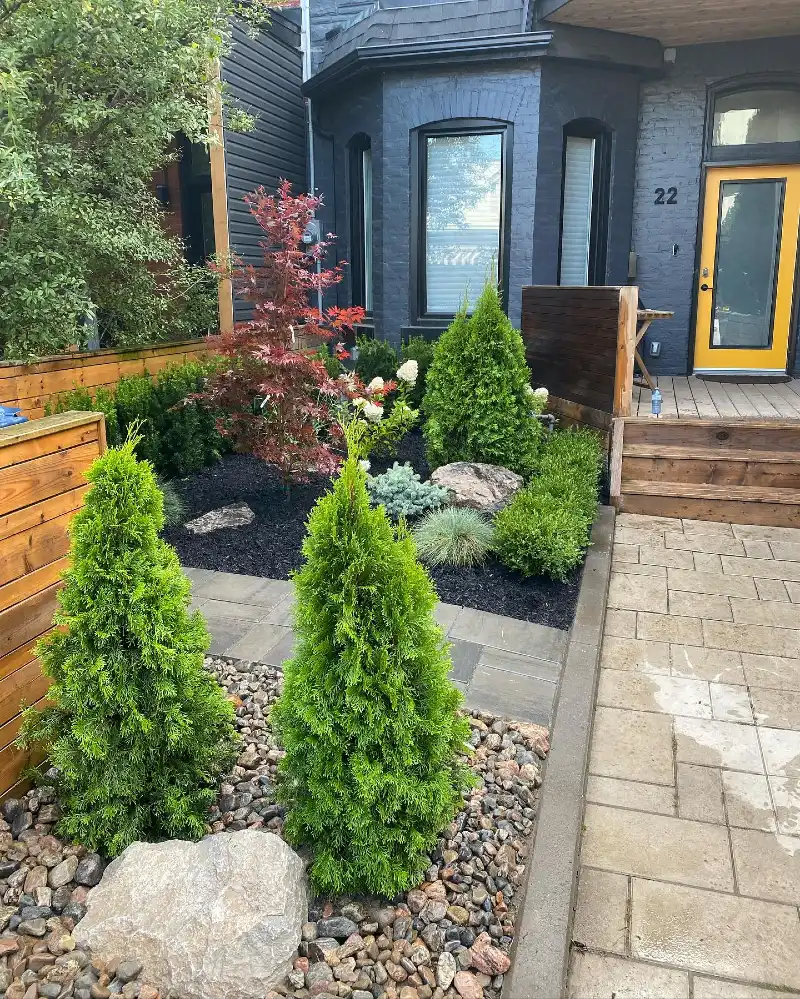
This compact front yard uses rounded river rock at the front edge and dark mulch closer to the house for strong texture contrast. Cone evergreens, rounded boxwood, blue-green grass, pale hydrangeas, and a burgundy Japanese maple create a layered look beside the dark painted brick.
A small city yard needs height, texture, and one color moment.
Copy this look by placing upright evergreens near the walkway, then using softer shrubs and grasses to fill the lower layer. Rocks help the front edge handle foot traffic and drainage, while the darker planting bed makes every green shade feel richer.
18. Charcoal Siding Front Garden with Boulder Gravel Beds, Tall Grasses, and a Yellow Door
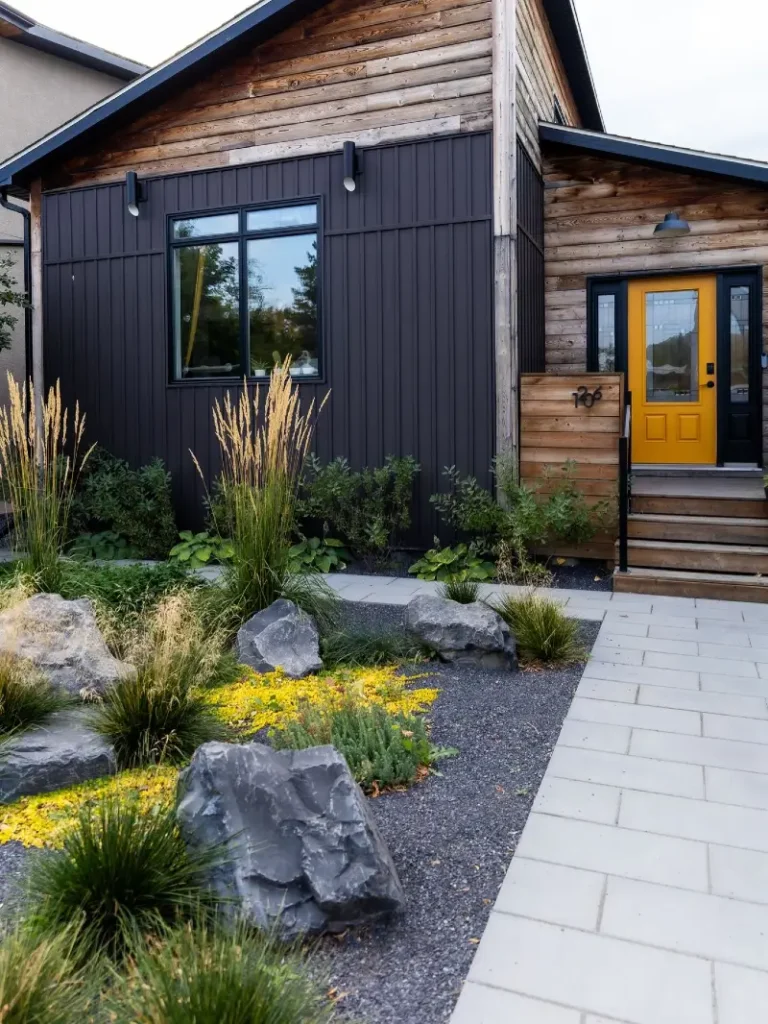
This modern front yard uses dark gravel, large charcoal boulders, and airy grasses to match the bold black siding. Warm wood cladding softens the house, while the yellow door gives the entry a bright focal point. Pale pavers keep the walkway clean, and low yellow groundcover brings color close to the gravel.
Rough stone and wispy grasses make a small front yard feel textured without feeling crowded.
The planting has a prairie feel, but the sharp path keeps it controlled. Tall grasses add movement near the window, while the boulders give the loose planting enough weight to suit the strong house exterior.
Why This Works
- Boulder Placement: Large rocks break up the gravel and give the yard a natural anchor.
- Grass Movement: Tall, fine blades soften the dark siding and add motion in the wind.
- Door Color: The yellow door creates one clear focal point, so the yard and house feel connected.
19. Cream Raised Planter Boxes with Blue Front Door, Slate Chippings, and Mini Trees
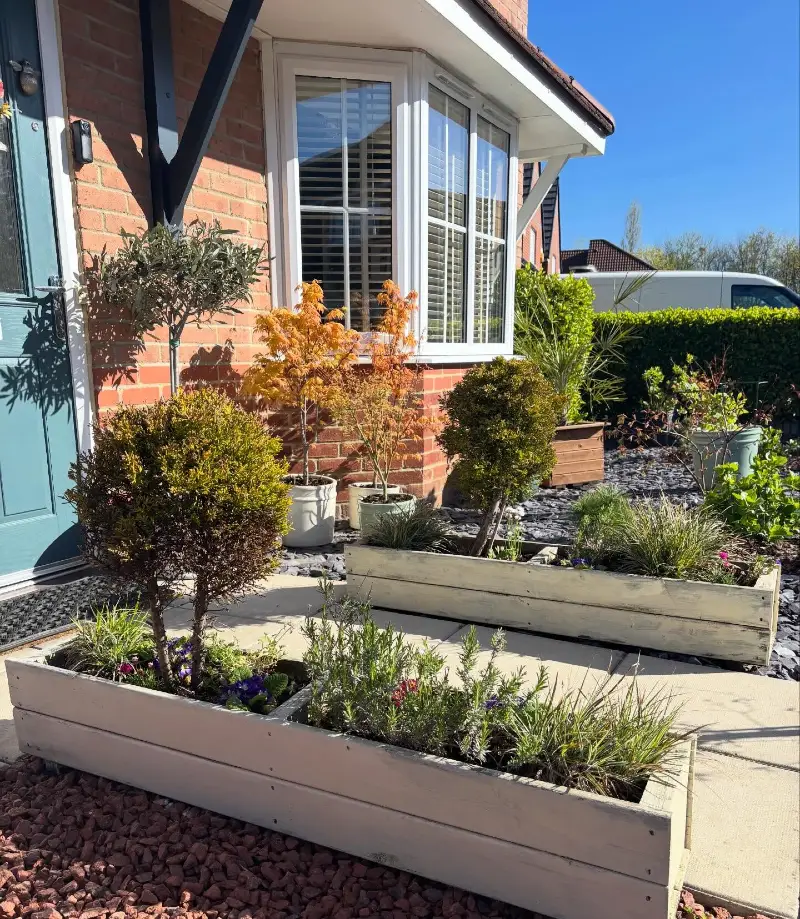
This compact front yard uses cream wooden planter boxes to bring planting right up to the bay window and blue front door. Small trees, clipped shrubs, lavender, grasses, and low flowers fill the boxes with mixed height and soft texture. Slate chippings and red gravel frame the paving, giving the whole entry a tidy, finished edge.
Raised planters let you build a layered garden without digging up the whole yard.
Use boxes like these when the ground is paved, awkward, or too narrow for deep beds. The taller shrubs give privacy near the window, while grasses and lavender soften the hard paving and make the entry feel more welcoming.