
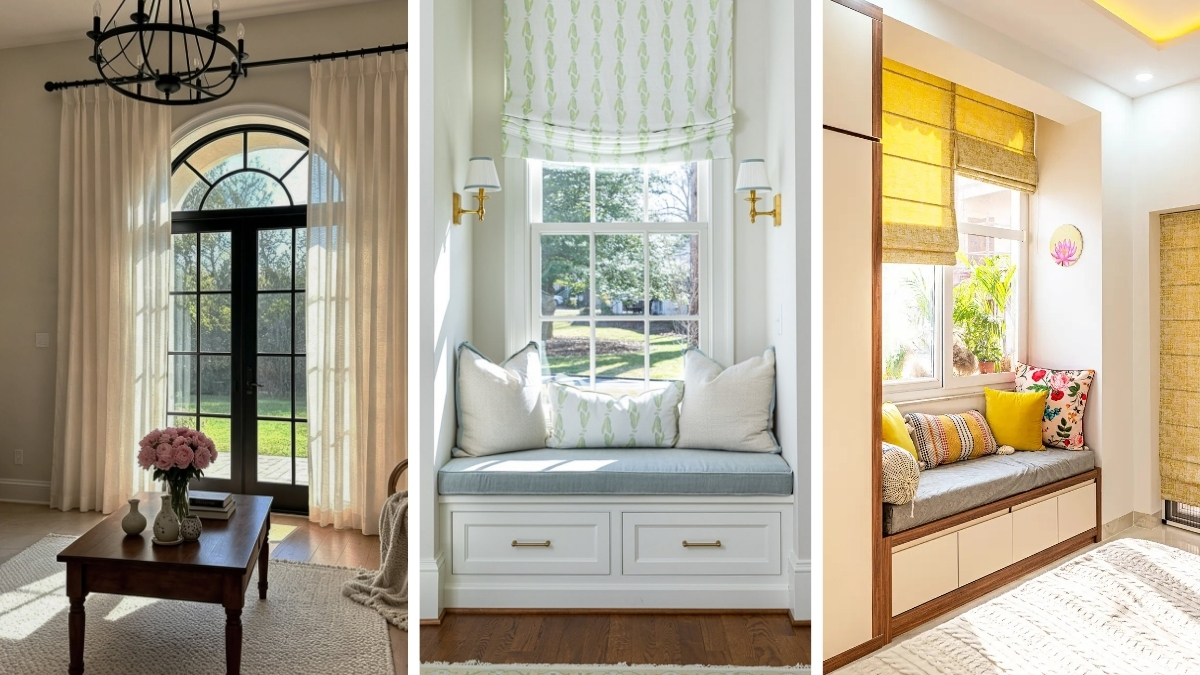
Cheap curtains can make a polished room feel unfinished. Thin panels, short hems, and flimsy rods often give away the budget before anyone notices the furniture. Windows take up too much visual space to treat as an afterthought.
Good window treatments shape light, soften hard edges, and make a room feel intentional. When the proportions are wrong, even a well styled space can look flat.
These budget window treatment ideas focus on smarter hanging, fuller fabric, layered panels, and low cost details that create a custom made look. A few thoughtful changes can make the whole room feel more finished.
Make Budget Curtains Look Custom-Made
A higher rod, fuller fabric, smart layering, and repeated color can make inexpensive curtain panels look intentionally designed for the room.
Take the Fabric to the Floor
Skip short panels. Choose curtains that reach the floor and mount the rod closer to the ceiling. Extending it beyond the frame also makes the window feel larger.
Build Depth With Two Layers
Place airy sheers behind thicker panels. The combination creates dimension, softens daylight, and gives you better privacy without relying on expensive fabric.
Upgrade the Hardware First
Trade flimsy plastic pieces for a simple metal rod and matching rings. Consistent hardware instantly makes inexpensive curtains feel cleaner and more finished.
Repeat the Curtain Color
Echo one curtain tone through pillows, rugs, or small accessories. Repetition makes the window treatment feel connected to a larger decorating plan.
1. Tailored Roman Shades with Greek Key Trim Around a Window Seat
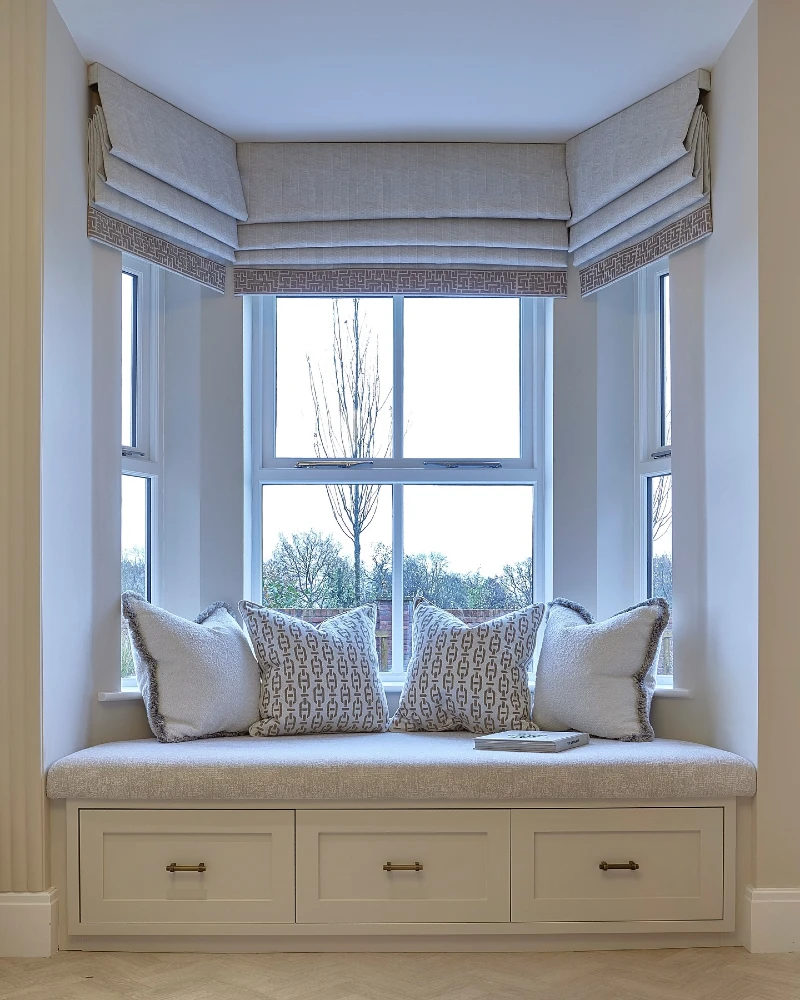
Soft gray Roman shades frame the three sided window nook with crisp, structured folds. A taupe geometric border runs along each lower edge, while the pale upholstered bench and patterned cushions keep the whole space calm and layered.
Decorative trim makes plain fabric shades look far more tailored and costly.
Start with basic neutral Roman shades, then add ribbon or fabric tape along the bottom edge for a custom finish. Repeating the same trim across several windows also creates visual order, which matters even more in a deep bay or reading nook.
2. Striped Roman Shades Layered Above White Plantation Shutters
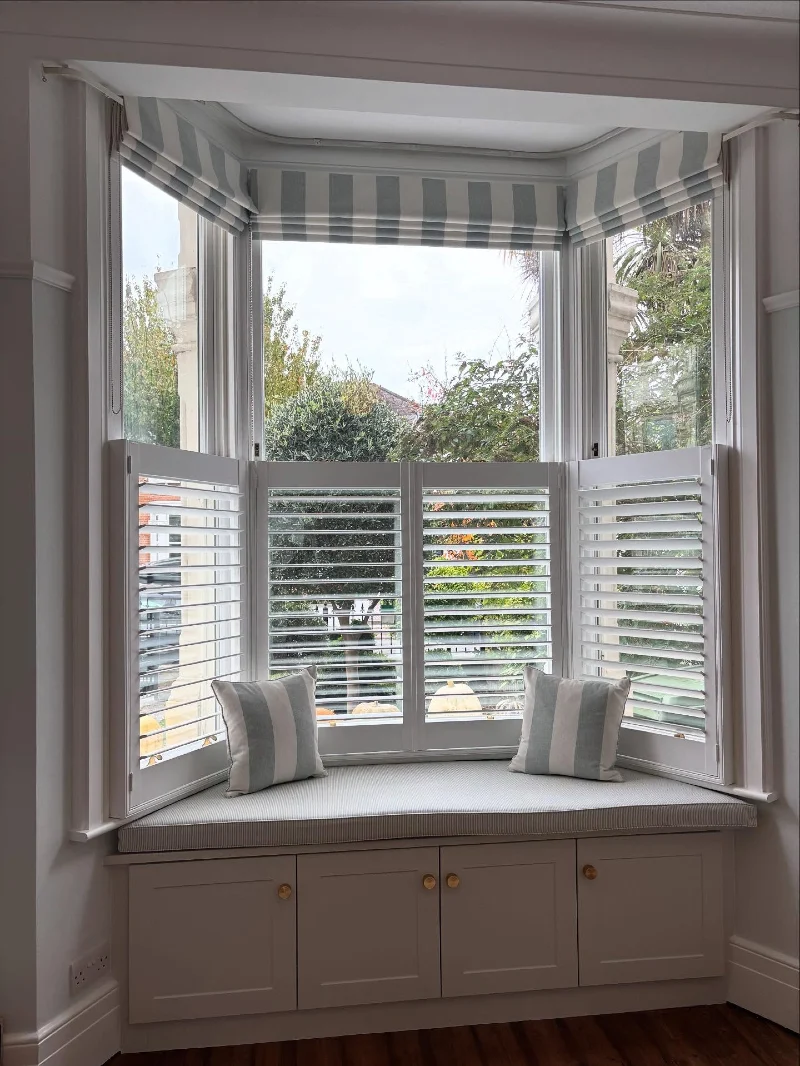
Soft gray and white striped Roman shades sit neatly across the upper half of this bay window, while crisp white plantation shutters cover the lower panes. The striped bench cushion and matching pillows repeat the pattern below, giving the nook a calm, coordinated finish.
Layering shades with shutters creates privacy, light control, and the look of a much more costly window treatment.
Keep the lower shutters closed when you want privacy while leaving the upper glass open for daylight. Using one fabric pattern on the shades, seat cushion, and pillows ties the entire bay together without adding extra colors or busy details.
3. Printed Roman Shade Above a Striped Built In Window Bench
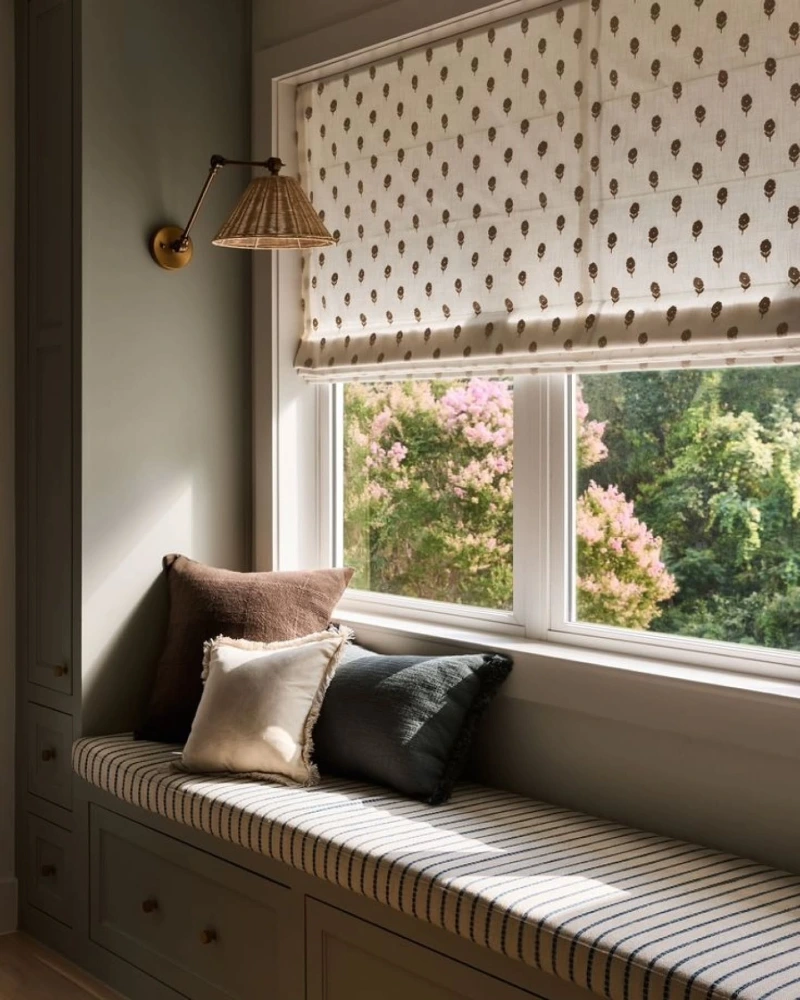
Soft cream Roman shade patterned with small brown motifs filters the warm daylight above this built in bench. Sage green cabinetry, a striped seat cushion, earthy pillows, and a pleated wall sconce give the corner a cozy, tailored feel.
A small repeat pattern adds character without making the window treatment feel heavy.
The restrained print works because its brown detail connects with the deeper tones in the pillows and lighting. Keeping the shade inside the window frame also lets the trim stay visible, which gives the whole installation a cleaner finish.
Why This Works
- Pattern Scale: The tiny motif adds interest while staying quiet beside the striped bench cushion.
- Color Anchor: Warm brown accents connect the shade to the pillows, sconce, and cabinetry hardware.
- Light Control: The fabric softens bright daylight while still allowing the window nook to feel airy.
4. Wide Patterned Roman Shade Above a Deep Window Daybed
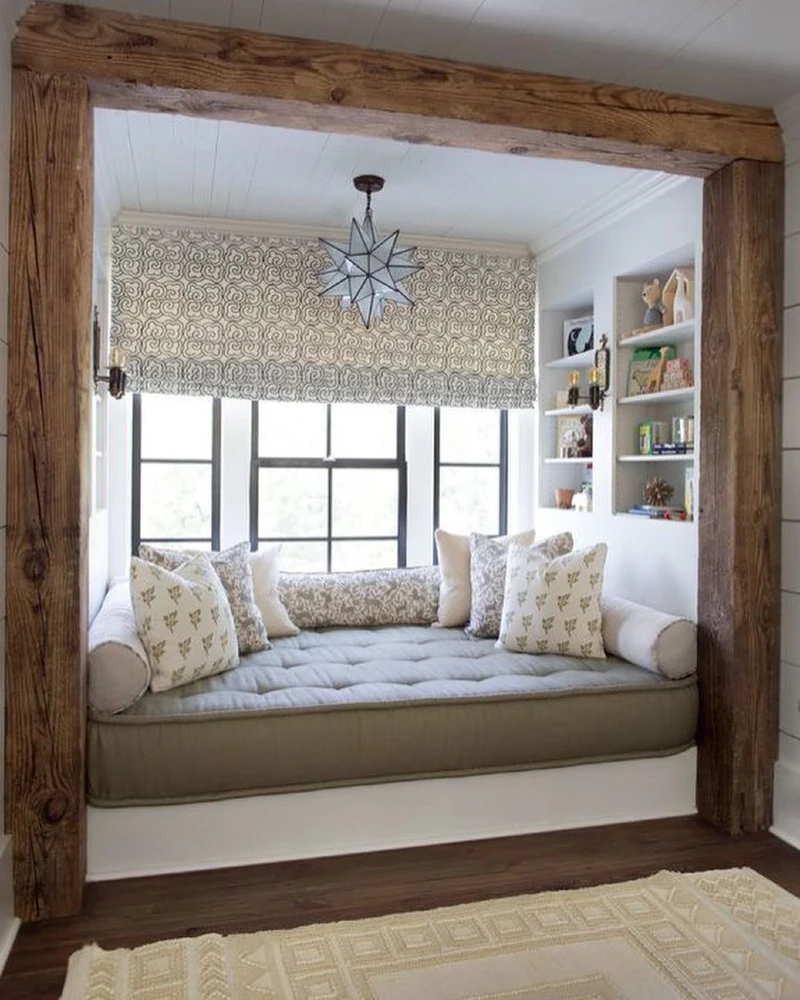
A broad Roman shade with a soft gray scroll pattern spans the full width of this deep window nook. Below it, a tufted daybed, floral pillows, black framed windows, and rough wood beams create a cozy mix of tailored fabric and rustic texture.
One oversized shade can make a bank of windows read as one polished architectural feature.
Using a single continuous treatment keeps the window wall calm instead of breaking it into smaller sections. Choose a restrained print and mount the shade high so more glass stays exposed when it is raised, allowing crisp daylight to fill the nook.
5. Neutral Roman Shades Across a Sunlit Victorian Bay Window
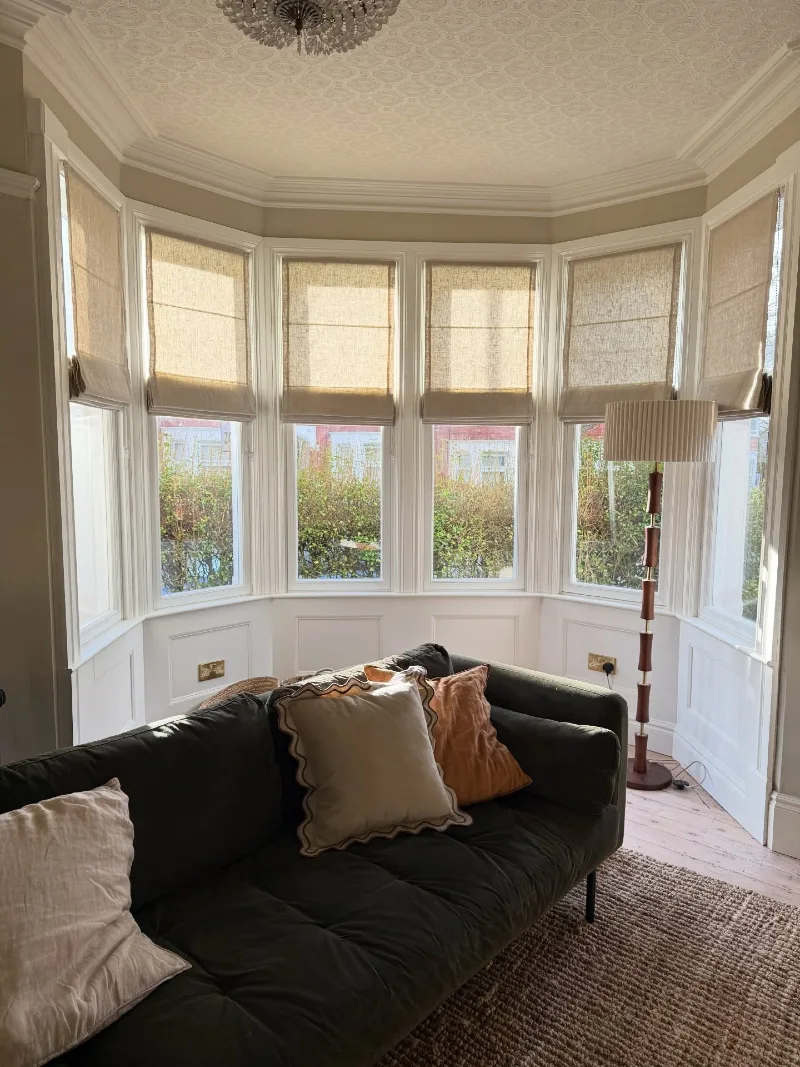
Soft taupe Roman shades cover each tall pane of this curved bay window, filtering sunlight through their lightly woven fabric. Crisp white trim and wall paneling frame the windows, while a deep green velvet sofa, warm pillows, and a pleated floor lamp add richer texture below.
Matching shades across every pane make a large bay window feel calm, balanced, and thoughtfully finished.
The restrained fabric lets the original window architecture stay in focus while softening strong daylight. Keeping every shade at the same height also creates a clean horizontal line that makes separate windows feel connected.
Quick Decorating Tips
- Budget version: Use matching ready made Roman shades in a warm neutral fabric across every window.
- Renter tip: Choose removable inside mount shades that sit neatly within the existing frames.
- Pro move: Match the shade height across all panes so the bay reads as one continuous feature.
6. Layered White Roller Shades Above a Bright Window Bench
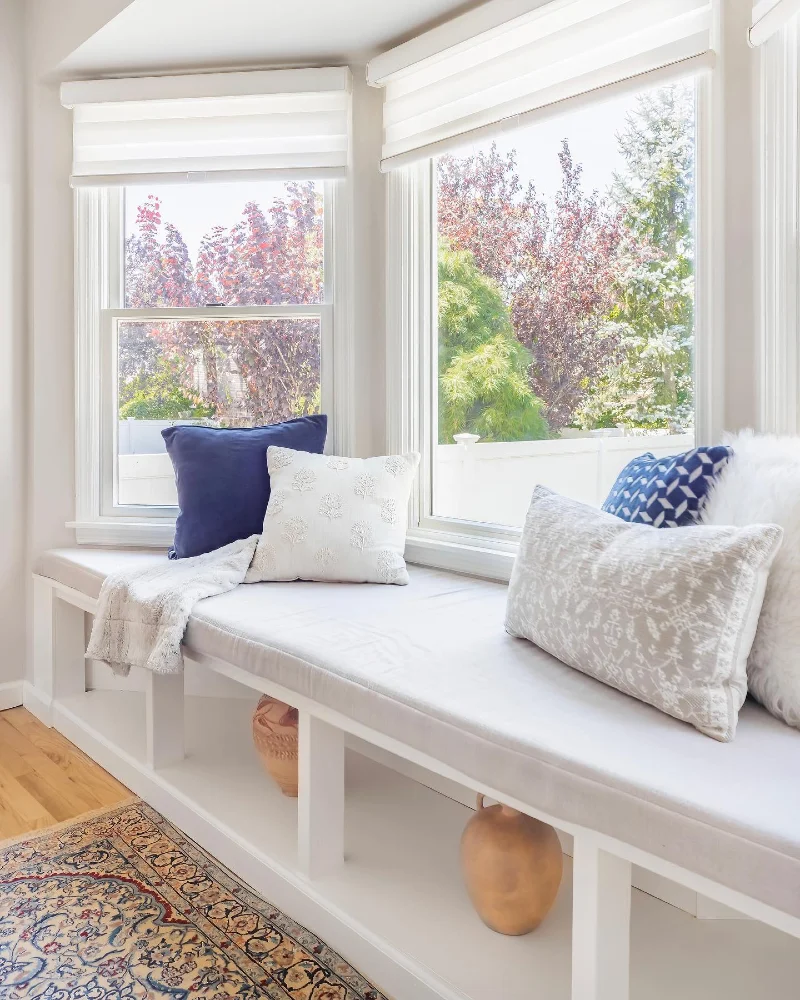
Crisp white layered roller shades sit neatly inside the tall window frames, keeping the treatment almost invisible when raised. A long cushioned bench, blue and cream pillows, pale wood floors, and open shelving below create a light, spacious corner filled with soft daylight.
Choosing a shade close to the wall color makes an affordable treatment look clean and built in.
This approach works well when the view deserves attention because the pale fabric does not compete with the glass. Keep the mounting hardware compact and repeat the same shade style on nearby windows so the whole wall feels intentional.
7. Brown Roman Shades Layered with Soft Sheers in a Window Alcove
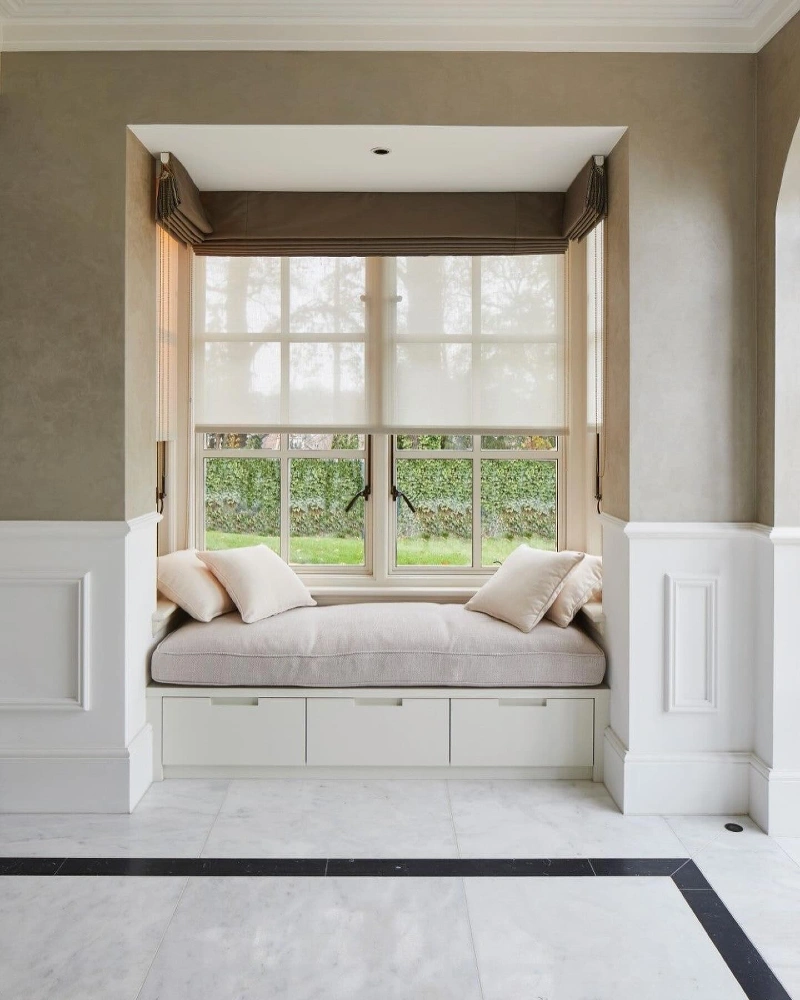
Deep taupe Roman shades wrap around the recessed window nook, adding a tailored border above the glass. Pale sheer shades soften the central windows, while the cream bench cushion, white paneling, and muted walls keep the space quiet and refined.
Layering a darker fabric shade over light filtering sheers gives inexpensive treatments more depth and structure.
Keep the outer Roman shades in a tone that relates closely to the surrounding wall color so they frame the nook without feeling heavy. Pair them with translucent inner shades to soften glare while still letting filtered daylight reach the seating area.
8. Golden Woven Roman Shades Framing a Compact Window Seat
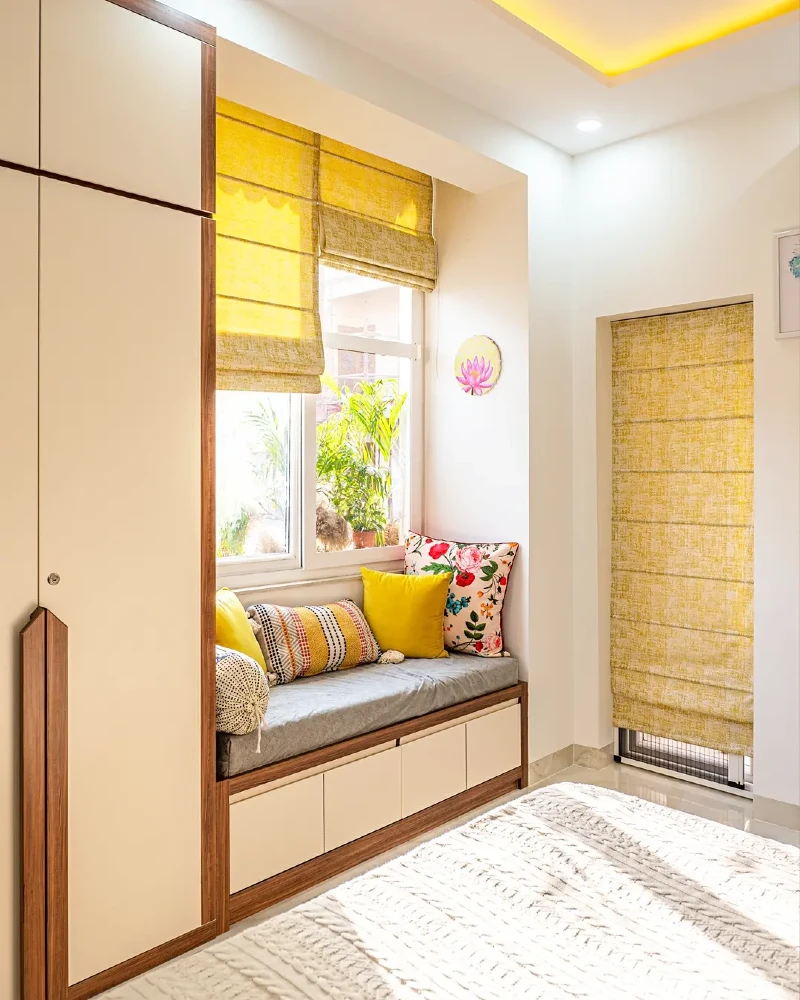
Warm woven Roman shades cover both the tall window and the narrow glazed door, filtering sunlight into a soft golden glow. Cream cabinetry, walnut trim, a gray bench cushion, and bright patterned pillows give the small nook a cheerful, layered look.
Repeating one woven shade fabric across different openings makes the room feel thoughtfully coordinated.
The textured material adds warmth without needing costly curtain panels or elaborate hardware. Mounting each shade close to the frame keeps the treatment tidy while leaving more wall and floor space visually open.
Why This Works
- Texture: The woven fabric brings depth to smooth white cabinetry and crisp walls.
- Color Anchor: Golden shades connect naturally with the walnut trim and yellow accent pillows.
- Scale: Slim Roman shades suit the tight window nook without crowding the seating area.
9. Natural Woven Roman Shades Framing the Connected Sunroom
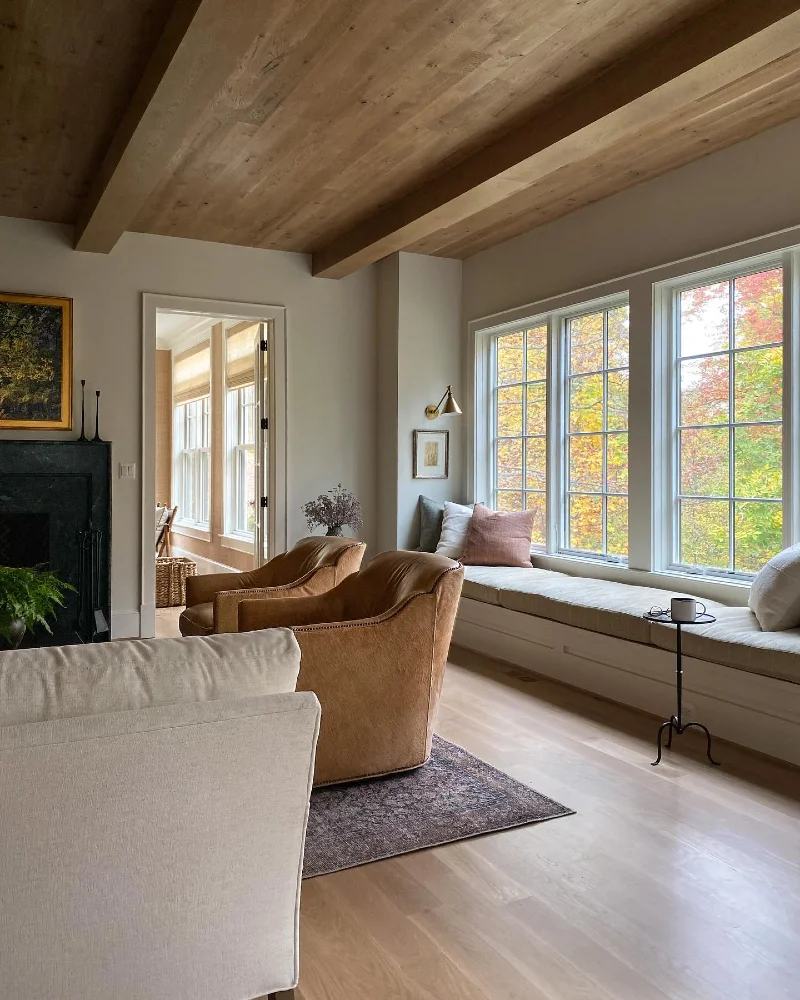
Warm beige Roman shades cover the tall windows visible through the doorway, adding soft texture beside the pale walls and exposed wood ceiling. In the main living room, uncovered divided light windows bring in crisp daylight above a long built in bench, while camel chairs and natural wood keep the palette grounded.
Woven shades can add warmth to one window zone without covering every pane in an open living space.
Use matching natural shades on windows where glare or privacy matters most, then leave other windows open when the view can take center stage. Repeating the same warm fiber tone found in wood beams and upholstery helps inexpensive shades feel connected to the wider room.
10. Two Tone Roman Shades Wrapped Around a Corner Window
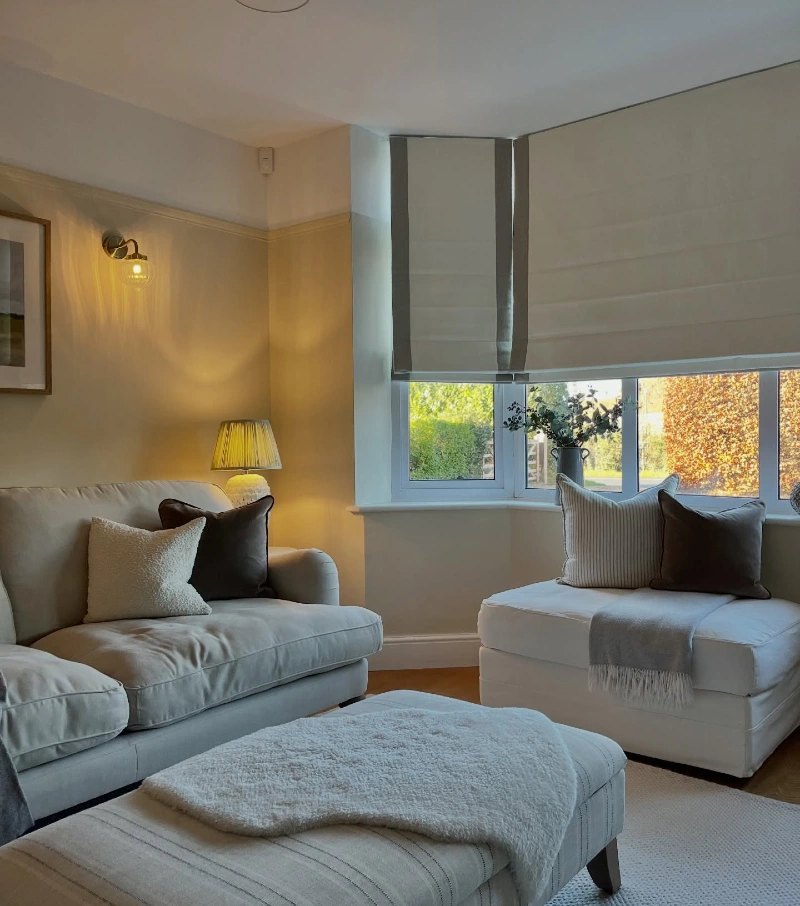
Soft cream Roman shades cover the wide corner windows, with deep gray borders defining the edges and giving each panel a tailored finish. Warm wall lighting, pale upholstery, textured pillows, and a low window seat create a calm living room with gentle filtered light.
A contrasting fabric border can make a basic Roman shade look custom made without adding heavy pattern.
Choose an inexpensive solid shade, then use fabric tape or trim in a deeper neutral along the sides. The darker edge sharpens the shape of each treatment and helps separate pale fabric from equally light walls.
Quick Decorating Tips
- Budget version: Add wide fabric trim to plain ready made Roman shades for a more detailed finish.
- Renter tip: Use removable fabric tape to test the bordered look without altering the window frame.
- Pro move: Repeat the same border width on every shade so corner windows feel balanced and connected.
11. Green Block Print Roman Shade Above a Built In Window Bench
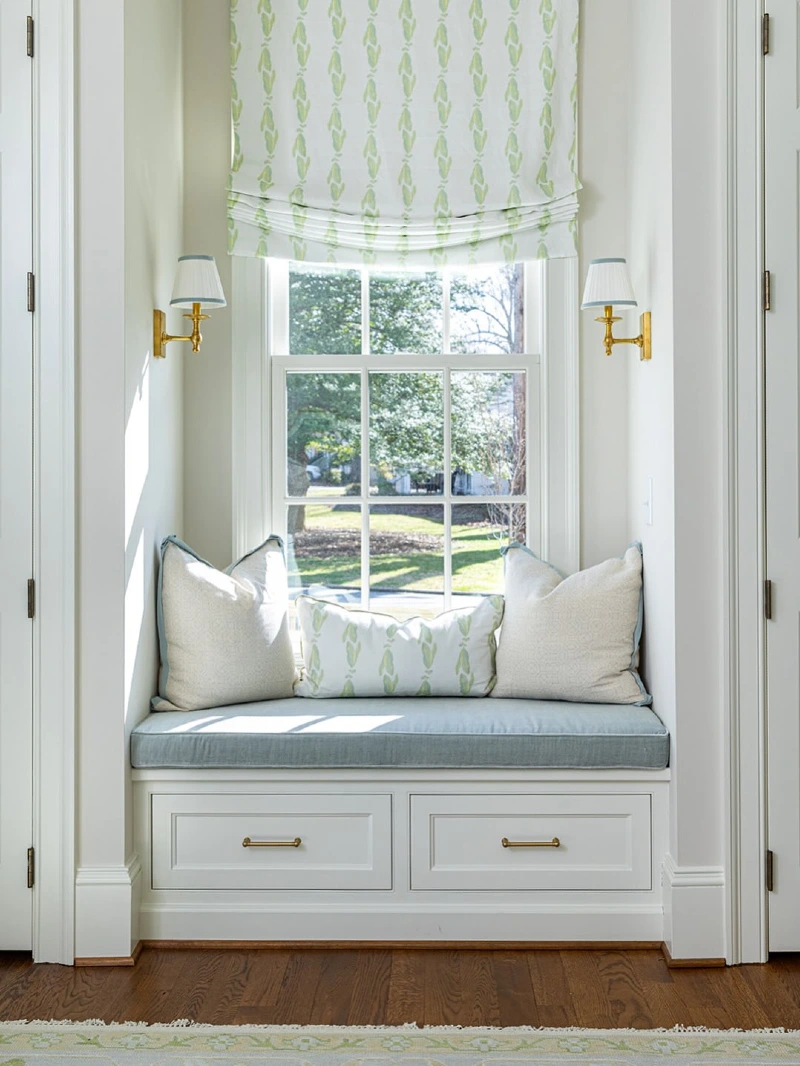
White Roman shade with a fresh green block print hangs above the tall divided light window, adding pattern without making the narrow nook feel busy. Pale blue upholstery, cream pillows, brass sconces, and crisp white cabinetry keep the space light while the matching lumbar pillow repeats the shade fabric below.
Repeating the window fabric in one small accent makes a budget treatment feel thoughtfully designed.
Choose a small scale print when the window sits inside a tight alcove, since larger patterns can overpower the opening. Carrying that fabric onto one pillow creates a strong visual link and gives an off the shelf shade a more custom made feel.
12. Floor Length Beige Curtains Layered Over Soft Roman Shades
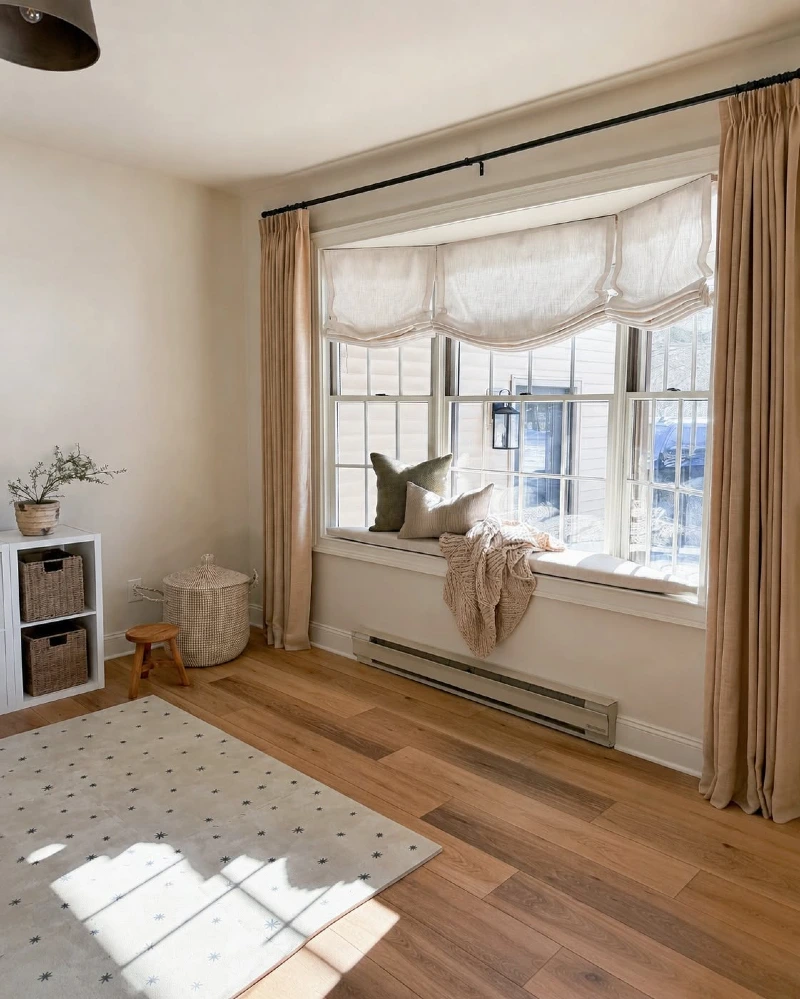
Warm beige curtain panels frame the wide window from a slim black rod mounted close to the ceiling. Inside the frame, pale Roman shades soften the bright daylight, while the window bench, woven baskets, and light wood floor keep the room relaxed and grounded.
Layering full length curtains over simple shades gives a basic window far more depth and presence.
The high rod draws the eye upward and makes the window wall feel taller. Keeping both fabric layers within the same warm neutral family creates a polished look without relying on costly patterns or decorative hardware.
Why This Works
- Layering: Roman shades handle glare while the outer curtains add softness and visual weight.
- Scale: Long panels stretch from near the ceiling to the floor, making the window feel larger.
- Color Anchor: Beige fabric connects with the wood floor, woven storage, and other warm neutrals in the room.
13. Small Print Floor Length Curtains on a Slim Black Rod
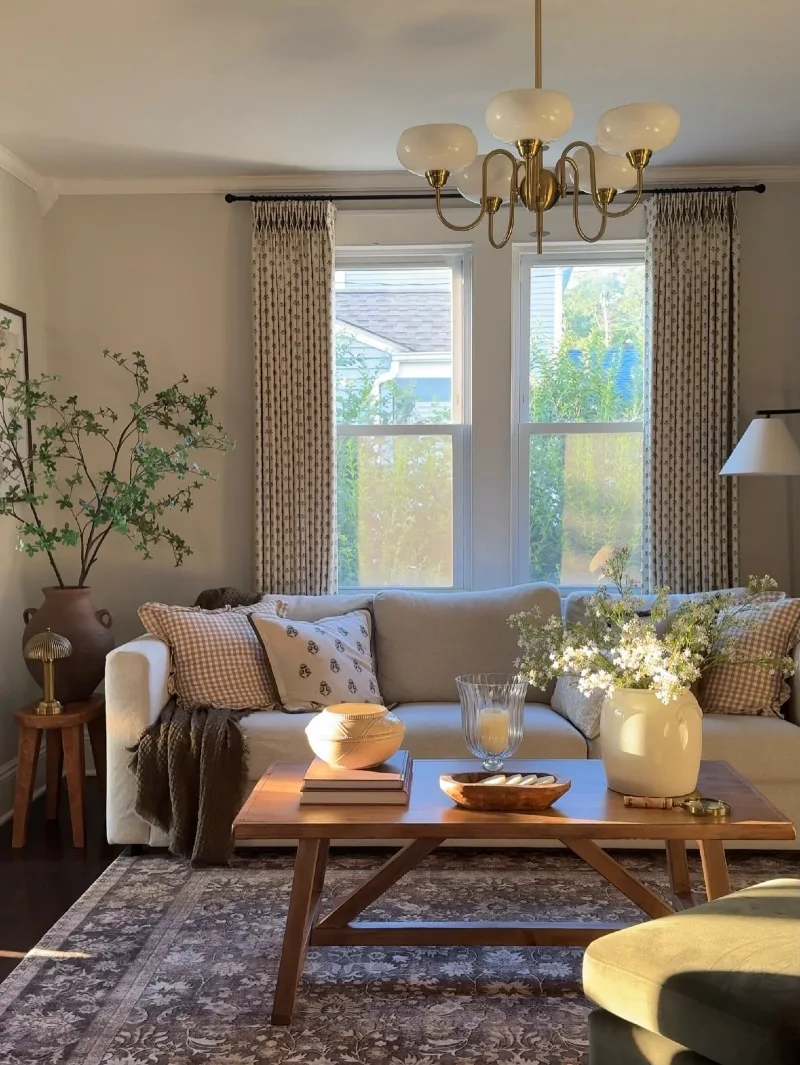
Cream curtain panels with a tiny repeating brown print frame two tall living room windows, hanging in dense folds from a slim black rod. Soft daylight passes through the glass behind a linen sofa, while gingham pillows, warm wood, brass lighting, and leafy branches give the room a cozy, lived in feel.
A small repeat pattern gives affordable curtain panels the tailored detail usually associated with custom fabric.
Mount the rod several inches beyond the outer window edges so the panels can stack beside the glass instead of blocking light. Using generous fabric width also creates fuller folds, which makes basic panels look richer and more intentional.
14. Botanical Roman Shades Wrapped Around a Warm Wood Bay Window
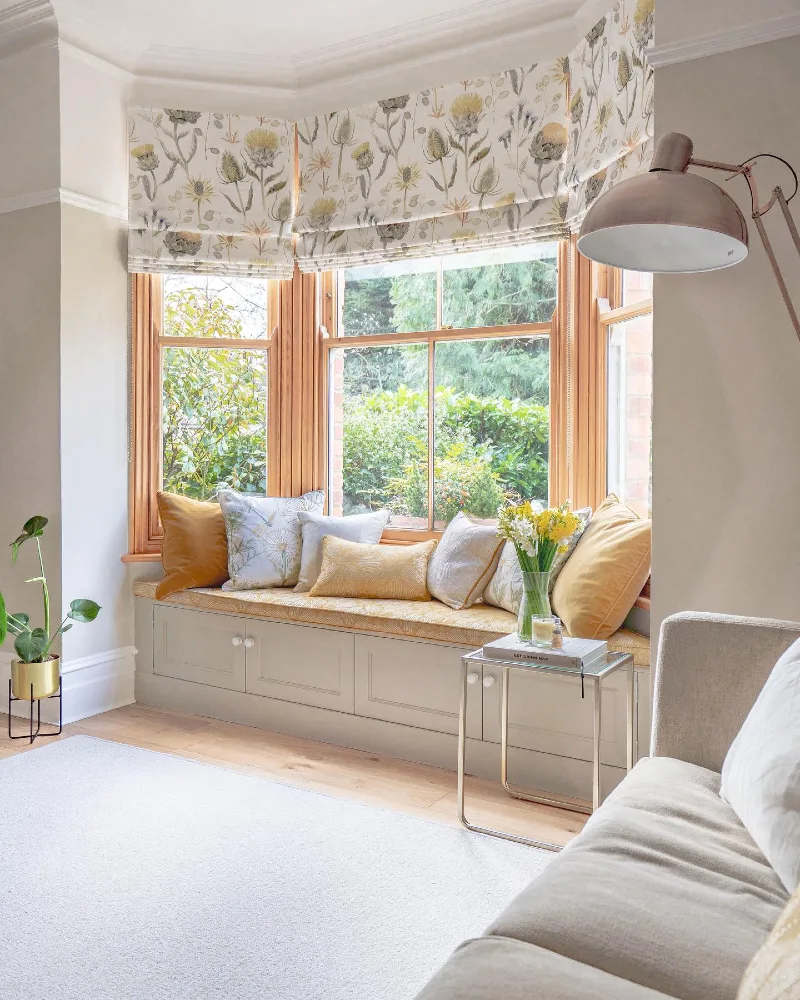
Cream Roman shades printed with soft green and mustard botanicals follow the angles of this bay window, bringing pattern above the warm wood frames. A built in bench below carries golden cushions and floral pillows, while daylight keeps the layered prints feeling fresh rather than busy.
Using one expressive fabric across every section of a bay window creates the look of a fully planned custom treatment.
Keep the surrounding walls quiet when the shade fabric carries a larger motif like this one. Repeating a few colors from the print in cushions and flowers helps the window treatment feel connected to the seating nook instead of looking like a separate feature.
15. Floor Length Sheer Curtains Wrapped Around a Curved Bay Window
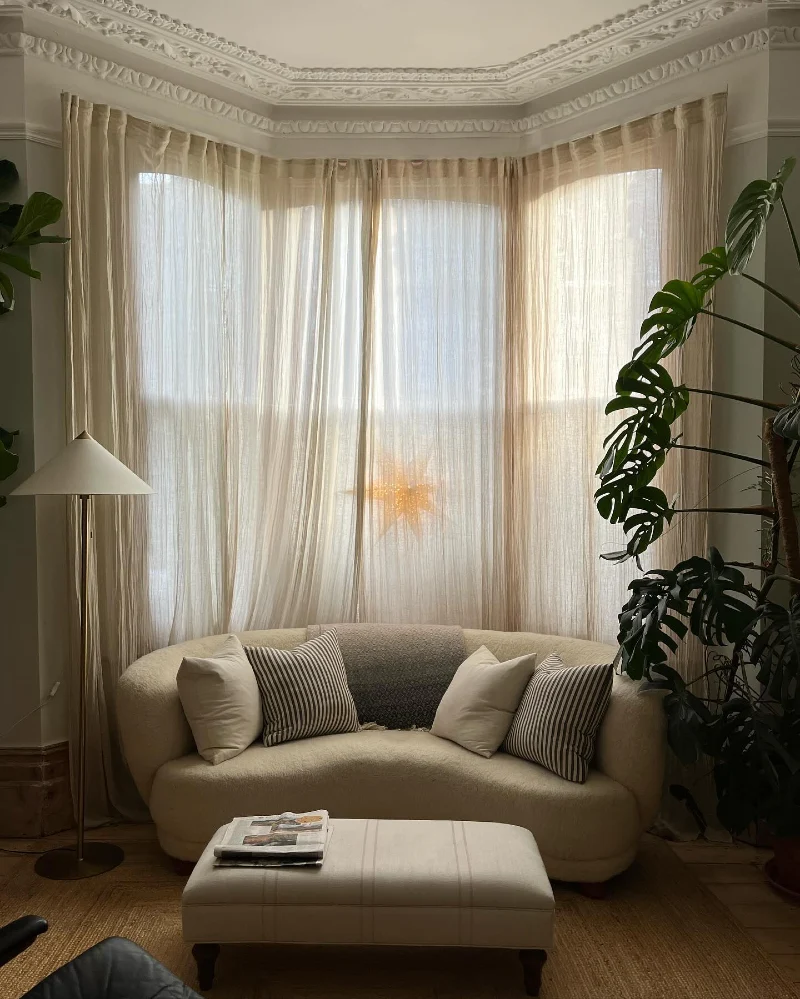
Airy cream sheers run across the full bay, falling from near the ornate ceiling trim to the wood floor in soft vertical folds. Golden daylight filters through the fabric behind a rounded cream sofa, while striped pillows, a woven rug, and large green plants add contrast and texture.
Full length sheers make a wide bay window feel softer and more finished without hiding its shape.
Choose generous panels so the fabric still looks full when stretched across several panes. A warm ivory tone filters harsh light while keeping the room bright, and letting the hems reach the floor gives inexpensive fabric a more tailored presence.
Quick Decorating Tips
- Budget version: Use several ready made sheer panels side by side to create enough fullness across a wide bay.
- Renter tip: Try tension rods or removable curtain hardware where the window shape allows it.
- Pro move: Hang the sheers as high as possible so the long fabric lines draw attention to the room’s ceiling height.
16. Airy White Sheer Curtains Framing a Tall Dining Bay Window
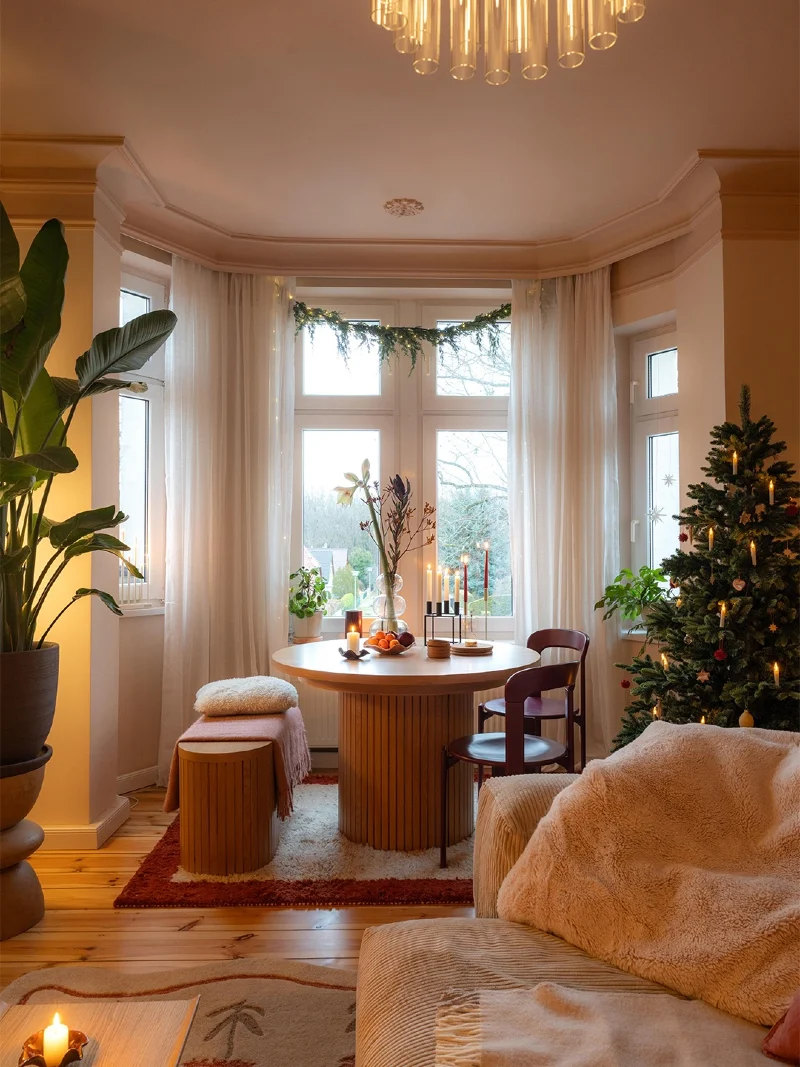
Soft white sheer panels fall from near the ceiling and frame the tall bay windows with loose, flowing folds. Warm evening light passes through the fabric, while the round wood dining table, deep red chairs, leafy plants, and glowing candles give the space a cozy, lived in feel.
Lightweight sheers can make tall windows feel graceful and finished without the cost of heavy drapery.
Choose extra long panels and hang them high so the fabric emphasizes the full height of the window. Keeping the sheers slightly gathered adds fullness, while their translucent weave preserves daylight and keeps the bay feeling open.
17. Ceiling Mounted Curtains Layered with a Bordered Roller Shade
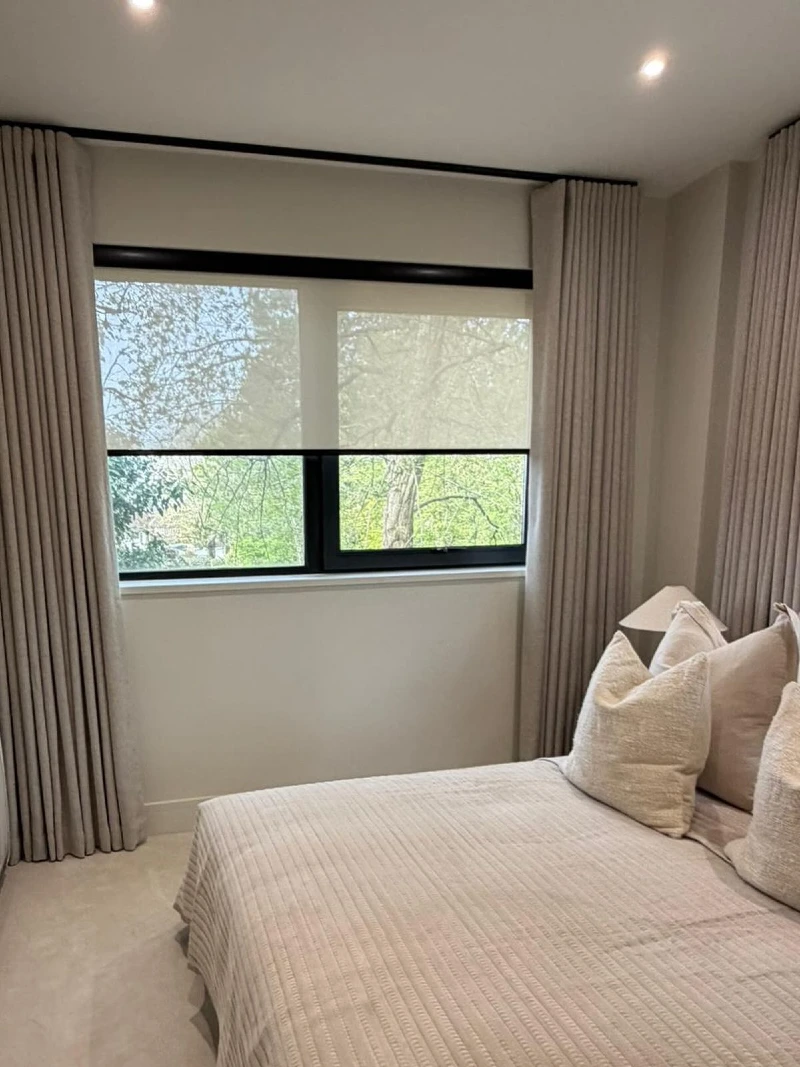
Dense taupe curtains run from ceiling to floor on a slim black track, framing a wide black trimmed bedroom window. A pale roller shade with a dark lower border filters the outdoor view, while soft cream bedding and textured pillows keep the room calm and tonal.
Combining a plain roller shade with full height curtains creates the depth and sharp finish of a custom window scheme.
Mounting the curtain track close to the ceiling stretches the wall visually and gives inexpensive panels more presence. The dark trim on the shade also echoes the black window frame and track, helping separate pieces read as one coordinated treatment.
Why This Works
- Layering: The roller shade controls glare and privacy while the curtains add softness and fullness.
- Scale: Ceiling height panels make the modest window appear taller and more substantial.
- Color Anchor: Black edging connects the shade to the window frame and curtain track for a crisp, intentional finish.