
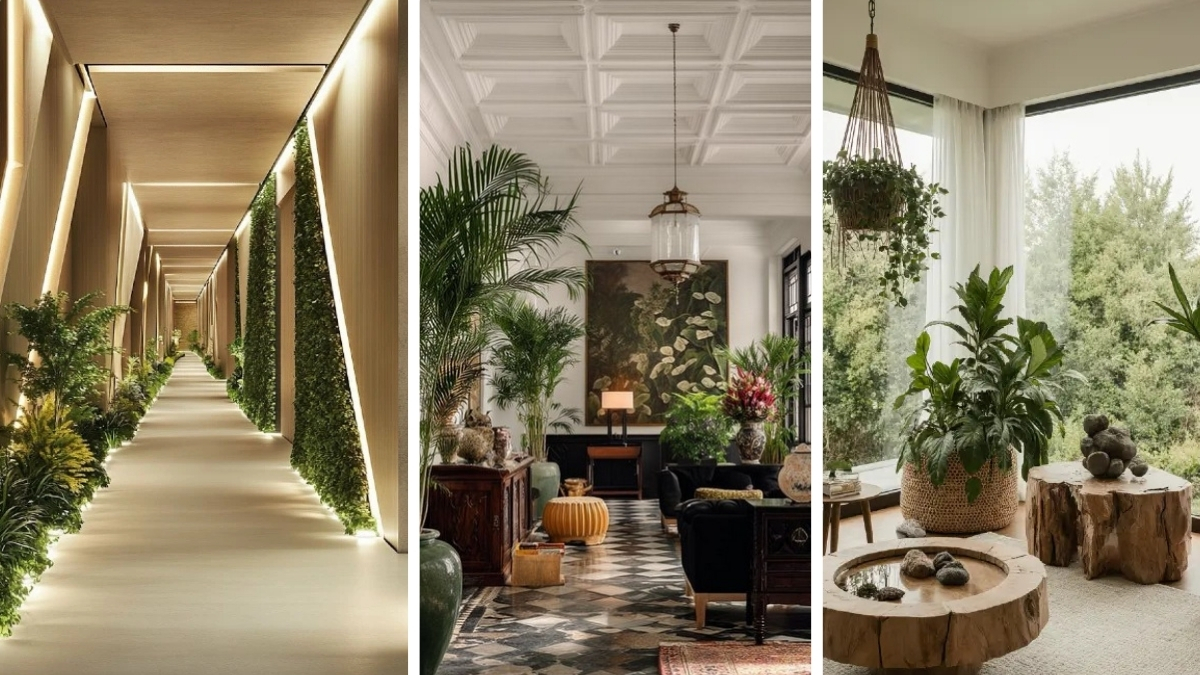
Sunlight warms your skin as you step into a room overflowing with lush, green life. The air feels crisp and oxygen-rich, like a quiet morning walk through a dense forest. You lose the rigid boundary between your four walls and the vast, wild world waiting right outside your window.
Biophilic design changes your home into a living, breathing retreat. It works for cramped city apartments or sprawling suburban houses alike. Bringing nature indoors boosts your mood and lowers stress levels instantly.
Grow Your Green Sanctuary With Strategic Window Placement
Plants need consistent, natural light to thrive throughout the seasons. Position your leafy companions near south-facing windows to maximize their growth potential while brightening your corners.
Grouping varieties with similar water needs makes maintenance manageable for busy schedules. Use sturdy shelving units to create height, drawing eyes upward to give your room an airy, vertical feel.
Botanical Styling
Green Interior Blueprint
Lighting
Place sun-loving ferns or palms within three feet of glass for optimal photosynthesis.
Grouping
Cluster three plants of varying heights together to form an organic focal point.
Texture
Mix terra cotta with smooth ceramic to reflect different elements of the earth.
Entryways
Entryways benefit from hanging trailing vines like Pothos for an inviting, jungle-like welcome.
1. Skylight Integration For Natural Light Saturation
Quick Styling Tips
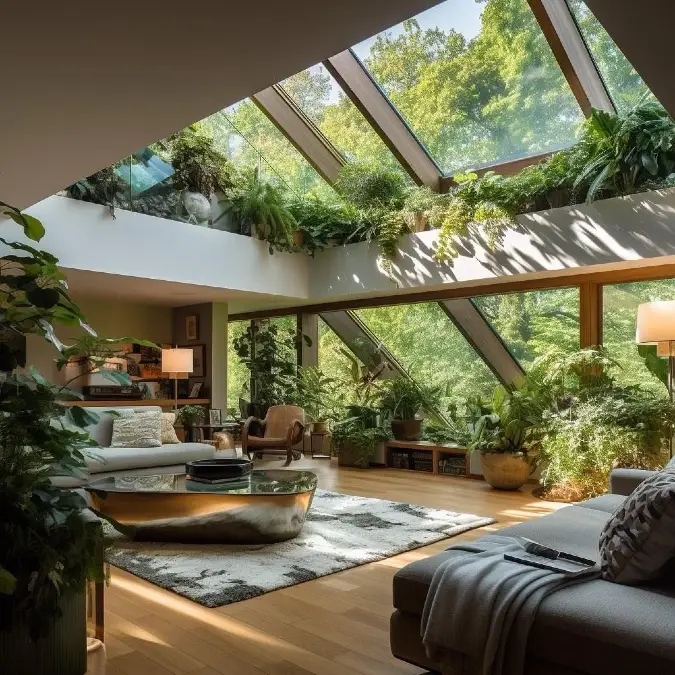
Massive skylights stretch across the ceiling, pulling the lush tree canopy right into your seating area. Dappled shadows dance over the warm oak floors and plush grey couches. Potted plants line the ledge, creating a layered green wall that softens the architecture.
Maximize overhead light to blur the line between interior comfort and outdoor wildness.
Use expansive glass apertures to turn daylight into a dynamic design element. This works best in living areas where you want a connection to the weather and seasons. If you lack architectural skylights, paint ceilings in a high-gloss white finish to mimic the reflective quality of glass and keep the space feeling open.
2. Formal Botany Hallway
Classic Architecture Meets Verdant Life
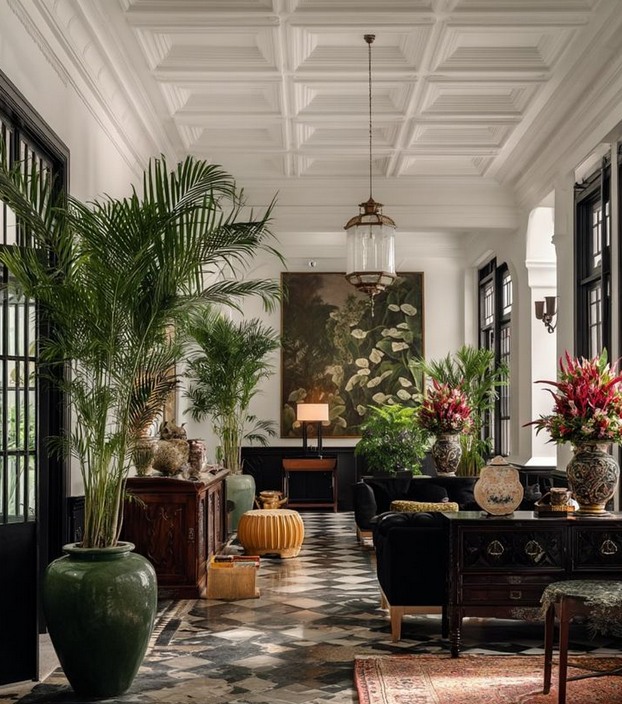
The black and white checkerboard floors provide a crisp, grounding foundation for the lush, oversized palms. Dramatic, dark-leafed greenery creates a striking contrast against the bright, coffered white ceilings.
Pair formal architecture with wild, untamed foliage to create a space that feels both stately and alive.
Use tall, floor-standing plants to mimic the height of high-ceilinged rooms and draw the eye upward. This look works best in entryways or wide hallways where you want to signal a transition between the outdoors and the home.
3. Organic Furniture Foundations
Nature Inspired Shapes and Materials
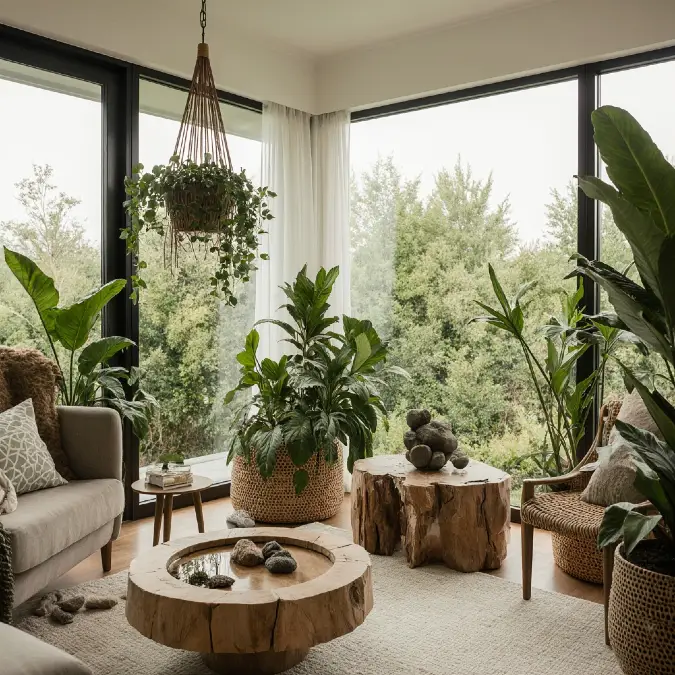
Thick, raw wood slabs serve as low coffee tables, highlighting the rough grain and knots of fallen timber. Nearby, a woven rattan chair provides texture that mirrors the outdoor foliage visible through expansive, full-height windows.
Use untreated wooden accents to anchor a space with raw, organic energy.
Choosing furniture with natural edges and visible wood grain makes the living room feel like an extension of the forest floor. You can mimic this look by shopping for reclaimed wood side tables or root-based decor.
Why This Works
- Raw edges on wood furniture remind the eye of living trees rather than manufactured objects.
- Woven baskets and textured chairs add soft, tactile layers that mimic grasses and bark.
- Low-profile furniture ensures the focus remains on the window view rather than blocking the light.
4. Layer Forest Green Through a Calm Bedroom
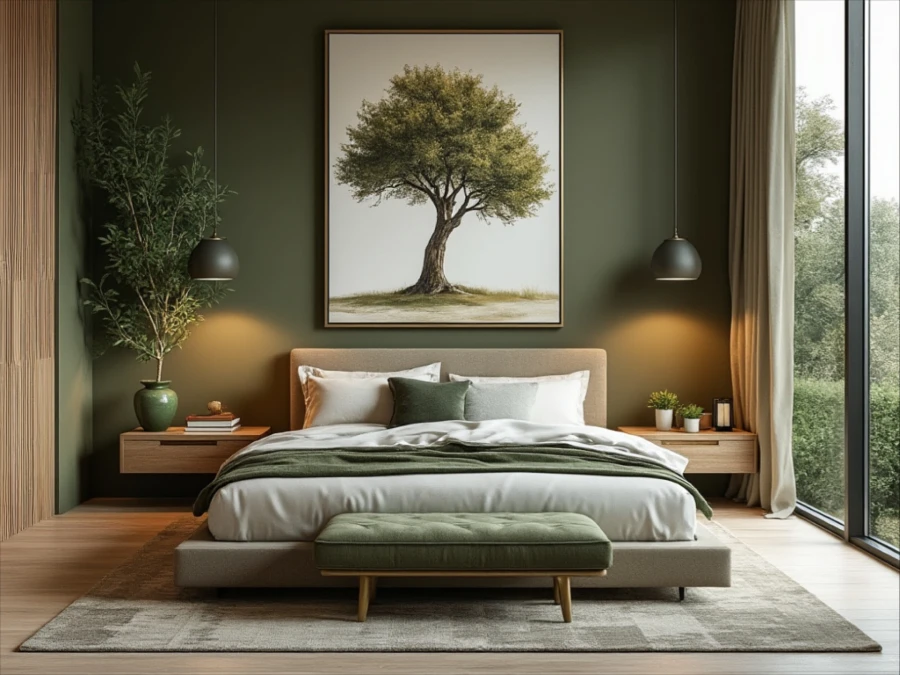
Deep olive walls wrap the room in a soft, grounded mood, while pale oak floors and floating nightstands add natural warmth. Crisp white bedding, a moss green throw, and a velvet bench keep the palette layered without feeling heavy.
Use one deep earth tone as the backdrop, then soften it with light wood, warm white, and living greenery.
This approach suits primary bedrooms, guest rooms, and quiet home retreats with good daylight. Recreate it with a 60 30 10 formula: 60 percent olive green, 30 percent warm neutrals, and 10 percent deeper botanical accents.
5. Turn a Plain Hallway Into a Living Garden Path
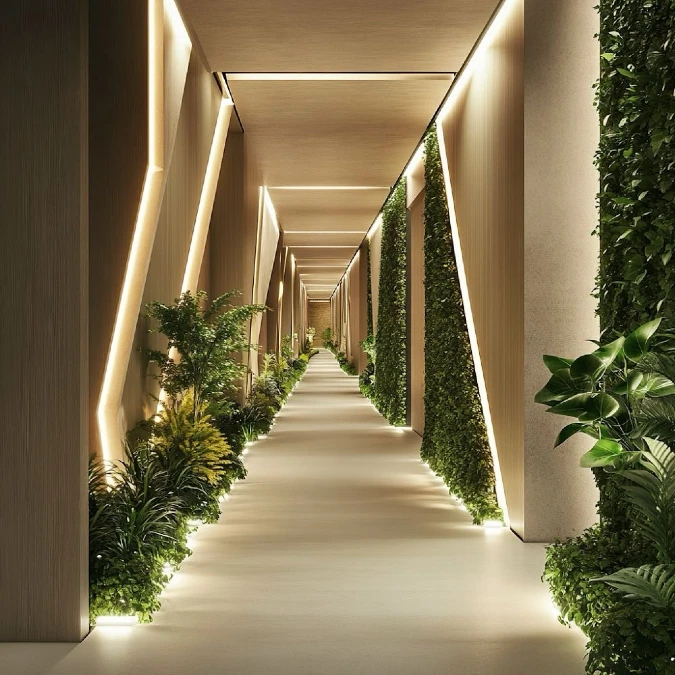
Warm wood panels frame this long corridor, while dense green walls and layered floor plants soften every hard edge. Hidden LED strips wash the ceiling, columns, and foliage with a gentle golden glow, giving the passage a calm, immersive feel.
Treat the hallway as a route through nature, not just a space between rooms.
This idea works well in wide hallways, hotel-style entries, and modern homes with long sightlines. Pair vertical greenery with slim floor planting to save walking space, then add concealed lighting at the base and ceiling. Keep the floor pale and uncluttered so the plants remain the main focus.
6. Grow an Indoor Garden Beside the Dining Table
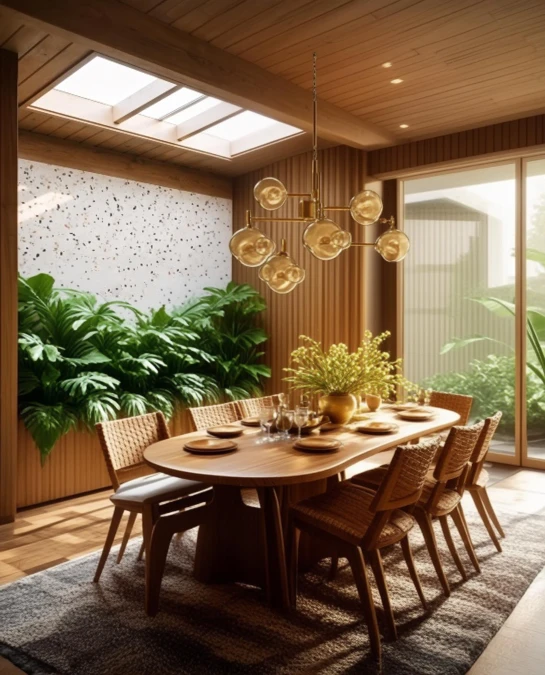
Warm timber wraps the walls and ceiling, while a wide skylight pours soft daylight over the dining area. A lush planted bed filled with ferns, fiddle leaf figs, and upright greenery creates a cool contrast against the honey-toned wood, woven chairs, and smooth concrete floor.
Place greenery at floor level to make the room feel like it grew around the furniture.
This layout works well in dining rooms, sunrooms, and open-plan spaces with strong natural light. Use a three-layer formula: tall plants at the back, leafy mid-height plants through the center, and soft ferns along the front edge.
Why This Works
Overhead Daylight: The skylight supports plant growth and gives the dining table a bright, airy focus.
Natural Material Rhythm: Repeated wood tones connect the ceiling, walls, table, and chairs without making the room feel flat.
Layered Planting: Mixed heights and leaf shapes create the depth of a small indoor landscape rather than a row of separate pots.
7. Layer Plants Through a Warm Textured Living Room
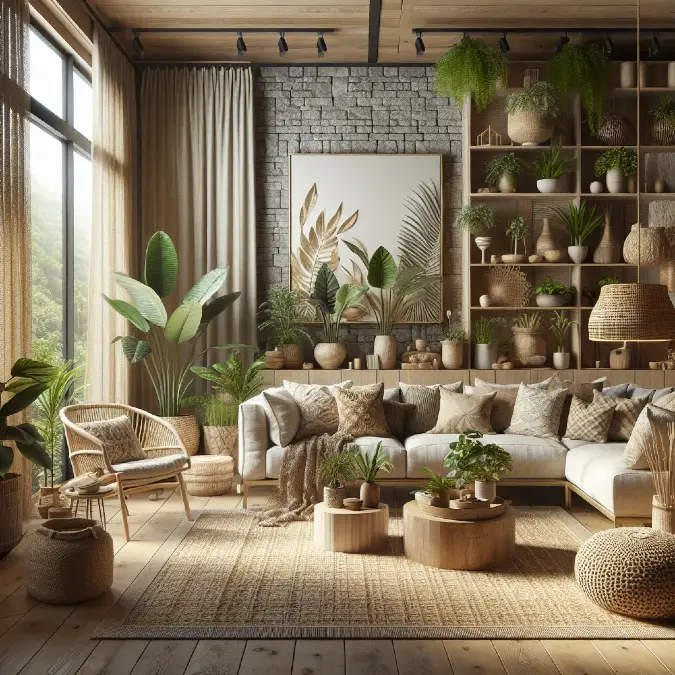
Soft daylight filters through tall curtains and falls across pale wood floors, woven rugs, and a deep cream sectional. Large tropical leaves anchor the window corner, while ferns, trailing plants, baskets, and ceramic pots fill the shelving with layered natural texture.
Repeat greenery at different heights so the room feels lush without crowding one surface.
This look suits large living rooms, sunlit apartments, and open family spaces with plenty of shelving. Use a balanced formula of one tall floor plant, three medium plants, and several small shelf plants.
8. Make a Mature Indoor Tree the Heart of the Room
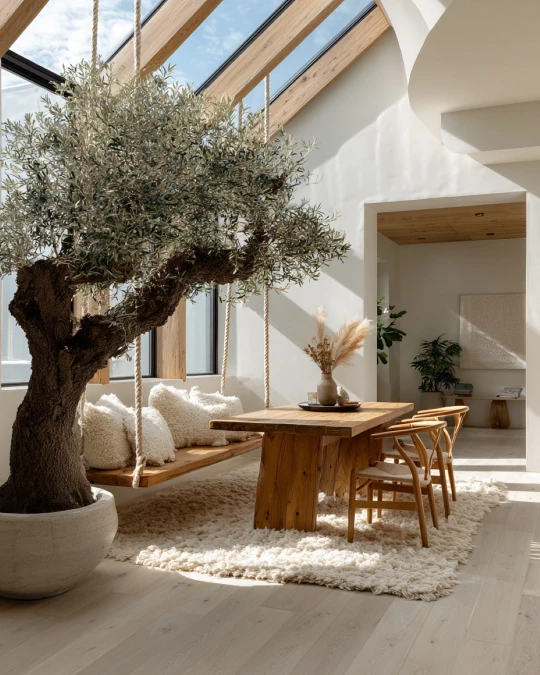
A sculptural olive tree rises beneath the glass roof, filling the dining space with silvery leaves and rugged bark. Pale oak beams, warm white walls, a chunky wool rug, and a thick wood table create a soft, sun-washed setting.
One large living element can shape the entire room more strongly than many small plants.
This approach suits bright dining rooms, conservatories, and open-plan homes with generous ceiling height. Build the look with one statement tree, one heavy wood table, and soft cream textures.
Quick Styling Tips
Budget version: Use a tall potted olive or ficus beside a secondhand solid wood table.
Renter tip: Place the tree in a wide lightweight planter and use a freestanding bench instead of a ceiling-hung seat.
Pro move: Add overhead glazing or a large roof window to cast changing shadows across the walls and floor.
9. Surround a Sunlit Home Office With Oversized Leaves
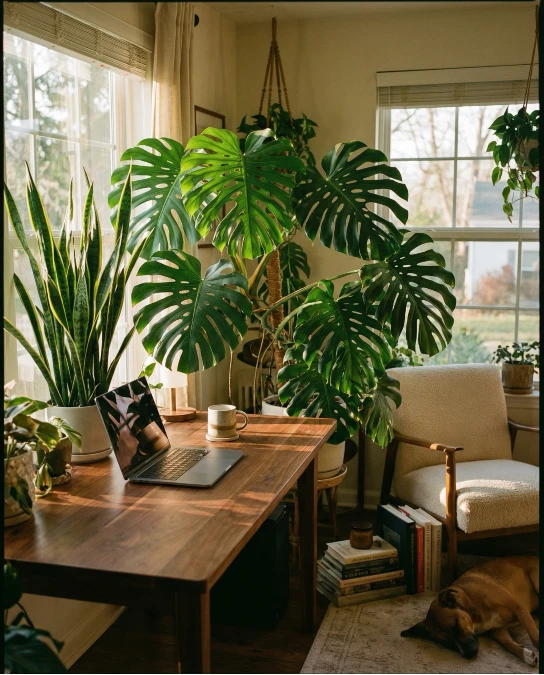
Golden window light filters through glossy monstera leaves and tall striped snake plants, casting soft shadows across the walnut desk. Hanging vines frame the upper corners, while a cream boucle chair, faded rug, and stacked books give the workspace a warm, lived-in feel.
Let one bold plant shape the room, then use smaller greenery to soften the edges.
This setup works well in spare bedrooms, enclosed porches, and home offices with windows on two walls. Place the largest plant behind or beside the desk rather than on the work surface.
Why This Works
Leaf Scale: Large monstera leaves create a strong natural focal point without needing extra wall decor.
Filtered Light: Sheer curtains soften direct sun while keeping the room bright enough for many common houseplants.
Warm Materials: Dark wood, creamy fabric, and a muted rug balance the fresh green tones and make the office feel grounded.
10. Spread Greenery Across a Bright Living Room
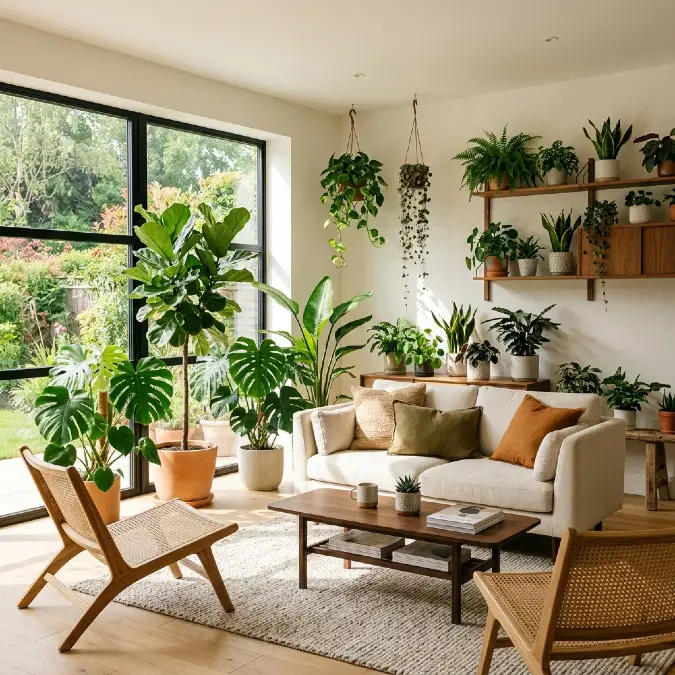
Large black-framed windows pull the garden view deep into this airy room. Fiddle leaf figs, monsteras, ferns, snake plants, and trailing vines rise from the floor, shelves, and ceiling, while pale wood, woven cane, and a cream sofa keep the space warm and light.
Distribute plants at three heights to create a lush room without blocking the floor plan.
This approach suits sunny living rooms, garden-facing extensions, and open apartments with strong natural light. Follow a floor wall ceiling formula: place broad-leaf plants near the windows, smaller pots across open shelving, and trailing vines above eye level.
11. Build a Biophilic Living Room With Earthy Texture
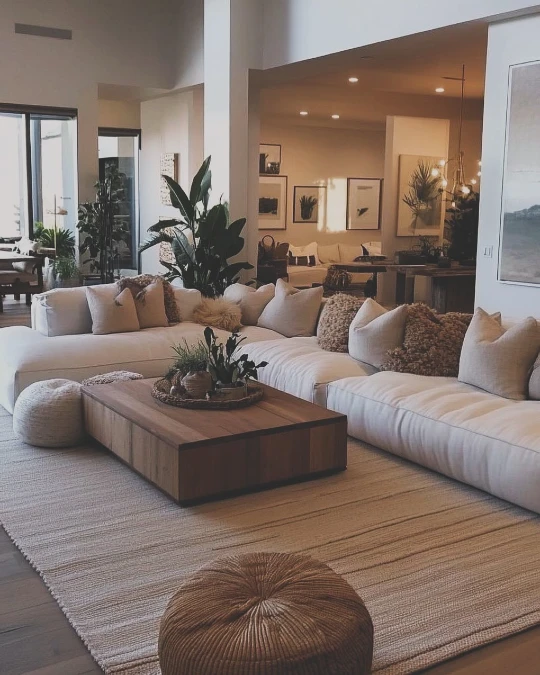
A long cream sectional curves around a low blocky wood table, creating a soft and grounded gathering zone. Woven rugs, nubby pillows, natural fibers, and leafy plants add depth to the quiet neutral palette.
Biophilic design can feel rich with only a few plants when wood grain and touchable texture carry the natural story.
This approach works well in large living rooms and open-plan homes where too much greenery could create visual clutter. Start with a warm white base, add one solid wood focal piece, then layer three textures such as boucle, wool, and woven fiber.
Why This Works
Low Furniture: The deep sectional and coffee table keep sightlines open across the large room.
Natural Texture: Wood, woven fibers, and plush fabrics bring in the warmth and variation found outdoors.
Focused Greenery: A small plant grouping adds life without competing with the calm neutral scheme.
12. Build a Living Wall With Stone and Moss
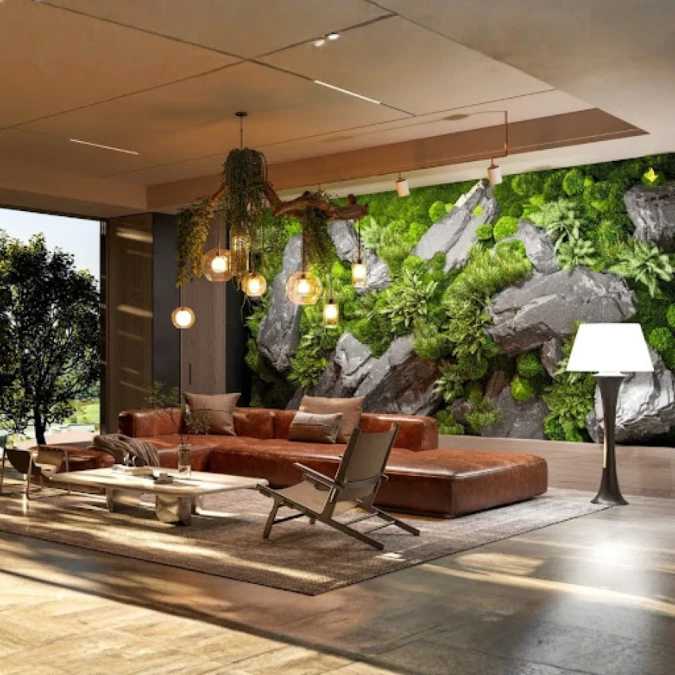
A full-height green wall blends thick moss, ferns, and dark slabs of stone into a rugged indoor landscape. The rust leather sectional adds warm contrast, while hanging globe lights cast a soft amber glow across the leaves and textured rock.
Mix living greenery with raw stone to create the depth and drama of a shaded forest wall.
This feature suits large living rooms, open-plan homes, and covered indoor-outdoor spaces with room for proper irrigation. Balance its strong texture with low furniture, clean flooring, and a restrained palette.
Why This Works
Natural Contrast: Soft moss and leafy plants break up the rough edges of the dark stone.
Earthy Color Balance: Rust brown leather adds warmth without competing with the rich green backdrop.
Focused Lighting: Small pendants and track lights highlight the wall’s depth while keeping the seating area cozy.
13. Blend Botanical Wallpaper With Real Greenery
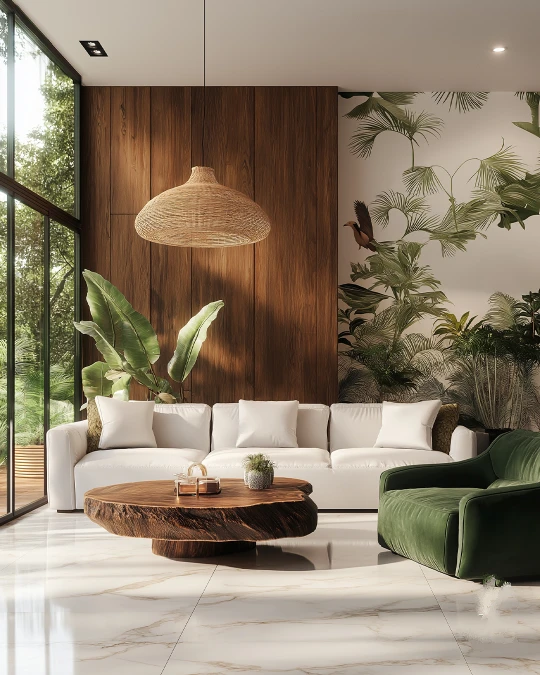
A leafy mural stretches across the wall behind the crisp white sofa, while tall tropical plants continue the pattern into the room. Dark wood panels, a raw-edge coffee table, and a woven pendant add warm texture.
Combine printed leaves with living plants to make a flat wall feel deeper and more immersive.
This idea works well in modern living rooms that need more nature without a dense plant collection. Use one botanical mural, two large floor plants, and one green upholstered piece. Keep the sofa and flooring light so the wood grain and leafy forms remain clear.
Quick Styling Tips
Budget version: Frame removable botanical wallpaper panels instead of covering the full wall.
Renter tip: Use peel-and-stick mural paper with a large potted plant placed along the edge to hide seams.
Pro move: Add warm directional lighting that grazes the wood wall and highlights the mural after sunset.
14. Open the Dining Room Straight Into the Garden
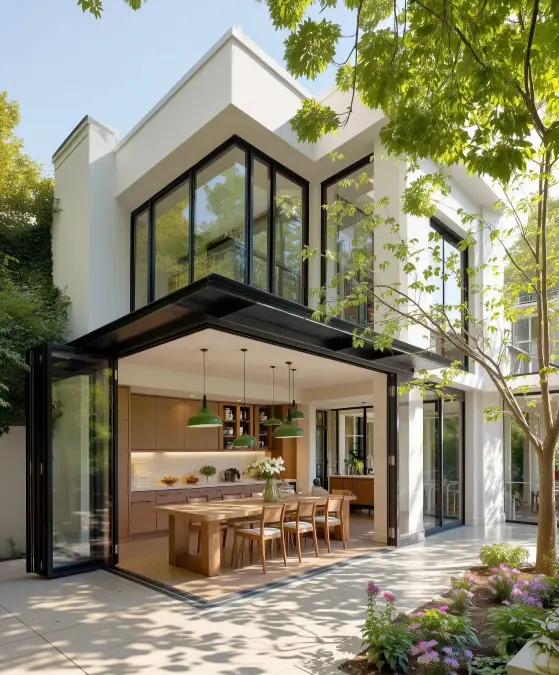
Wide folding glass doors erase the wall between this warm wood dining space and the leafy courtyard. Black window frames sharpen the clean white exterior, while green pendant lights echo the trees and flower beds outside.
A wide open threshold lets garden light color and movement become part of the room.
This idea works well for kitchen extensions, garden rooms, and dining areas that face a private yard. Use a three-part formula of full-height glazing, matching floor levels, and repeated colors on both sides of the doors.
15. Grow a Living Wall Above the Kitchen Counter
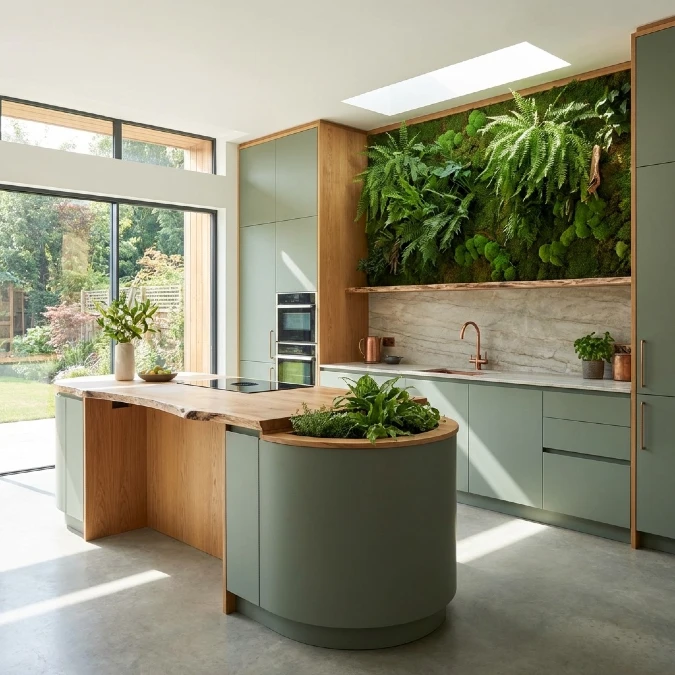
Soft sage cabinetry, warm oak trim, and a pale stone backsplash give this kitchen a calm, earthy base. Ferns and moss spread across the full wall above the sink, while a skylight pours crisp daylight onto the leaves, island, and smooth concrete floor.
Place greenery where daylight already gathers to make the kitchen feel fresh and deeply connected to the garden.
This works well in bright extensions and open kitchens with high ceilings. Frame the living wall with wood so it reads like a large natural artwork, then repeat its green tones through the cabinetry and island.
Why This Works
Living Focal Point: The moss and ferns turn an empty upper wall into the room’s strongest natural feature.
Layered Green Palette: Sage cabinets connect the bold greenery to the rest of the kitchen without copying it exactly.
Top Light: The skylight brightens the planting from above and creates soft leaf shadows across the stone surfaces.
16. Frame an Open Plan Home With Indoor Greenery
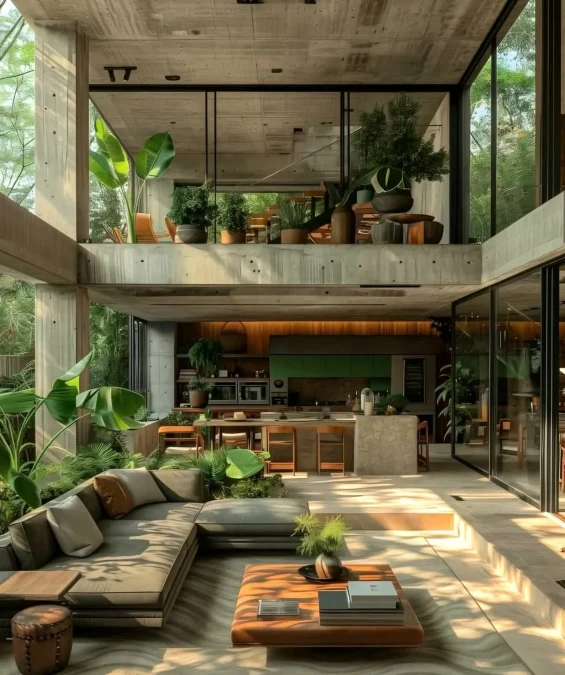
Raw concrete ceilings, black steel glazing, and warm wood furniture give this double-height home a grounded modern feel. Broad tropical leaves rise from built-in planting beds around the sunken lounge, while daylight filters through the surrounding trees and casts shifting shadows across the floor.
Use plants as part of the architecture so greenery guides the eye through every level.
This idea suits open-plan homes, loft-style interiors, and rooms with tall ceilings or large windows. Balance hard concrete with soft upholstery, rich timber, and broad-leaf plants placed near seating areas. Repeat greenery upstairs and downstairs to connect separate zones and make the full interior feel like one continuous landscape.
17. Open a Skylit Bathroom to a Private Garden
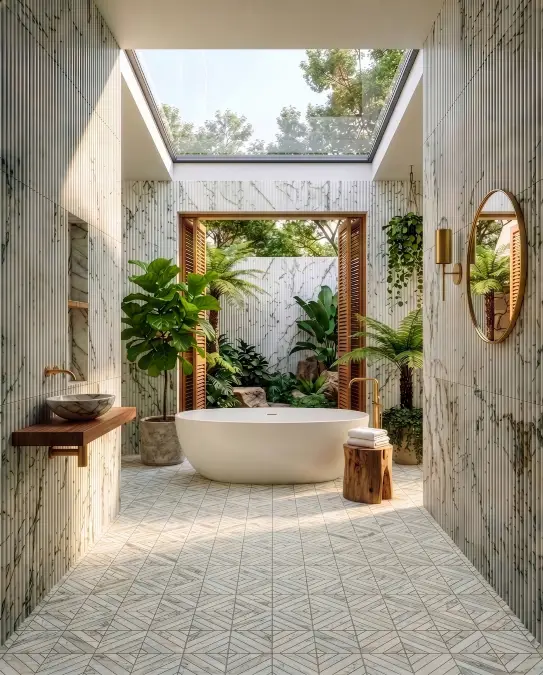
A broad skylight floods the marble-lined bathroom with clear daylight, while open timber shutters frame a dense tropical courtyard beyond the tub. Warm wood, brushed brass, leafy plants, and a raw stump stool soften the crisp stone surfaces and geometric floor pattern.
Frame the bathtub with sky above and greenery ahead to turn bathing into a full sensory retreat.
This approach suits private primary bathrooms, courtyard homes, and extensions protected from outside views. Use a four-part formula of pale stone, warm timber, aged brass, and broad-leaf greenery.
18. Create a Reading Nook Beside a Living Wall
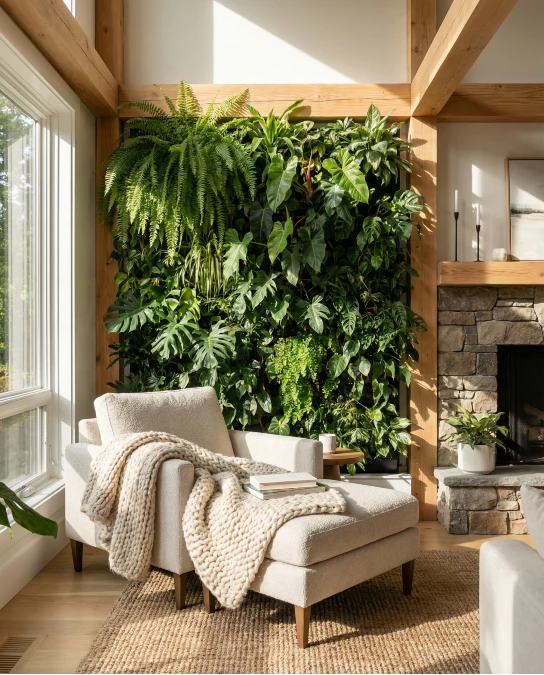
A dense wall of ferns, philodendrons, and broad tropical leaves rises behind a soft cream chaise. Sunlight pours through the tall window, catching the chunky knit throw, pale oak beams, woven rug, and rough stone fireplace.
Pair lush greenery with one deeply comfortable seat to create a quiet retreat that feels sheltered by nature.
This idea works well in living rooms, lofts, and bright corners that need a clear purpose. Frame the plant wall with warm timber, then balance its rich color with cream upholstery and light floors.
Quick Styling Tips
Budget version: Group several tall floor plants on a slim black shelf to mimic the depth of a planted wall.
Renter tip: Use freestanding plant panels or a tall open bookcase filled with trailing pots.
Pro move: Add low grow lights above the leaves so the wall stays healthy and softly lit after dark.
19. Floating Shelves Into a Plant Display
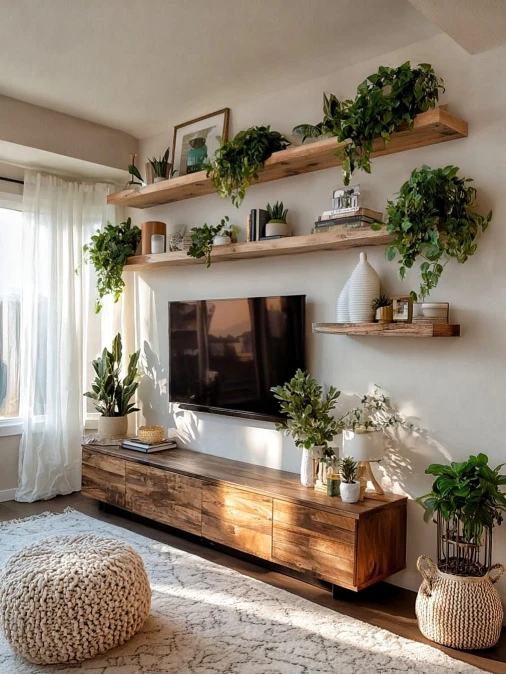
Long wood shelves stretch above the television, filled with trailing pothos, compact greenery, books, and soft ceramic accents. Sunlight filters through sheer curtains and catches the warm grain of the media cabinet, while a chunky knit pouf and woven basket add cozy texture below.
Use cascading plants to soften straight shelves and break up the hard outline of a television.
This setup suits apartments and small living rooms where floor space is limited. Follow a three-one formula on each shelf: three small decor pieces paired with one leafy plant.