
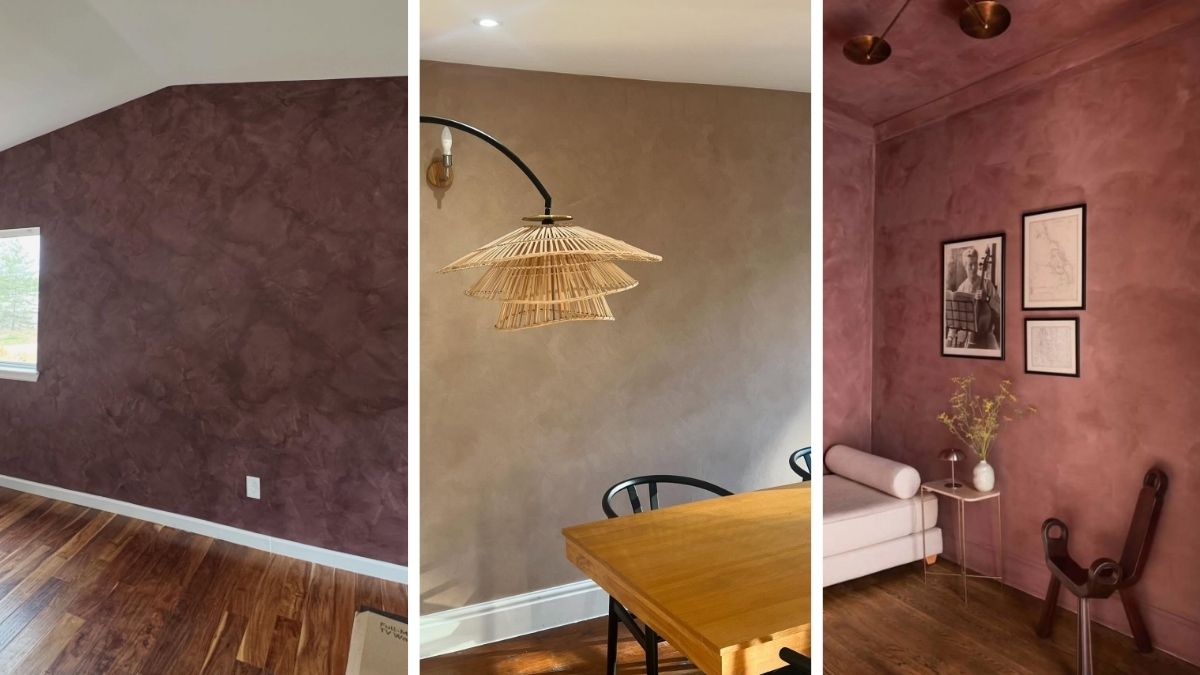
Most people assume a happy dog requires only a plastic crate shoved into a dark corner. That approach ignores your pup’s need for comfort while turning a perfectly good room into a cluttered mess. Your home deserves better than an eyesore that ruins your layout.
Functionality matters, but your pet’s resting place should reflect your personal design choices. You want a home that feels intentional, where every square inch serves a purpose without sacrificing style. A dedicated dog nook proves you care about design and your best friend simultaneously.
These eighteen concepts turn awkward gaps into stylish retreats tailored for your pet. Explore these creative layouts to find the best fit for your space and your pup.
1. Venetian Plaster Accent Wall with Warm Tonal Depth
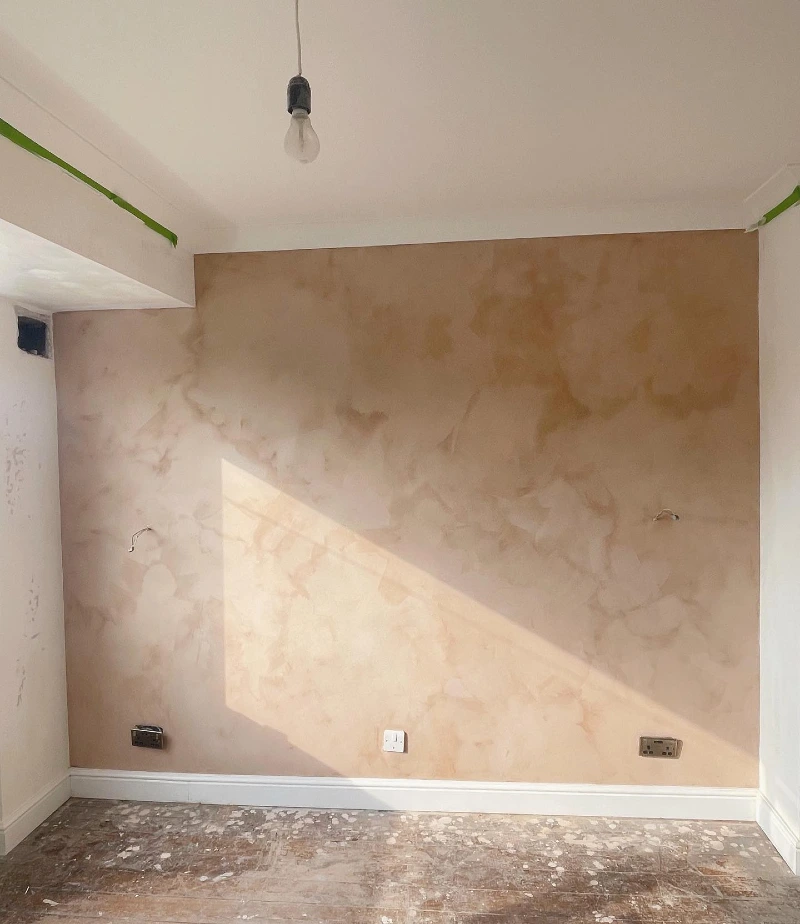
Space features a rich, textured wall finished in warm beige Venetian plaster, creating a sophisticated backdrop for a future dog nook. Soft, natural light streams across the mottled surface, highlighting the subtle variations in tone and matte finish.
A textured, neutral wall acts as a grounding canvas, allowing your pet’s bed and accessories to stand out without competing for attention.
Applying this technique requires patience, but the result adds incredible character to a small corner. By choosing a color palette that mimics earth tones, you create a sense of calm that invites your dog to settle in comfortably.
2. Limestone Fireplace Hearth with Ample Side Alcoves
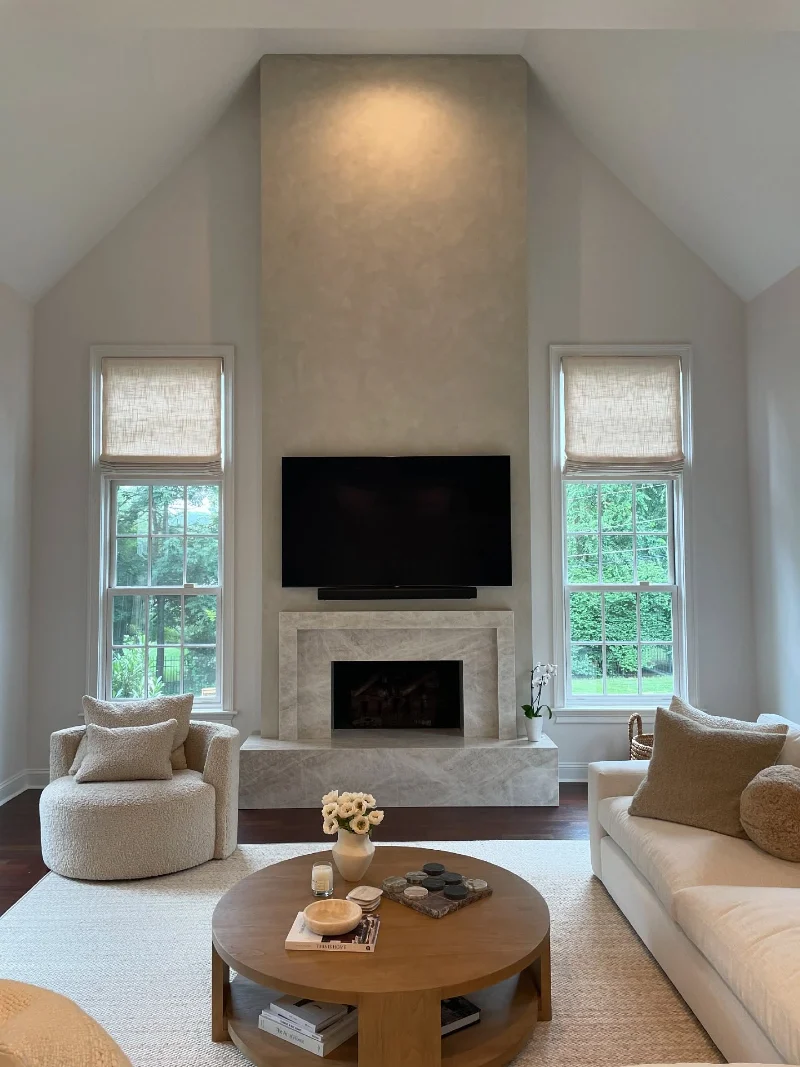
Expansive living room centers on a tall, marble-clad fireplace featuring clean lines and a soft, monochromatic palette. The space on either side of the raised stone hearth provides an organic opportunity to place a custom, built-in dog nook that echoes the home’s architectural scale.
Utilizing the unused floor area beside a large hearth creates a naturally cozy retreat for your pup that feels integrated into the home’s primary layout.
Think about extending the stone material or matching the surrounding cabinetry to ensure the dog’s spot looks like a planned feature. Providing a soft, plush bed tucked into these alcoves keeps the pet visible but out of the main traffic flow.
3. Floating Reclaimed Wood Bench with Sculptural Minimalism
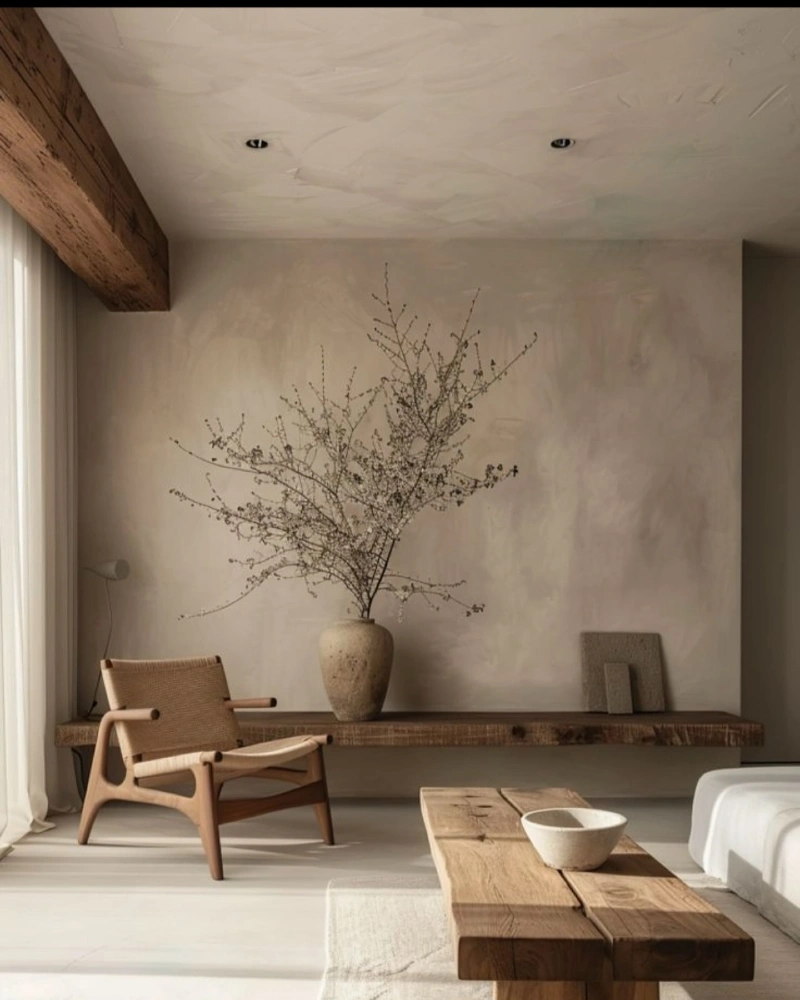
Serene space centers on a low, floating wooden bench set against a soft, hand-applied plaster wall. The arrangement emphasizes raw texture and organic shapes, providing a perfect, sturdy base that could easily accommodate a custom, built-in pet bed underneath.
A floating bench design offers an airy aesthetic while providing a practical, hidden floor area for your dog to rest comfortably.
This setup works because it maintains the room’s sense of openness while introducing a grounded, natural element. The contrast between the heavy wood and the light, neutral walls creates a sophisticated balance that feels both intentional and calm.
Why This Works
- Floating Construction: Removing legs from the bench makes the room feel larger and keeps the floor space clear for your pet.
- Material Cohesion: The use of warm, reclaimed wood ties the furniture together and introduces a necessary raw texture.
- Negative Space: Keeping the area beneath the bench simple allows it to function as a quiet nook without overwhelming the visual flow of the wall.
4. Sun-Drenched Niche with Earthy Plaster and Woven Textures
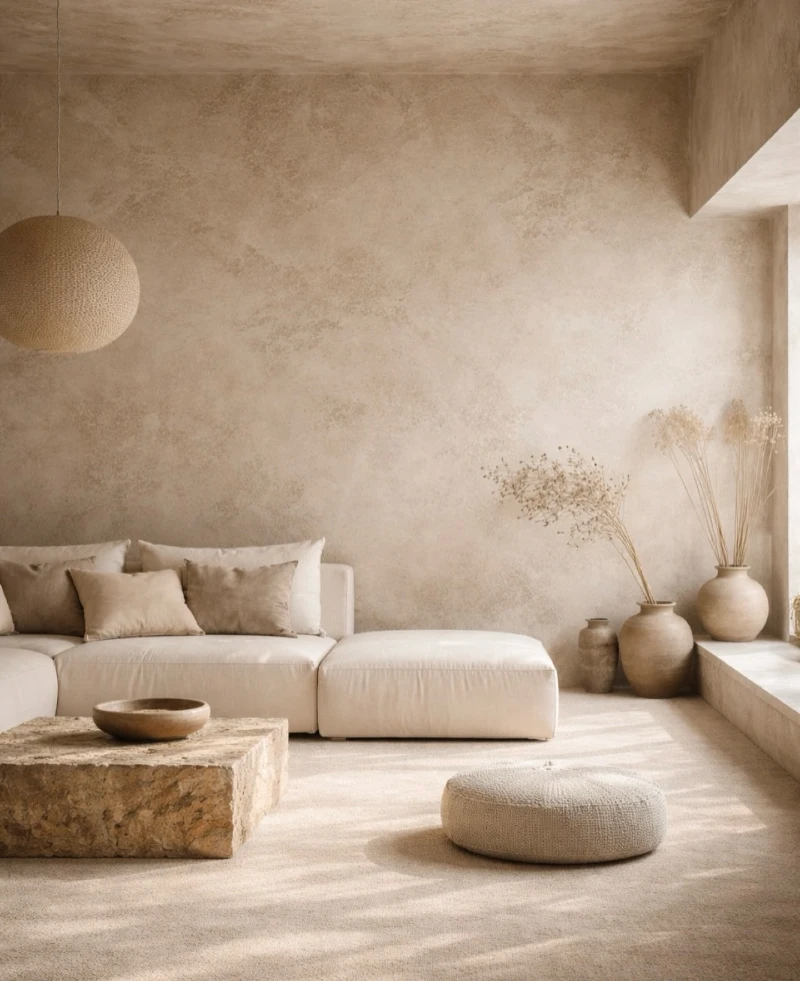
Tranquil living room corner utilizes a deep, plaster-finished wall and a raised ledge to create a serene, monochromatic environment. The space is anchored by warm, sand-toned textiles, a chunky stone coffee table, and oversized ceramic vessels that bring organic, grounded energy to the room.
Soft, neutral palettes combined with varied, tactile surfaces turn an empty corner into a peaceful, high-end sanctuary for your dog.
Replicating this look involves focusing on layered, natural materials that feel soft to the touch. You can easily carve out a cozy pet zone by placing a plush, tonal bed against the wall, allowing it to disappear into the room’s calm, earthy atmosphere.
5. Charcoal Venetian Plaster Focal Wall with Built-In Log Storage
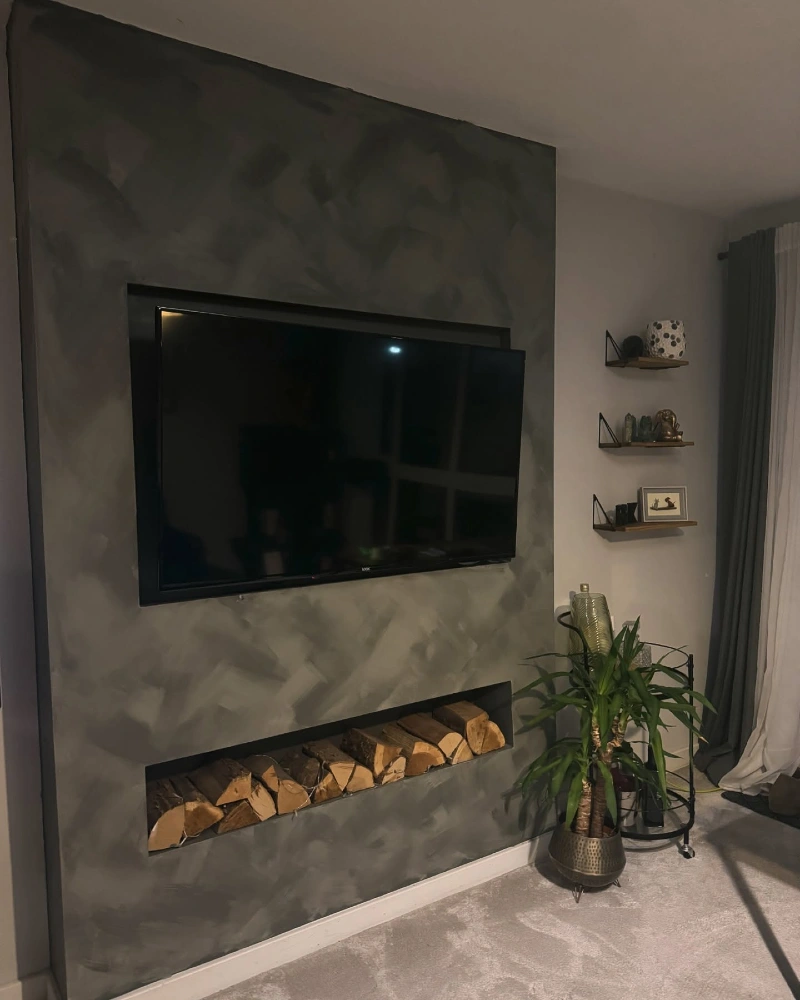
Moody living area centers on a dramatic charcoal wall finished with brushed Venetian plaster, creating a sophisticated backdrop for a mounted television. A horizontal recessed niche at the base stores firewood, grounding the dark wall with warmth and natural texture.
A dark, moody accent wall defines a specific zone in your room, making a pet bed placed beneath it feel intentional rather than haphazard.
Contrast is the key here; placing a light-colored, plush dog bed against the dark, textured plaster creates a striking visual pairing that highlights the comfort of the nook. You can soften the overall impact by adding a nearby floor plant to bridge the gap between the structured wall and the softer furniture elements.
Quick Decorating Tips
- Budget version: Use a dark, matte paint finish with a subtle sponge technique to mimic the look of expensive Venetian plaster at a fraction of the cost.
- Renter tip: Place a freestanding, dark-toned console or cabinet beneath the TV to anchor the space without needing to alter your walls permanently.
- Pro move: Install a small, integrated LED light strip inside the log niche to add a warm glow that illuminates the area near the floor where your dog sleeps.
6. Sage Green Plaster Accent with Walnut Console Table
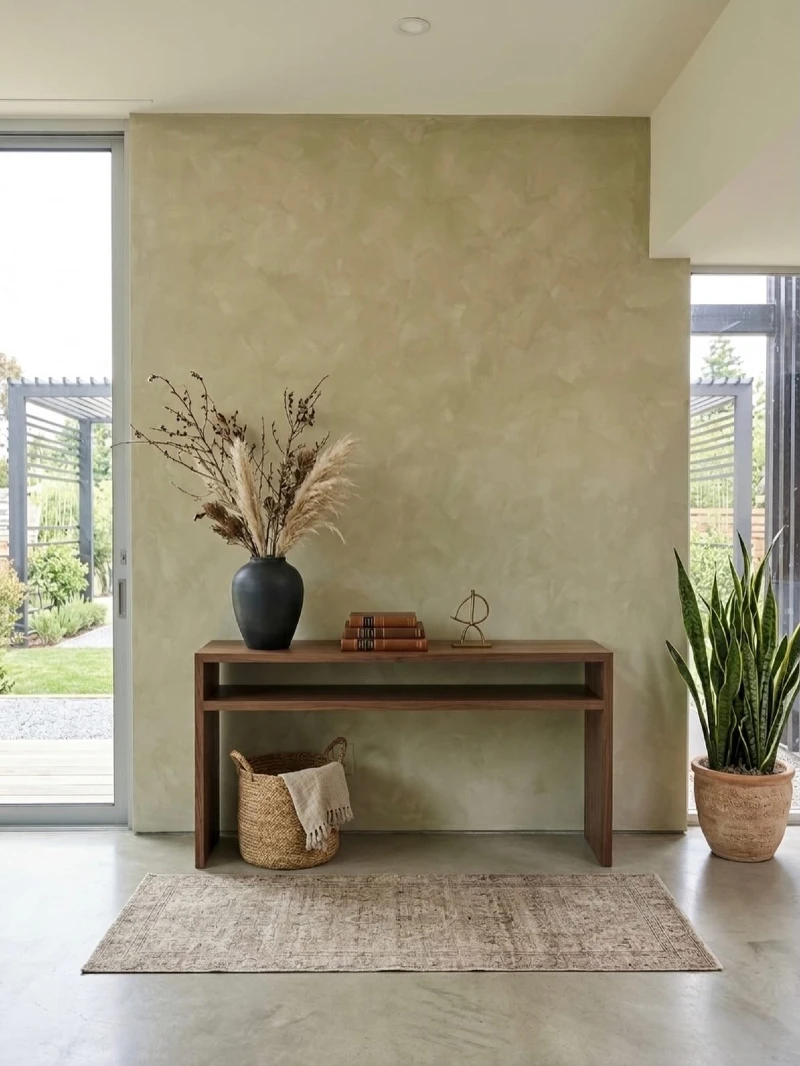
Light-filled space is anchored by a calming, sage-toned plaster wall that provides a soft, organic backdrop for a clean-lined walnut console table. The integration of natural textures like the woven basket, potted snake plant, and dried botanicals creates a balanced, grounded atmosphere perfect for a pet-focused zone.
Using a low-profile console creates a natural “roof” for a dog bed, turning an entry or living room wall into a dedicated, stylish sleeping quarters.
By sliding a plush, neutral-toned dog bed beneath this wooden table, you maintain the minimalist aesthetic of the room while offering your pup a snug, protected place to rest.
This layout is excellent for high-traffic areas because it keeps your pet’s bed tucked away from foot traffic while remaining a seamless part of your home’s overall design.
7. Wainscoting Panels with Soft, Dimensional Plaster Finish
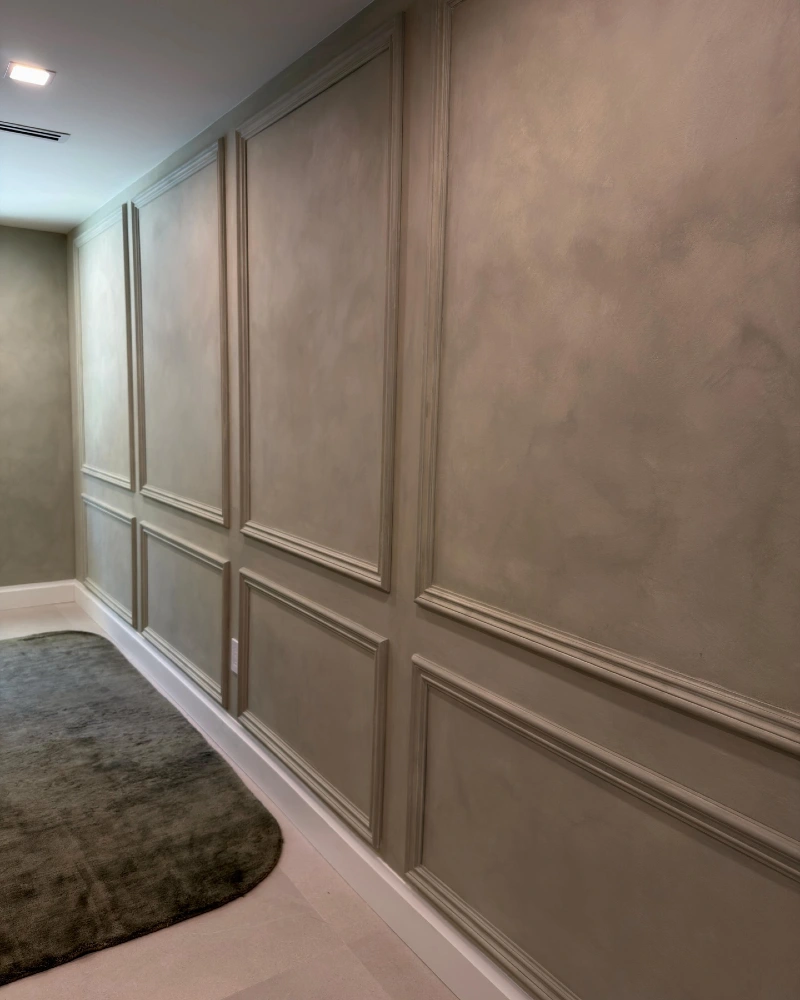
Wall features classic, elevated wainscoting panels finished in a muted, tonal plaster that creates subtle depth and visual interest. The soft, matte finish on the molding and the panels makes this a sophisticated setting for a dedicated pet corner.
Matching the color of a pet’s bed to the wall’s plaster finish ensures the nook feels like a deliberate architectural element rather than an afterthought.
You can lean into the formal nature of these panels by placing a low, custom dog bed within one of the lower sections, allowing the molding to frame the space. This approach maintains a sense of order and elegance in the room while providing your pup with a cozy, defined area of their own.
Why This Works
- Architectural Framing: The wainscoting creates natural boundaries, making a dog bed look like a built-in feature.
- Color Continuity: Using a monochrome palette across the wall and trim keeps the space feeling calm and intentional.
- Texture Contrast: The soft, mottled plaster adds a touch of organic warmth that prevents the formal paneling from feeling too stiff.
8. Low-Profile Sofa Against a Richly Toned Plaster Backdrop
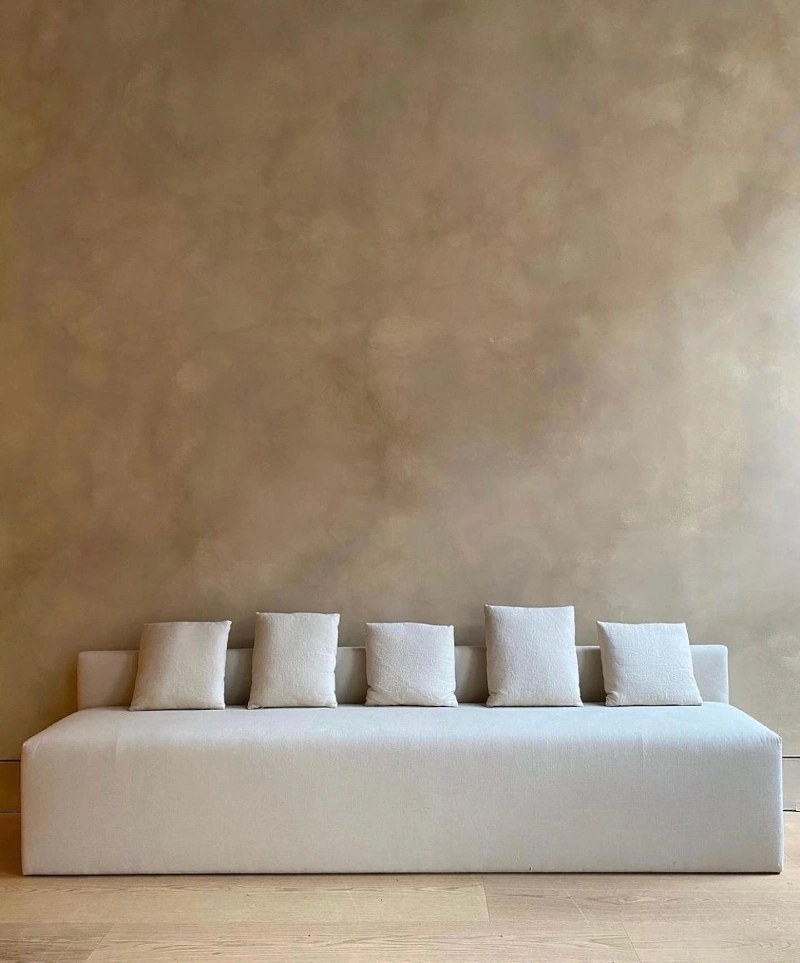
Space is anchored by a deep, warm-toned plaster wall that provides a grounding, earthy canvas. A long, minimalist sofa with a clean, low-profile silhouette sits flush against the wall, creating a serene and uncluttered look.
A low, clean-lined sofa acts as an extension of the architecture, leaving the floor space around it open for a dedicated, discreet pet retreat.
To integrate a dog nook here, consider placing a coordinating bed at the far end of the sofa, letting it nestle into the corner to maintain the room’s calm energy. This layout uses the sofa’s depth to hide the pet area from view while keeping your dog close to the seating zone.
9. Deep Plum Venetian Plaster Focal Wall
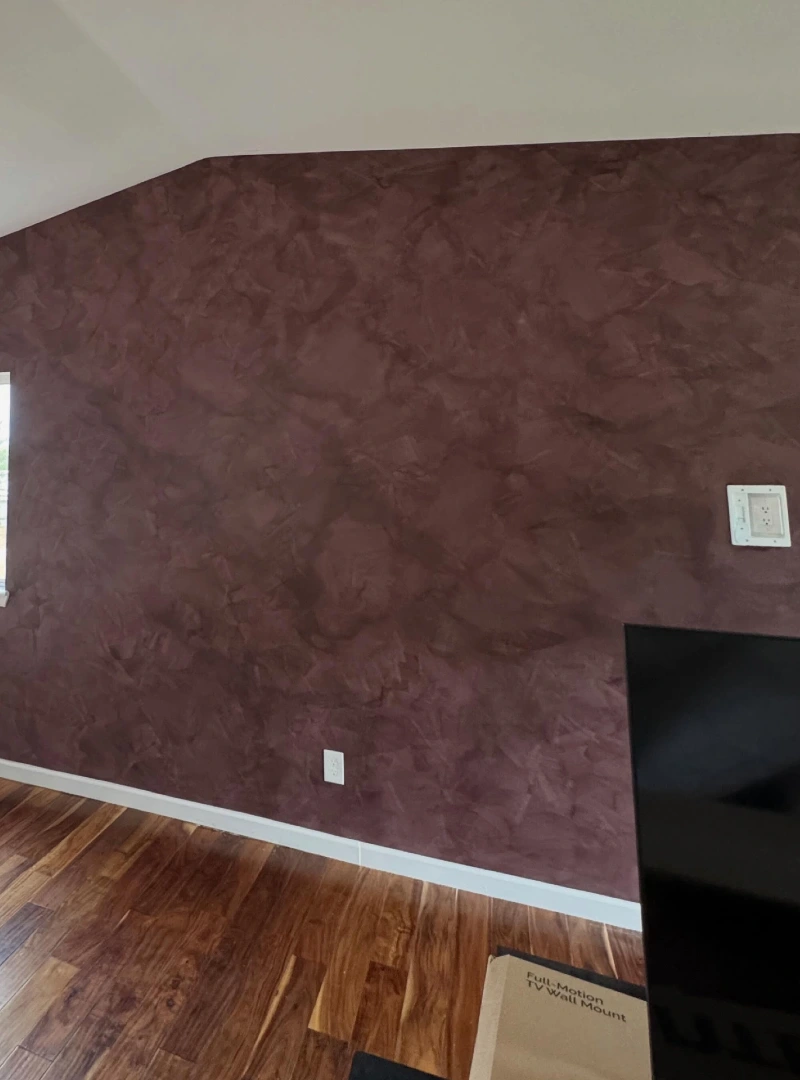
Bold accent wall features a dramatic, moody plum finish with textured plaster strokes that catch the light, adding depth to the open living space. The rich, dark color contrasts beautifully with the warm, honey-toned wood flooring, creating a sophisticated environment.
A high-contrast accent wall provides a natural boundary that defines your pet’s sleeping area as a separate, intentional zone within a larger room.
You can successfully integrate a dog nook by placing a light, neutral-toned bed against this dark wall to create a striking visual anchor.
This setup allows the bed to serve as a design element that feels tied to the room’s color palette while providing your dog with a cozy spot to rest away from main traffic paths.
Quick Decorating Tips
- Budget version: Achieve this moody effect by using a deep, matte paint with a subtle cross-hatch stippling technique instead of expensive plaster.
- Renter tip: Place a velvet dog bed in a shade that complements the plum wall to make the space feel curated without needing to touch the wall finish.
- Pro move: Add a small brass or gold floor lamp nearby to reflect light off the textured wall, highlighting the finish and adding warmth to your dog’s corner.
10. Blue Plaster Wall with Warm Walnut Console
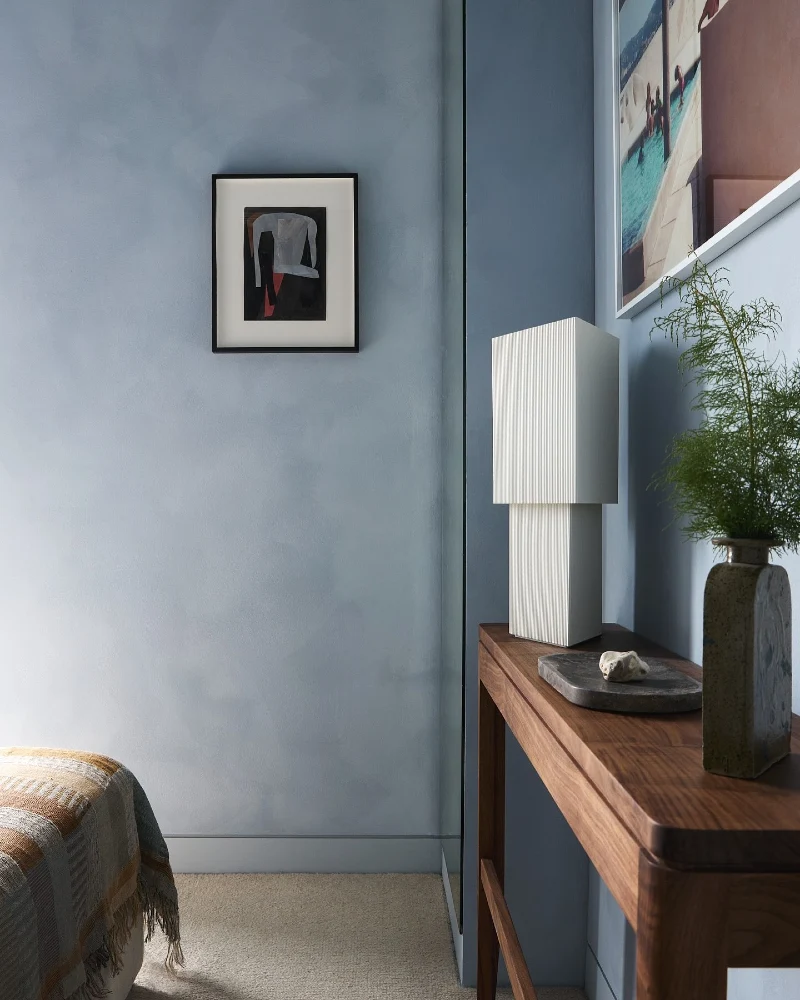
Bedroom corner features a calm, blue-toned plaster wall that creates a serene atmosphere. A slender walnut console table stands against the wall, topped with a sculptural white lamp and a small vase, offering a balanced mix of cool and warm tones.
Choosing a console table for your dog’s nook creates a dedicated “ceiling” for their bed, helping them feel protected and cozy while keeping the furniture piece functional.
By sliding a plush dog bed underneath this console, you can easily turn an unused wall area into a stylish, low-profile pet sanctuary. This approach is effective because it integrates your pet’s essentials into the room’s existing layout without disrupting the minimalist design logic.
11. Sculptural Bouclé Chair with Warm Terracotta Wall
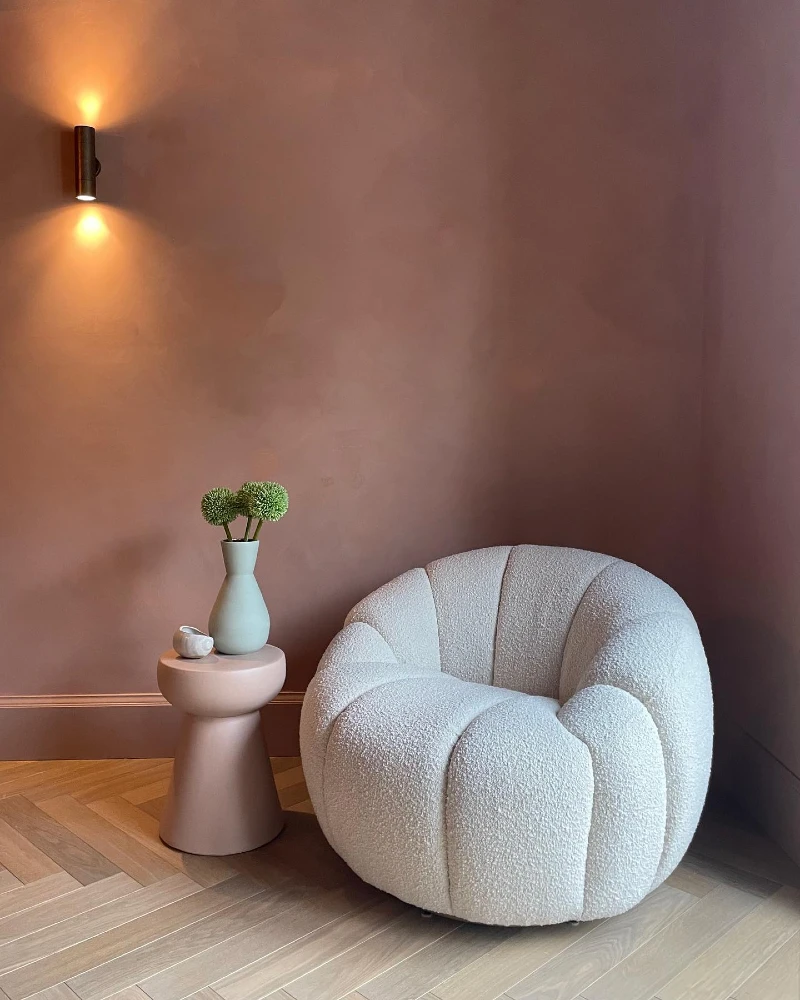
This serene corner is defined by a deep terracotta plaster wall, creating a cozy and grounded backdrop for a plush, cream-colored bouclé chair. A small, pedestal-style side table holds a simple vase, while a warm wall-mounted sconce casts a soft, inviting glow over the entire setup.
A deeply textured accent wall turns a single lounge chair into a cozy, intentional sanctuary that feels distinct from the rest of the room.
To create a pup-friendly version of this nook, swap the accent chair for a low-profile, circular dog bed in a matching plush material. The wall sconce remains a vital design element here, providing focused, warm lighting that highlights the nook and makes it feel like a truly special retreat for your pet.
Why This Works
- Color Harmony: The contrast between the warm terracotta wall and the neutral, textured fabric creates a sophisticated, balanced palette.
- Lighting Focus: A dedicated wall light draws the eye and defines the space as a relaxing zone, perfect for a pet to settle into.
- Textural Layering: Combining the matte finish of the plaster with the soft, nubby bouclé fabric adds necessary depth to a small corner.
12. Arched Plaster Wall Niches with Deep Green Drapes
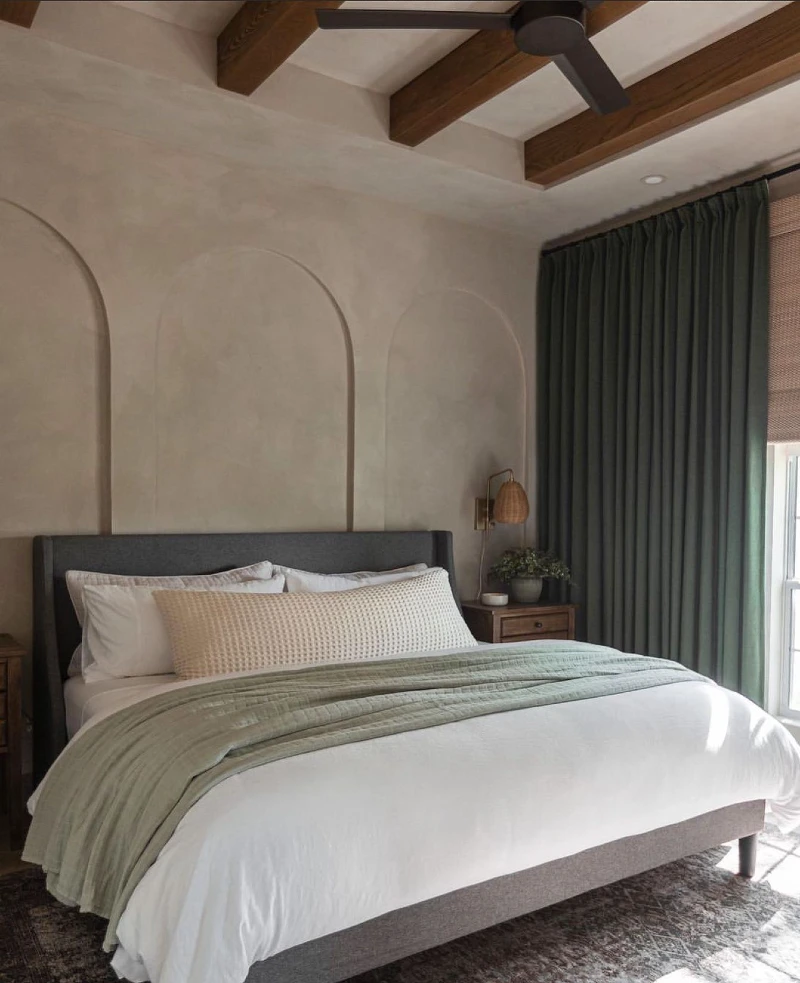
Bedroom is defined by a serene, neutral plaster wall featuring recessed, arched architectural details that add a sophisticated, built-in feel. The warmth of the plaster is balanced by rich, forest-green floor-to-ceiling curtains and dark exposed ceiling beams, creating a layered, tranquil sanctuary.
Architectural arches offer a natural, defined frame that elevates a simple pet bed into a permanent, intentional part of your bedroom’s layout.
Because this wall features such strong vertical interest, you can place a low, understated dog bed in front of one of the arches to mirror the space’s sense of order.
Green color palette from the drapes and bedding provides a perfect tonal guide for selecting a dog bed that feels cohesive with the rest of the room’s decor.
13. Layered Rattan Pendant with Warm Earthy Plaster
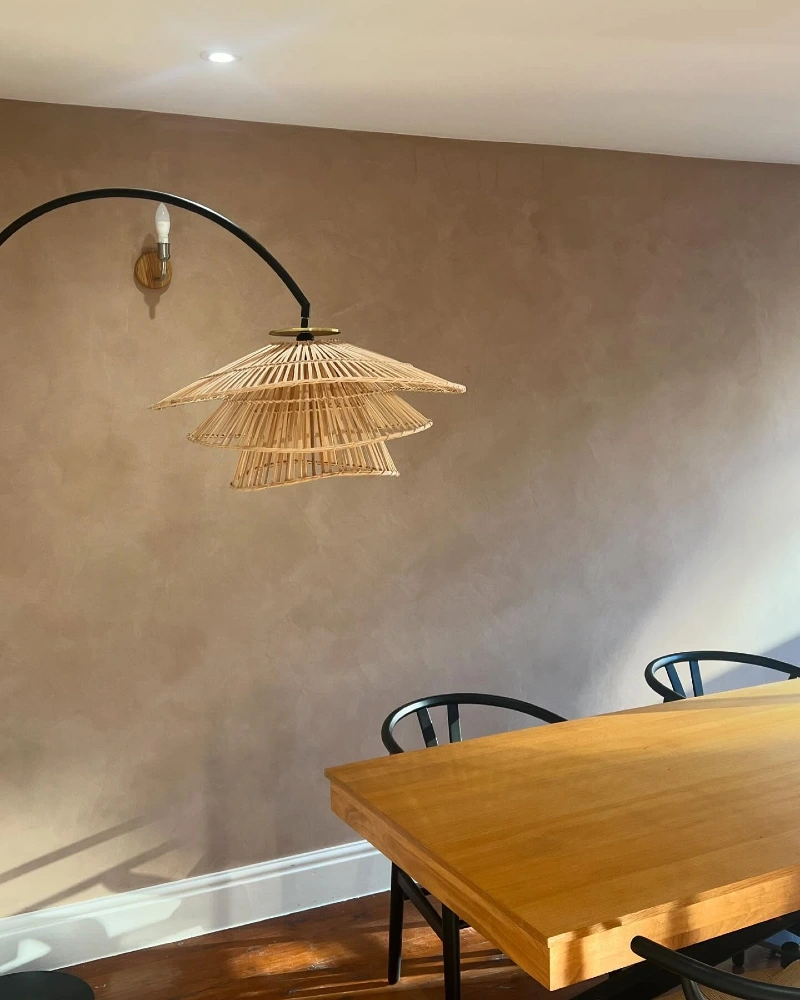
Dining area features a warm, mocha-toned plaster wall that provides a grounding backdrop for a striking, tiered rattan pendant lamp. The natural, woven texture of the light fixture adds an organic element that complements the solid wood dining table and matte black chairs.
A statement pendant light creates a defined visual “zone,” making the floor space beneath it the logical and most stylish place for a dog nook.
Placing your pet’s bed directly under or near a hanging feature like this anchors their spot within the room’s layout, giving them a cozy place to settle while you dine. Choose a bed with a similar woven or neutral fabric to echo the natural textures of the lamp and maintain the cohesive, earthy design of the space.
14. Architectural Recessed Alcove with Matte Plaster Finish
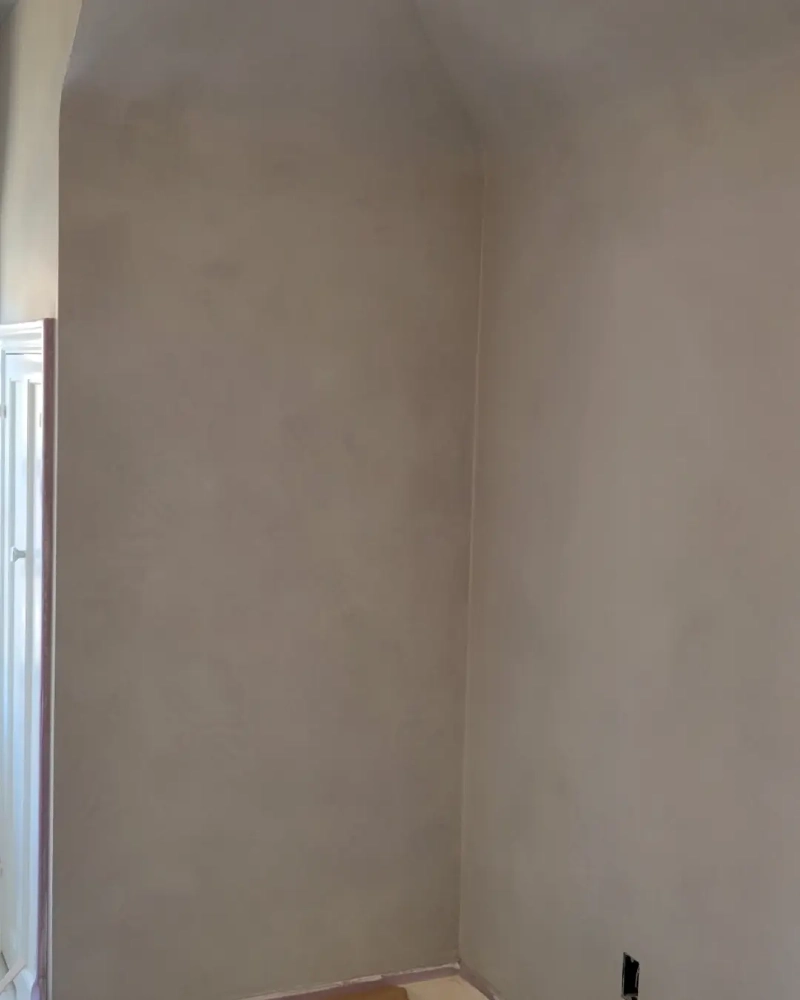
Dedicated, arched nook features smooth, matte plaster walls that create a quiet and secluded atmosphere. The soft, neutral tones and curved ceiling lines provide a naturally protective, den-like environment that is inherently calming.
A structural alcove is the most functional space for a pet nook because it provides a clear, pre-defined boundary that keeps your dog’s bed out of main foot traffic paths.
You can maximize this area by adding a custom, floor-hugging cushion that fits the arch perfectly, turning the entire footprint into a sprawling resting spot for your pup.
The simple, clean aesthetic of the plaster walls means you have total freedom to layer in textiles, such as a chunky, woven wool blanket or a soft, faux-fur rug, to make the space feel extra comfortable without cluttering the architectural lines.
15. Olive Green Plaster Nook with Soft Textiles
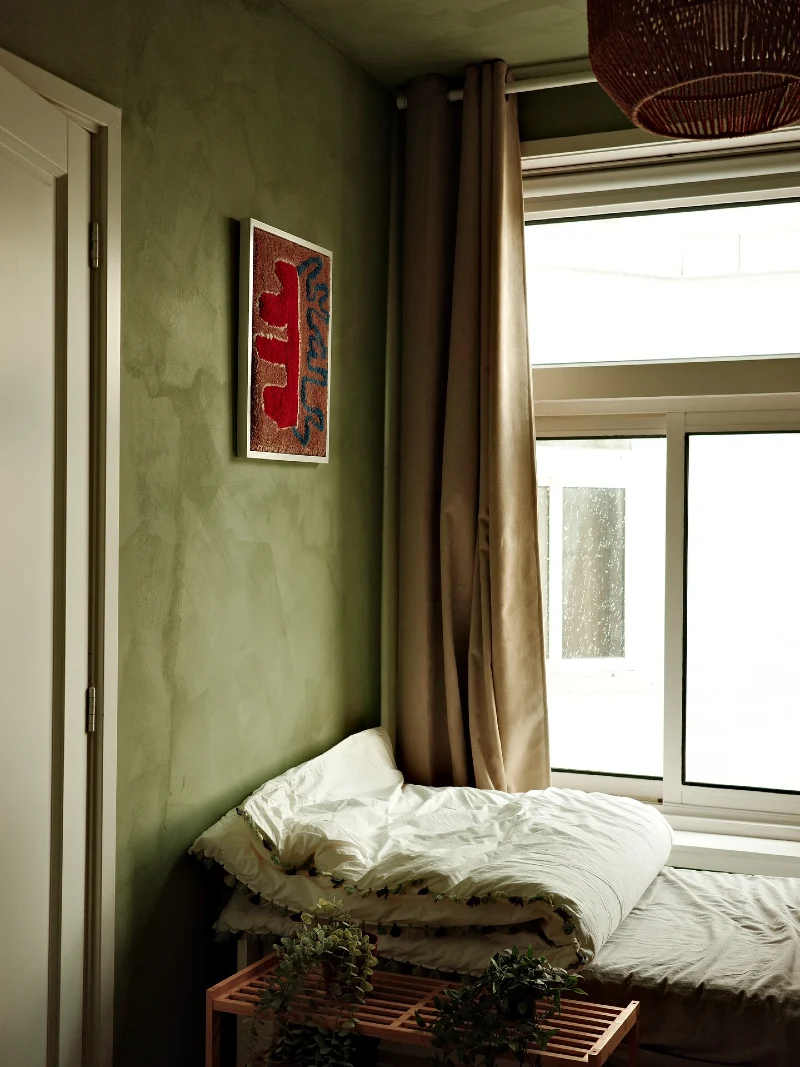
cozy corner features deep olive green plaster walls, providing a rich and calming backdrop that feels grounded. A plush, white layered bedding setup sits next to a large window, while a small wooden slatted bench topped with trailing greenery adds organic, tactile interest.
A dedicated, low-profile sleeping area integrated into a window-side corner creates the ultimate, sun-drenched retreat for your pup.
To replicate this for your dog, place a soft, overstuffed bed directly where the bedding is currently located, letting the natural light from the window keep the spot warm and inviting.
Using a mix of layered, washable textiles keeps the nook comfortable and easy to maintain, ensuring your pet’s area remains a stylish extension of your room’s decor.
Quick Decorating Tips
- Budget version: Use a matte, deep olive paint instead of plaster to achieve the same moody, sophisticated color profile for less.
- Renter tip: Utilize a low, freestanding wooden bench as a focal point to anchor your pet’s bed and define the nook without any permanent installations.
- Pro move: Add a small piece of vibrant, abstract wall art in a contrasting color to break up the dark wall and add a playful, custom touch to your dog’s space.
16. Peach-Toned Plaster Wall with Velvet Settee
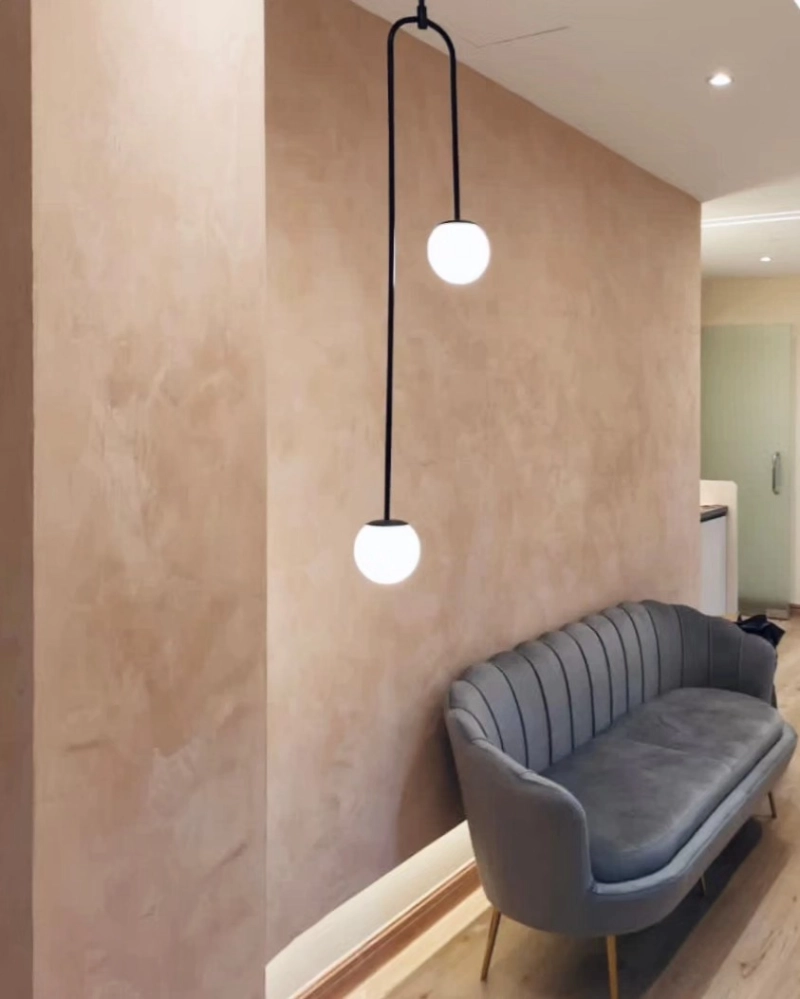
This space features a soft, warm-toned plaster wall that provides a gentle, textured backdrop for a channeled gray velvet settee. A unique, sculptural pendant light with dual glowing orbs adds a modern, artistic touch, while the warm color palette makes the entire corner feel inviting and snug.
Placing a pet bed against a textured wall creates a defined, cozy retreat that feels like a deliberate design choice rather than an afterthought.
To adapt this for a dog, you can tuck a plush, neutral-colored bed into the corner near the settee, allowing the soft plaster to act as a warm, protective boundary.
This arrangement is particularly effective because it uses the settee as a visual anchor, keeping the dog’s area tucked away from high-traffic zones while ensuring they remain part of the room’s atmosphere.
17. Matte Earth-Toned Wall with Sculptural Gray Seating
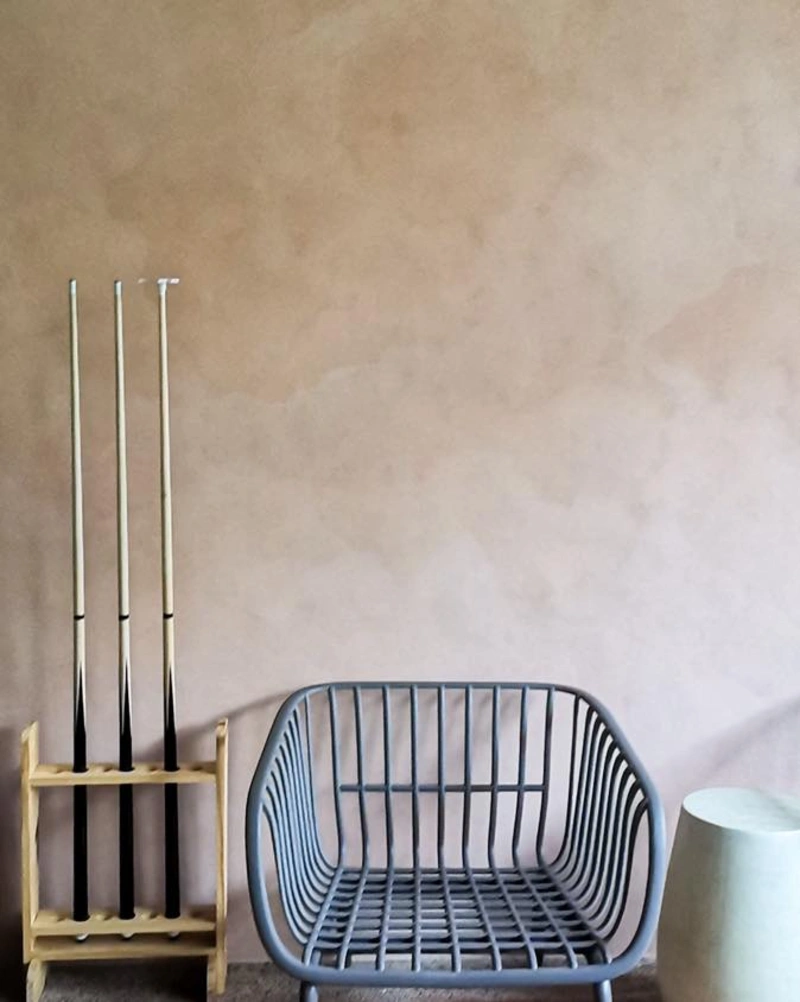
Muted, earth-toned plaster wall provides a calm, textured backdrop for this minimalist corner. A gray slatted chair and a simple wooden rack create an organized, clean-lined display that feels both functional and intentional.
Using a matte, textured wall finish grounds an otherwise open corner, transforming it into a distinct and stylish zone for your pet.
To create a pup-focused retreat here, you can place a low, soft dog bed directly where the chair sits, allowing the textured wall to frame their space.
This approach keeps the pet area feeling like a deliberate part of your home’s decor rather than a random addition, maintaining the room’s cohesive and uncluttered aesthetic.