
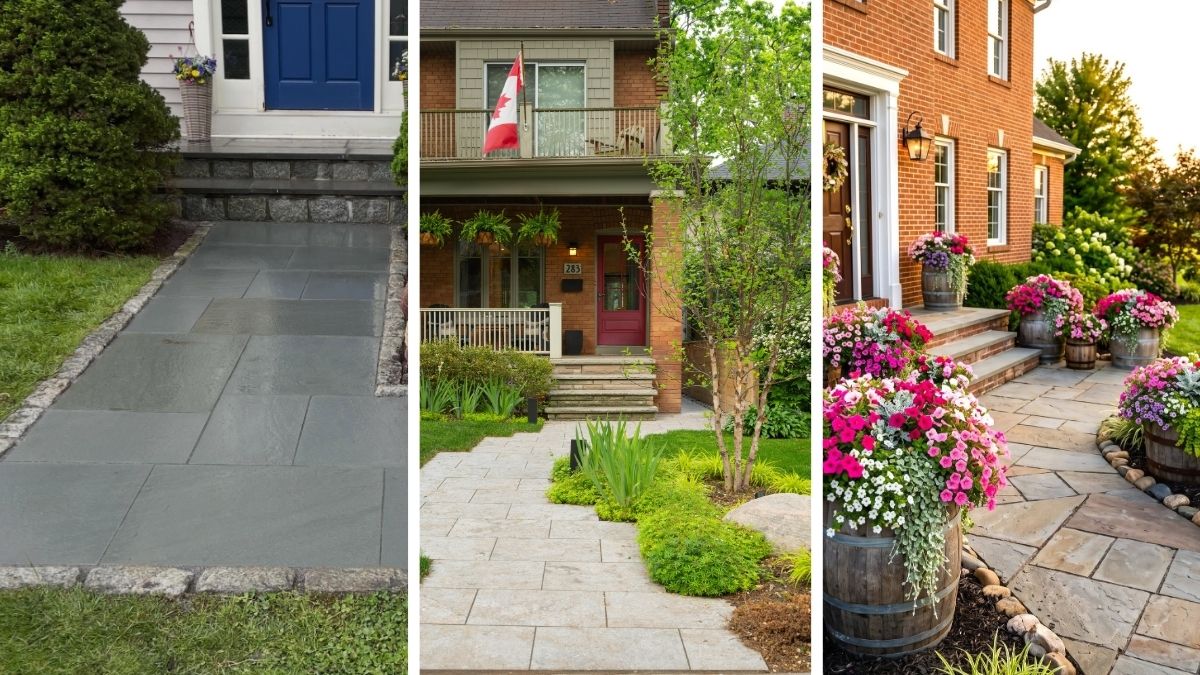
Most front yards fall flat before anyone even reaches the front door. An uninspired walkway can make fresh landscaping feel disconnected and leave your home’s entrance without a clear sense of direction. Small details like the path shape, edging, and materials often have a bigger effect than expensive plants or décor.
That first walk to your door quietly shapes every visitor’s impression. A thoughtfully planned pathway adds warmth, guides the eye, and helps the whole front yard feel welcoming instead of unfinished.
These front yard walkway ideas show practical ways to create a path that feels inviting, polished, and full of character. From natural stone to modern pavers and charming garden borders, each idea offers inspiration worth seeing.
Creating a Welcoming Entrance: Path Details That Make Every Step Count
A front walkway should feel like it belongs to both the house and the landscape. Matching the path material to your home’s architecture creates a stronger first impression, while gentle curves or clean straight lines influence how the space feels as you approach.
Think beyond the paving itself. Lighting, edging, and layered planting soften hard surfaces and help the walkway become part of the overall landscape instead of feeling like a strip laid across the lawn.
- Path Material: Choose stone, brick, pavers, or gravel that complements your home’s exterior.
- Lighting: Low path lights improve safety while adding a warm evening glow.
- Plant Layering: Border the walkway with low shrubs, grasses, or seasonal flowers to soften the edges.
- Scale: Keep the path wide enough for comfortable walking and proportionate to the size of your front yard.
1. Large Concrete Stepping Slabs with Dark Gravel Borders
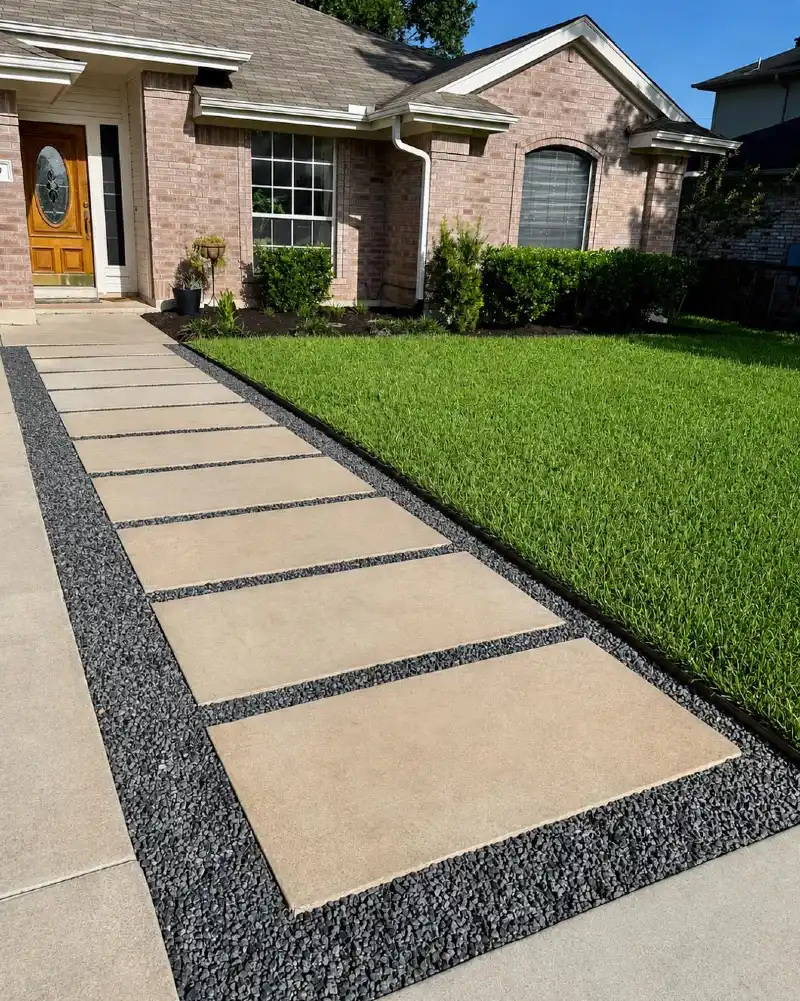
A clean walkway of oversized rectangular concrete slabs creates a strong path from the lawn to the front entrance. The warm beige tones of the pavers pair with the dark crushed gravel edges, while the straight layout adds a crisp, modern feel against the green grass and brick exterior.
Large slabs make a simple path feel architectural and intentional.
This design works because the contrast between smooth concrete and textured gravel adds depth without needing extra decoration. Using repeating shapes and clear borders helps guide movement while keeping the front yard neat and easy to maintain. Mixed materials like pavers and gravel are often used together to create structured yet welcoming walkway designs.
2. Curved Stone Walkway Framed by Lush Flower Beds and Layered Greenery
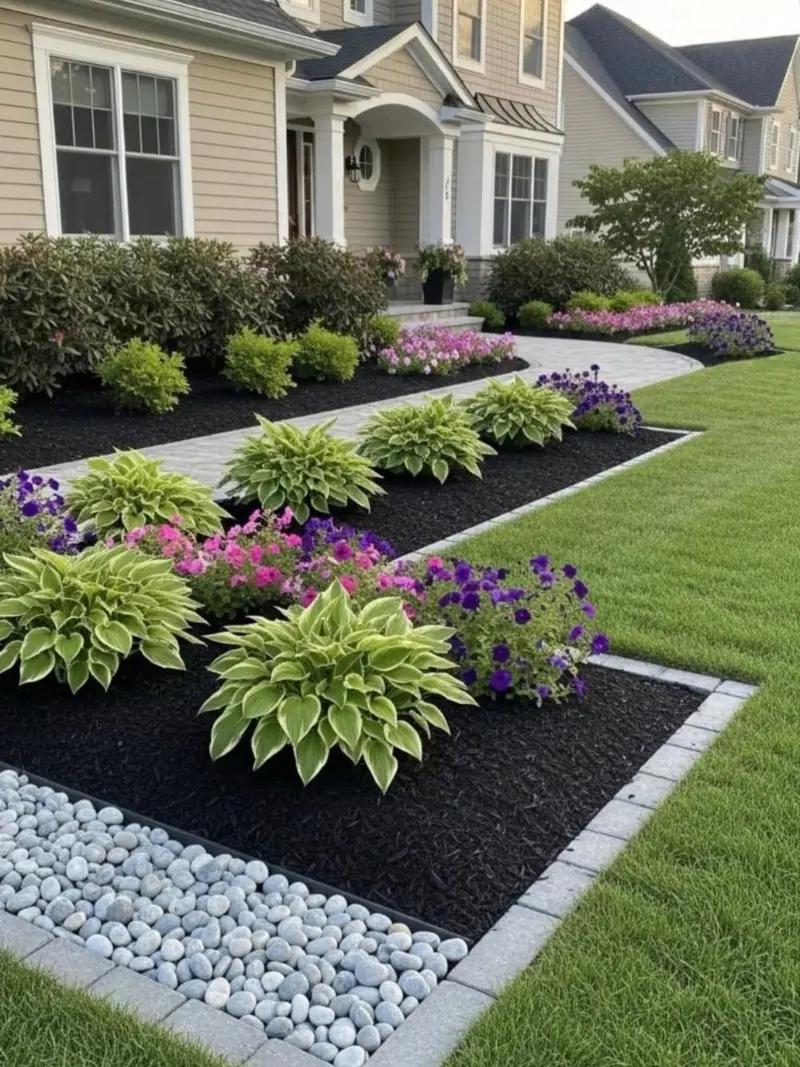
Gently curving gray stone walkway winds through a front yard filled with layered planting beds, bright hostas, and clusters of purple and pink flowers. The dark mulch creates a rich backdrop for the foliage, while the light paver border keeps the path defined against the lawn.
A walkway feels more inviting when plants soften every edge.
This design works because the curved route slows the journey and creates a garden-like arrival experience instead of a straight path to the door. Mixing leafy textures, colorful blooms, and structured edging helps the walkway feel connected to the surrounding landscape. Thoughtful path shapes and material choices can add both function and visual interest to a front yard entrance.
3. Curved Gray Paver Walkway with River Rock Border and Garden Canopy
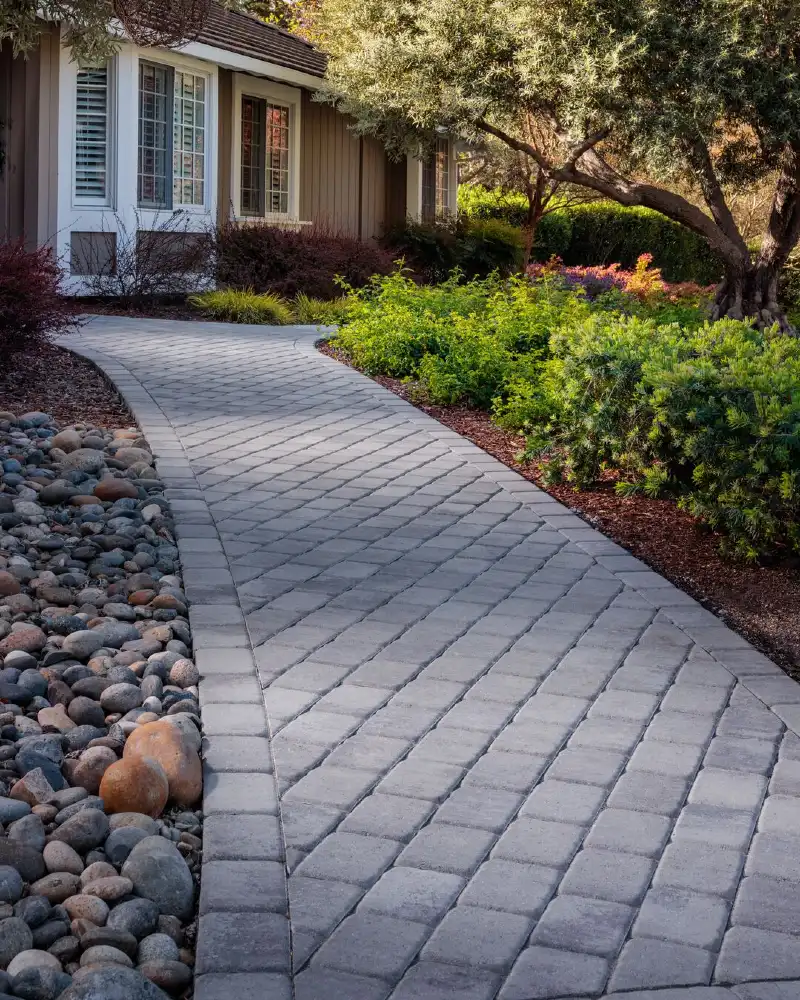
Graceful curved walkway made from small gray pavers leads through a shaded front yard filled with mature greenery. The soft curve follows the landscape naturally, while smooth river rocks along the edge add a raw texture that contrasts with the structured stone path.
A curved path invites people to slow down and enjoy the journey home.
This design works because the walkway feels connected to the surrounding plants instead of cutting through them. The repeating paver pattern creates movement, while the organic stone border adds balance between hard surfaces and natural elements. Curved paths are often used in landscapes to create a more relaxed arrival experience and blend the walkway with garden spaces.
Why This Works
- Curved Layout: The gentle bend creates a more natural flow and makes the entrance feel less rigid.
- Material Contrast: Smooth pavers paired with rounded river rocks add layers of texture.
- Plant Integration: Surrounding shrubs and trees soften the hardscape and connect it with nature.
4. Dark Border Paver Walkway with Raised Entry Steps and Clean Lines
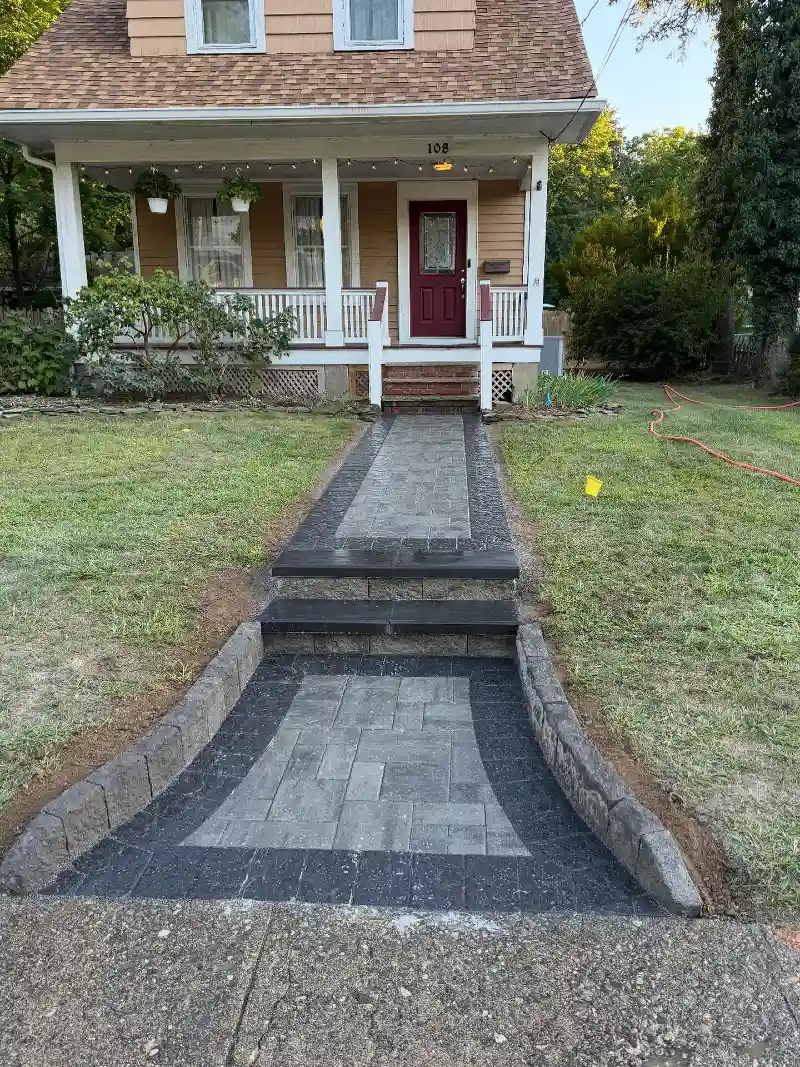
Structured walkway uses charcoal and gray pavers to create a strong approach toward this classic front porch. The dark outer border frames the lighter center pattern, while the raised steps add depth and help define the transition from yard to entrance.
A bold border can turn a basic walkway into a designed feature.
This look works because the contrasting paver colors create direction and visual rhythm without adding extra decorations. The clean rectangular layout feels organized, while the side edging keeps the path contained and polished. Mixing paver tones and patterns is a common way to add character to outdoor walkways while keeping the design cohesive.
5. Modern Gray Paver Entry Walkway with Black Border Framing
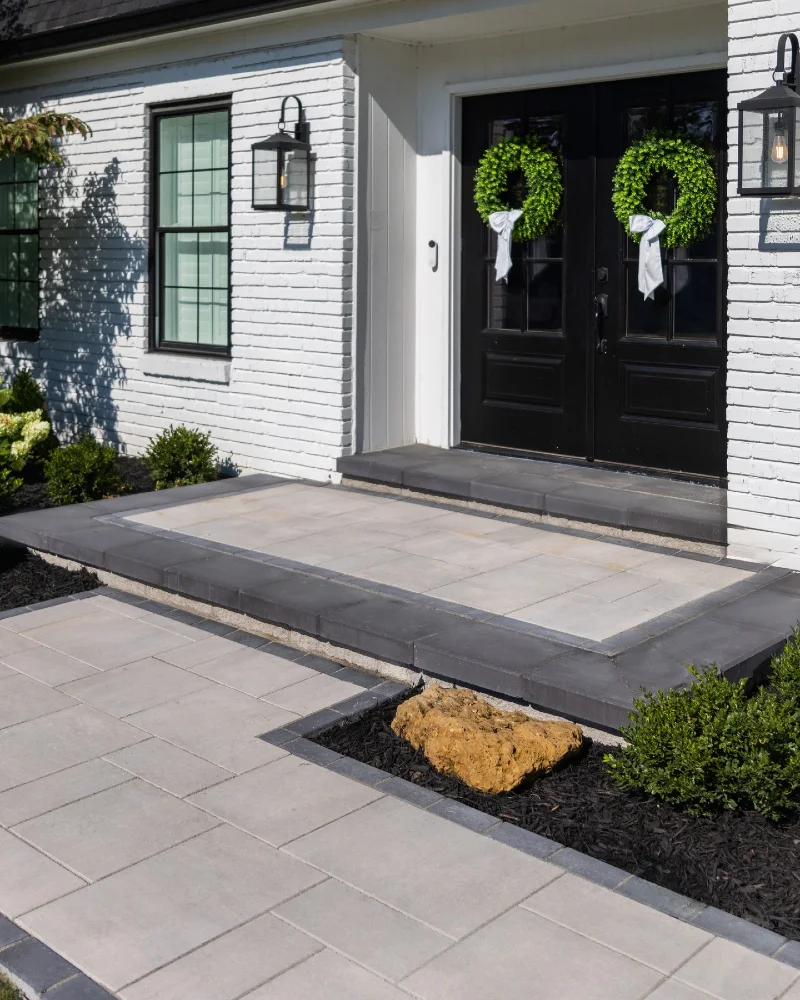
Sleek front walkway uses large gray pavers arranged in a clean pattern to create a strong approach toward the dark front door. The charcoal edging outlines the path and landing area, while the white brick exterior and black accents create a crisp modern contrast.
A strong border gives a simple walkway a custom-built feel.
This design works because the limited color palette keeps the entrance calm and organized. The dark trim adds structure, while the wide paver layout creates a spacious feel that suits the home’s modern farmhouse character. Using contrasting borders around pavers is a common way to add definition and visual interest to walkway designs.
6. Irregular Flagstone Pathway Surrounded by Colorful Cottage Garden Beds

Natural stone walkway curves gently toward the front porch, using large blue-gray flagstones with soft tan joints between each piece. Bright flower borders, leafy plants, and small pathway lanterns create a warm garden entrance filled with color and texture.
Natural stone feels more welcoming when surrounded by living layers.
This design works because the uneven stone shapes create a relaxed rhythm that feels connected to the landscape. The colorful plantings soften the hard surface, while the warm lighting adds charm after sunset. Flagstone paths are often used in garden designs because their varied textures and tones bring a more organic feel to outdoor spaces.
Quick Decorating Tips
- Budget version: Use smaller natural stones or concrete alternatives with similar tones to create the same garden-path feeling.
- Renter tip: Add movable solar lights and container flowers beside an existing walkway for a softer look.
- Pro move: Layer plants at different heights so the path feels surrounded rather than placed on top of the lawn.
7. Straight Concrete Walkway with Gravel Side Borders and Modern Path Lights
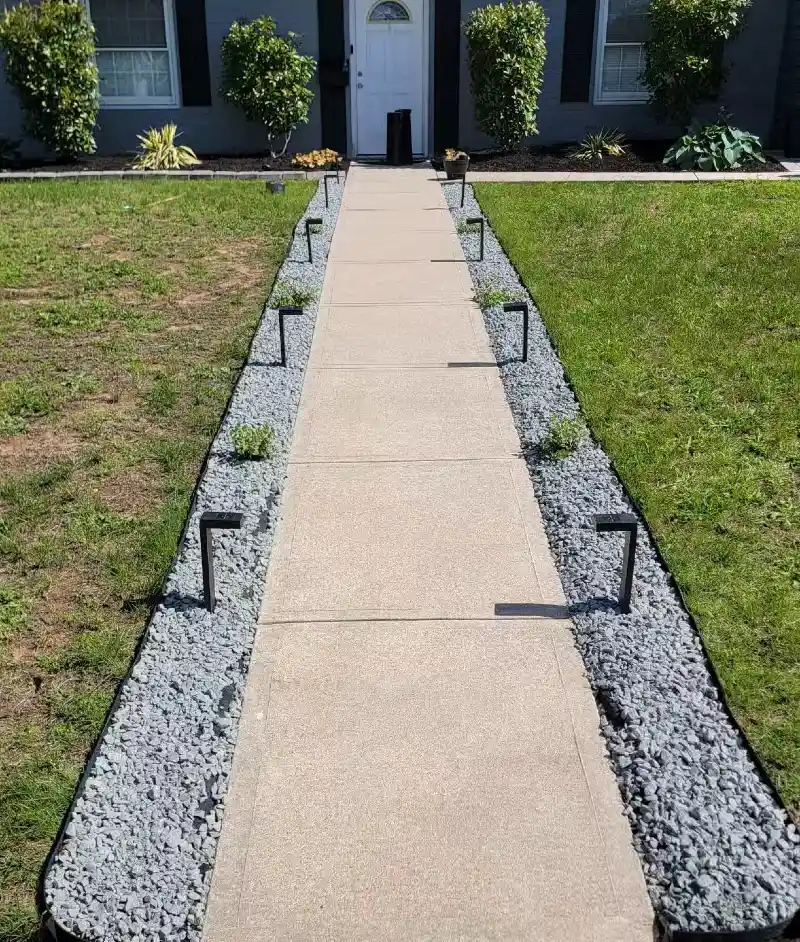
A long, straight concrete walkway creates a clean route from the lawn to the front door. The light beige surface is framed by gray gravel strips on both sides, while slim black path lights add structure and a subtle evening glow along the edges.
Simple lines can make a small entrance feel more organized and intentional.
This design works because the narrow gravel borders create contrast without overwhelming the clean concrete surface. The evenly spaced lighting adds function while keeping the walkway visually balanced. Combining pavers or concrete with gravel is a popular approach because it adds texture, improves definition, and creates a polished front yard entrance.
8. Classic Red Brick Walkway with Potted Greenery Lining the Path
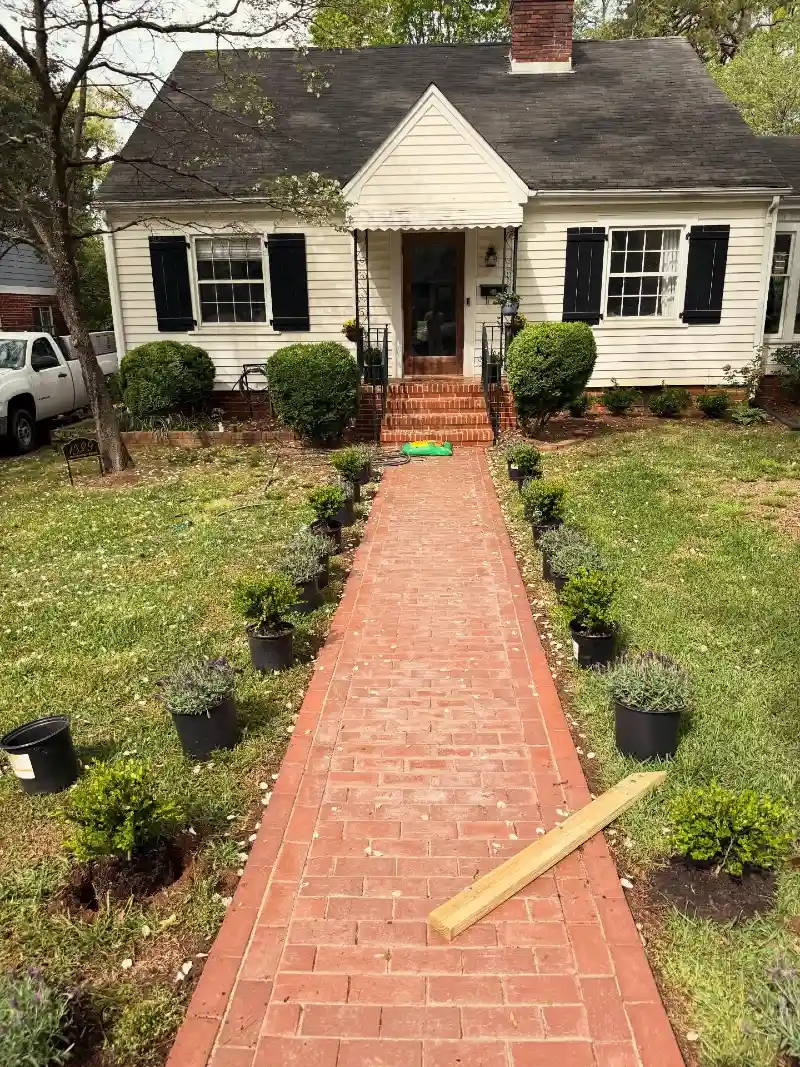
Straight red brick walkway creates a charming approach to this traditional front porch, adding warmth against the pale siding and dark shutters. Small potted shrubs and flowers line both sides of the path, creating a welcoming garden feel while keeping the entry area structured.
Brick paths bring instant character with texture that feels lived-in.
This design works because the warm brick tones connect naturally with the home’s classic architecture. Repeating plants along the edges creates balance and draws the eye toward the doorway without making the space feel crowded. Brick walkways are often chosen for their traditional charm and ability to pair well with cottage, farmhouse, and classic home styles.
9. Flagstone Entry Path with Flower-Filled Barrel Planters and Soft Garden Edges
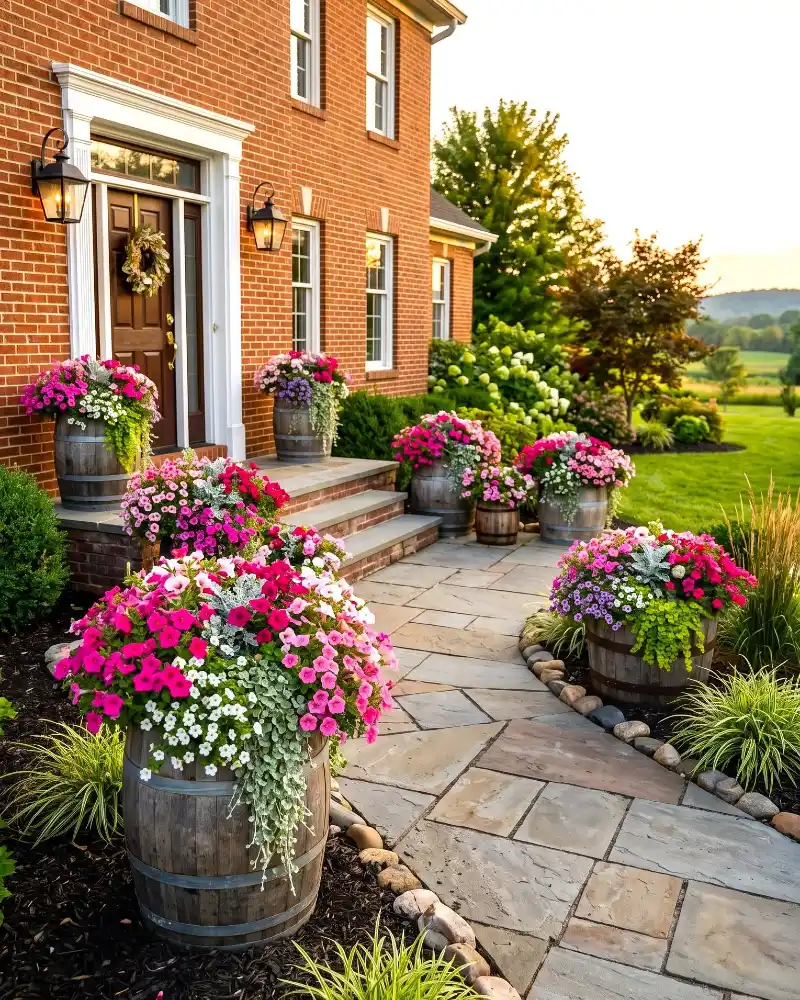
Natural flagstone walkway curves toward a brick home entrance, using warm gray stones with varied shapes and earthy tones. Large wooden barrel planters overflowing with pink and white flowers create a welcoming border, while rounded rocks and layered greenery soften the edges.
Flower-filled containers can turn a stone path into a front yard focal point.
This design works because the irregular flagstone pattern adds organic texture while the colorful planters bring height and seasonal charm. The mix of rough stone, lush plants, and warm brick creates a relaxed garden entrance that feels connected to the home. Natural stone paths are often used in front yards because their varied shapes and textures blend well with planting areas.
10. Textured Paver Walkway with Gravel Beds and Minimal Green Borders
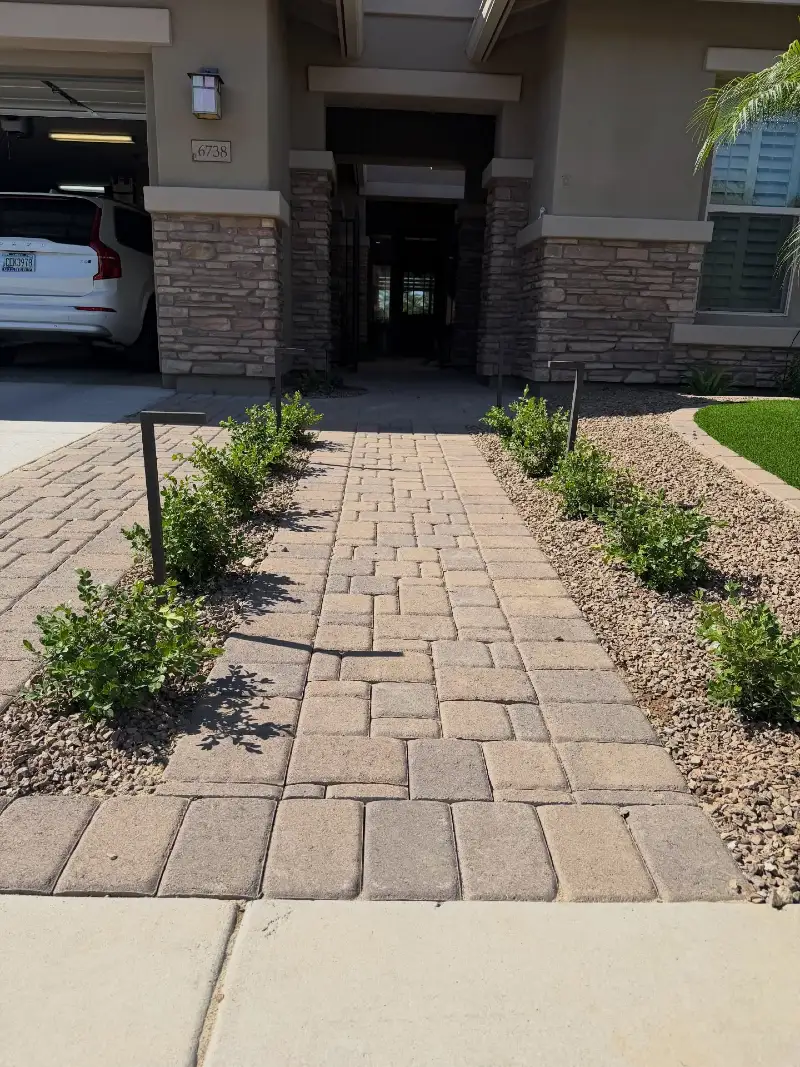
Compact paver walkway creates a neat route toward this modern entryway, using warm gray rectangular stones arranged in a repeating pattern. Gravel beds frame both sides of the path, while small green shrubs and slim black lights add subtle structure without crowding the entrance.
A simple paver pattern can create a polished walkway with very little clutter.
This design works because the neutral materials let the home’s stone accents and architecture remain the focus. The gravel sections add texture and drainage space, while the evenly spaced plants bring softness to the hardscape. Combining pavers with gravel and restrained landscaping is a practical way to create a defined front path with a modern feel.
11. Dark Slate Tile Walkway with Stone Edging and Blue Door Accent
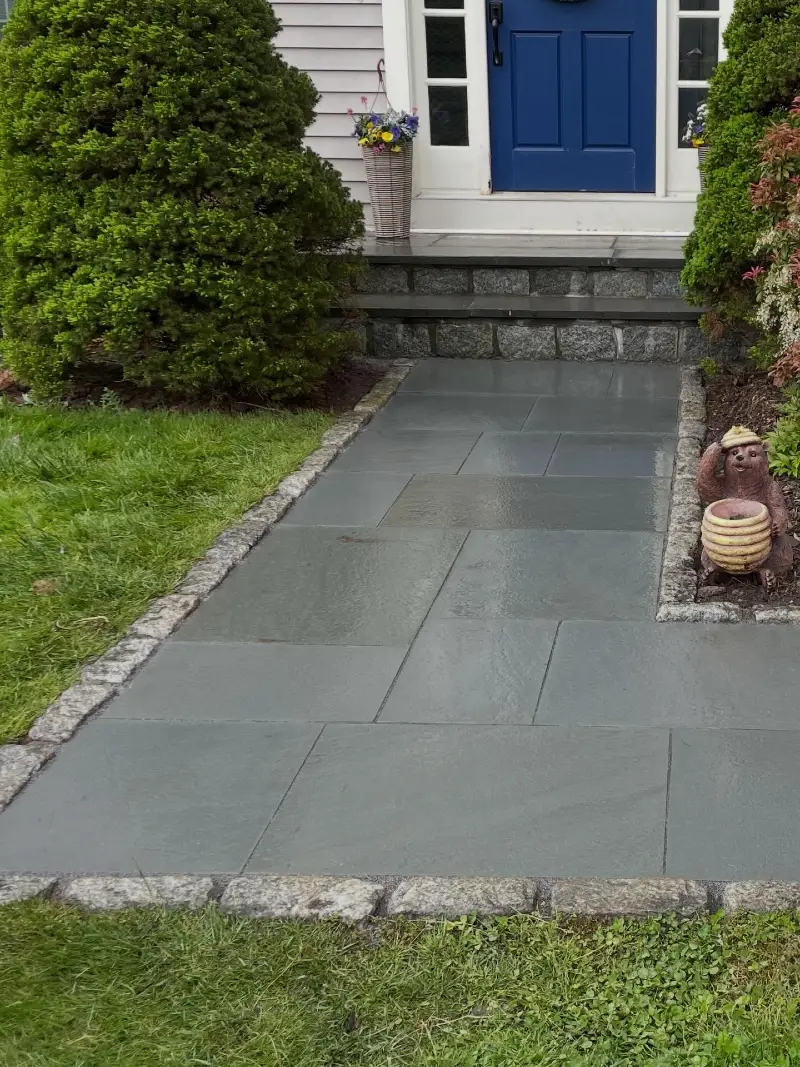
Sleek dark slate walkway creates a refined approach toward this welcoming blue front door. Large rectangular tiles form a clean surface, while rough stone edging adds texture and separates the path from the surrounding lawn and shrubs.
A deep-toned walkway can make a bright entry door feel even more inviting.
This design works because the simple layout lets the home’s color details stand out while keeping the entrance grounded. The stone border adds a natural touch that softens the smooth tile surface and connects the path with the landscape. Using contrasting materials around a walkway can help define the route and create a stronger connection between architecture and outdoor spaces.
12. Curved Gray Paver Walkway with Dark Border and Layered Garden Island
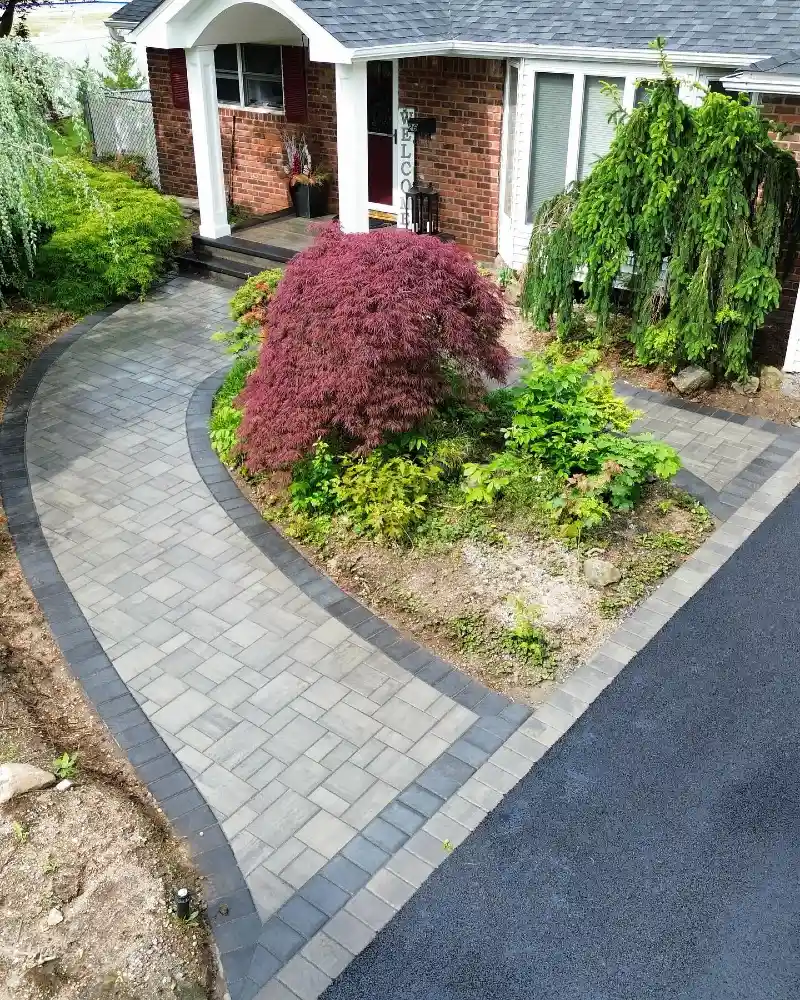
Sweeping gray paver walkway curves around a central planting bed, creating a graceful route toward the front entrance. The darker border frames the lighter pavers, while colorful foliage, a burgundy Japanese maple, and evergreen shrubs add layers of texture around the path.
A curved walkway can make the entire front yard feel more thoughtfully planned.
This design works because the path follows the landscape instead of forcing a straight line through it. The contrasting border gives the curve a clear shape, while the planted island creates a natural focal point that guides the eye. Curved paver walkways are often used to add softer movement and connect hardscape with garden areas in a more relaxed way.
13. Light Stone Walkway with Layered Greenery and Natural Garden Borders
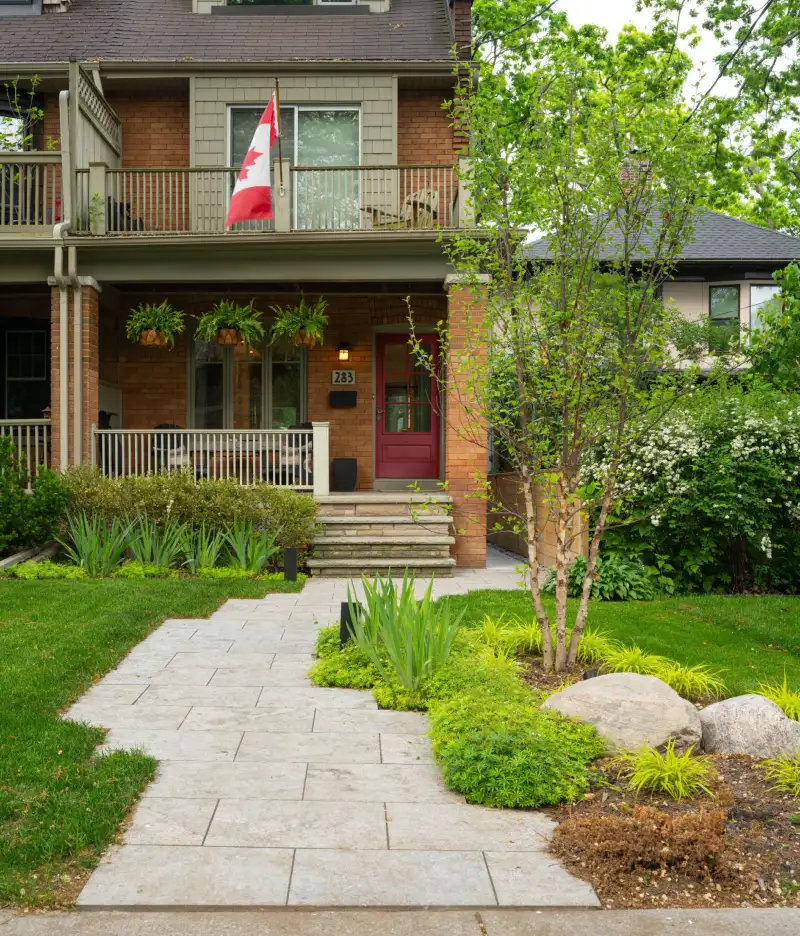
Wide light stone walkway creates a calm approach through this lush front yard, leading directly toward a welcoming porch entrance. The soft gray pavers blend with the brick exterior, while layered shrubs, ornamental grasses, and large garden stones add natural texture along the route.
A simple stone path feels richer when the landscape grows around it.
This design works because the neutral walkway acts as a quiet foundation for the surrounding plants and architectural details. The varied greenery adds depth while the clean paver layout keeps the entrance feeling open and easy to follow. Matching walkway materials with the home’s exterior and adding planting layers are common ways to create a connected front yard design.
14. Curved Paver Walkway with Stone Edging and Soft Garden Plantings
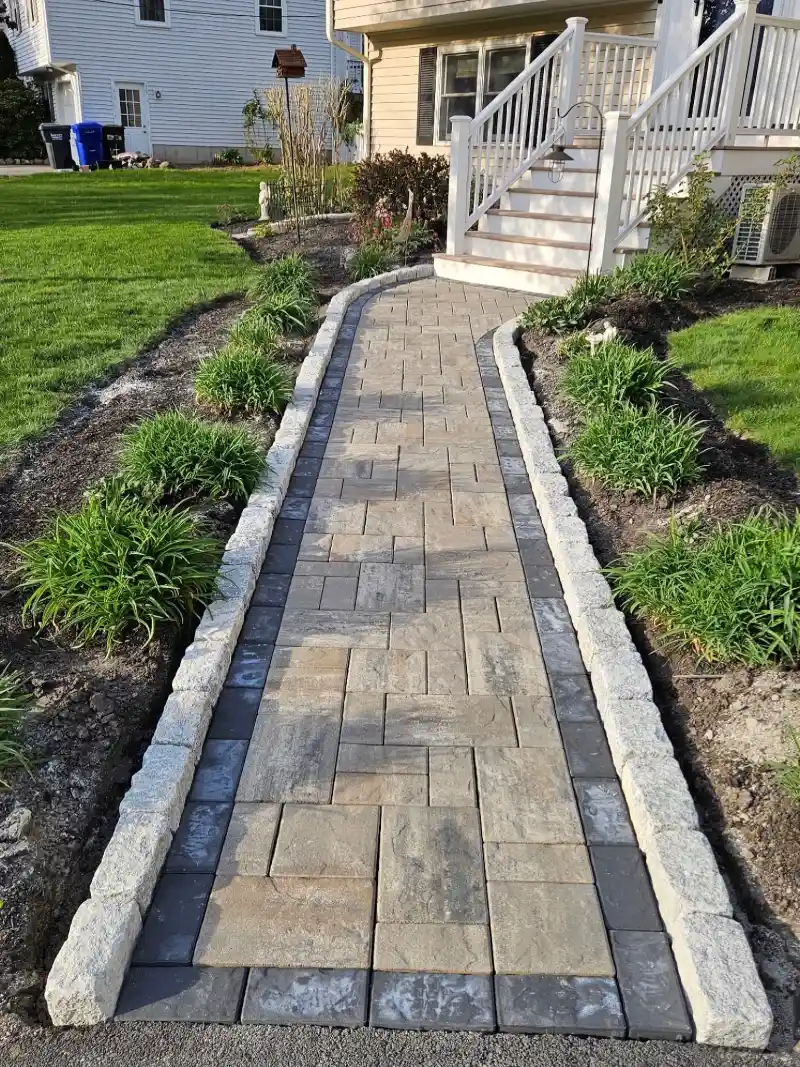
Gently curved paver walkway leads toward the raised porch, using warm gray and tan stones arranged in a repeating pattern. Light stone edging frames both sides of the path, while clusters of green plants create a soft transition between the hardscape and lawn.
A defined border helps a walkway feel finished from every angle.
This design works because the curved layout creates a natural flow while the contrasting edges keep the shape clear. The mix of textured pavers, stone borders, and surrounding greenery adds depth without making the entrance feel busy. Using edging around paver paths helps maintain clean lines and gives the walkway a more structured appearance.
15. Curved Multi-Tone Paver Walkway with Decorative Border Inlays
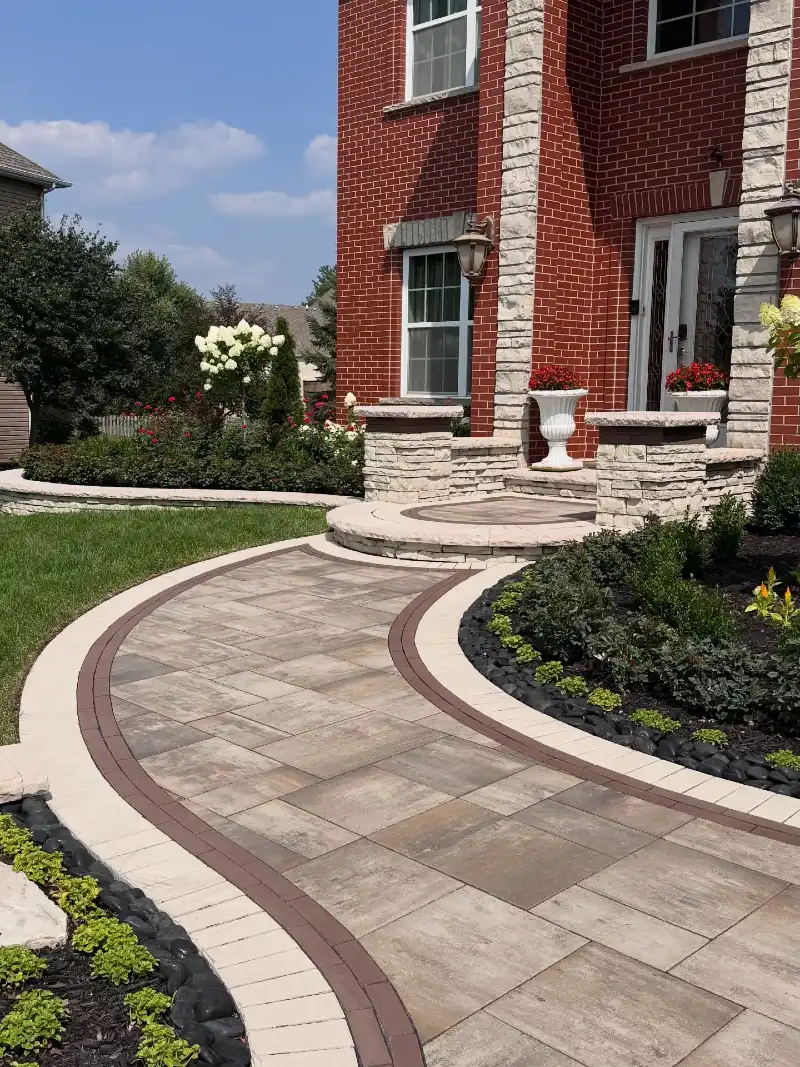
A sweeping paver walkway curves gracefully toward this brick home entrance, using large warm-toned stones with layered border details. The lighter outer frame and dark curved accents create flowing lines, while manicured planting beds and smooth black stones add contrast around the path.
A curved border can turn a walkway into a true front yard feature.
This design works because the rounded edges guide movement while creating a softer connection between the driveway, garden beds, and entry steps. The mix of paver colors adds depth and makes the walkway feel custom rather than flat. Curved paver paths are often used to create a more natural flow through landscapes and help connect hardscape areas with surrounding greenery.
16. Curved Flagstone Path with White River Rock Beds and Soft Garden Lighting
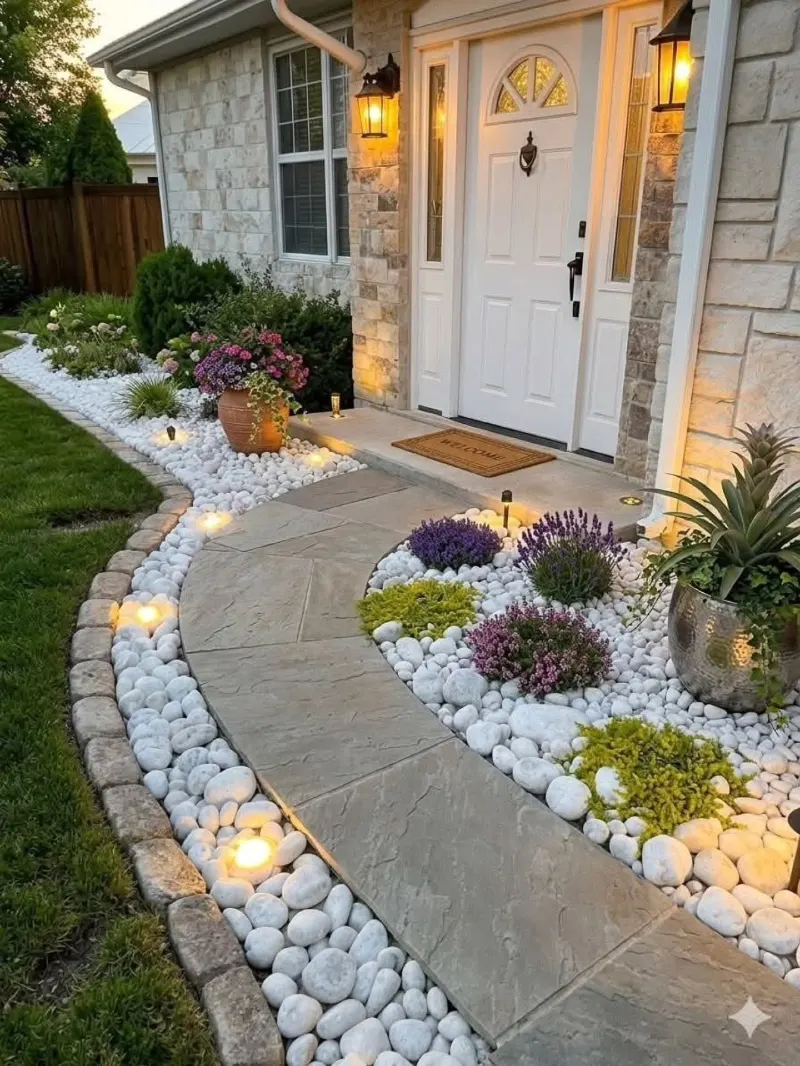
Graceful stone walkway curves through this front entrance, using large gray flagstones surrounded by smooth white river rocks. Small flowering plants, rounded shrubs, and warm pathway lights create a welcoming garden scene that guides visitors toward the bright front door.
White stone borders make a walkway feel lighter, softer, and more decorative.
This design works because the contrast between dark flagstone and bright river rocks creates clear definition while keeping the overall look relaxed. The curved layout adds movement, and the layered planting areas help the path feel connected to nature instead of placed separately. Combining flagstone with river rock is a common landscape approach because it adds texture, drainage support, and an organic garden feel.
17. Curved Gravel Garden Walkway with Natural Rocks and Drought-Friendly Planting
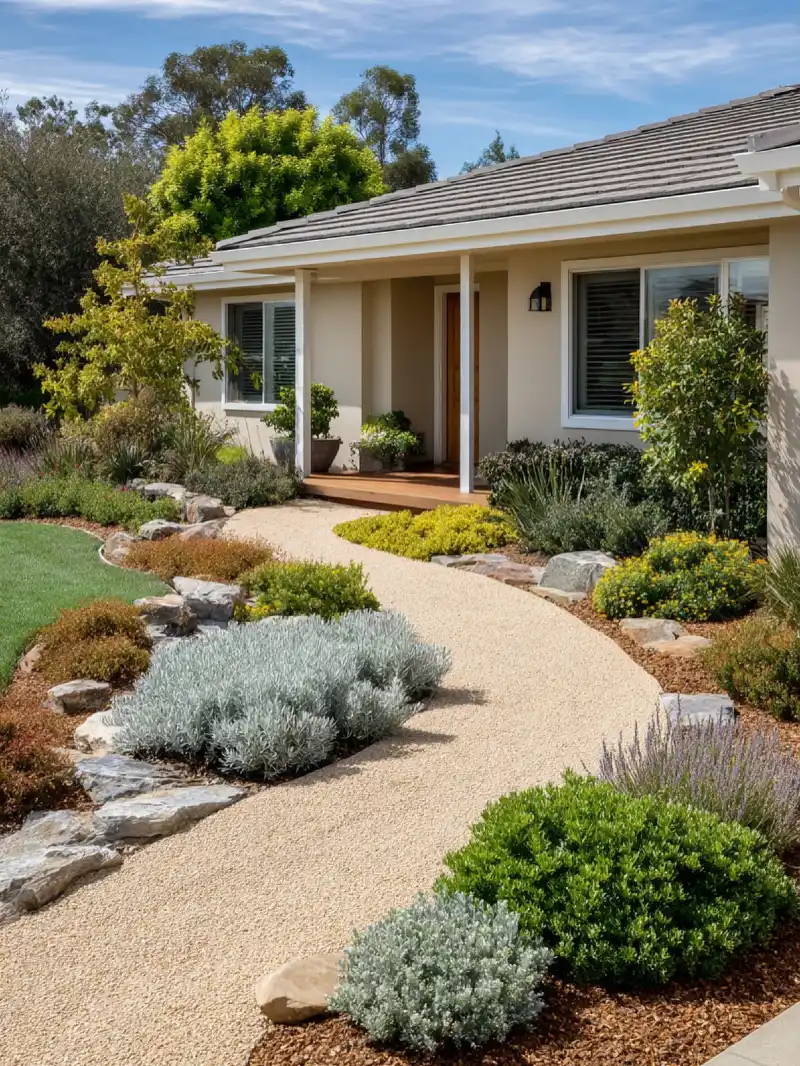
A sweeping gravel walkway curves gently through this front yard, creating a relaxed route toward the home’s covered entrance. Light-colored gravel is bordered by large natural rocks, textured shrubs, and soft green plants that blend the path into the surrounding landscape.
A gravel path feels inviting when nature becomes part of the design.
This design works because the winding shape creates movement while the layered plants and stones keep the walkway connected to the yard. The neutral gravel allows the greenery and architectural details to stand out, creating a calm outdoor arrival. Gravel paths are often used in landscape designs because they add texture, soften hard edges, and pair well with natural planting styles.