
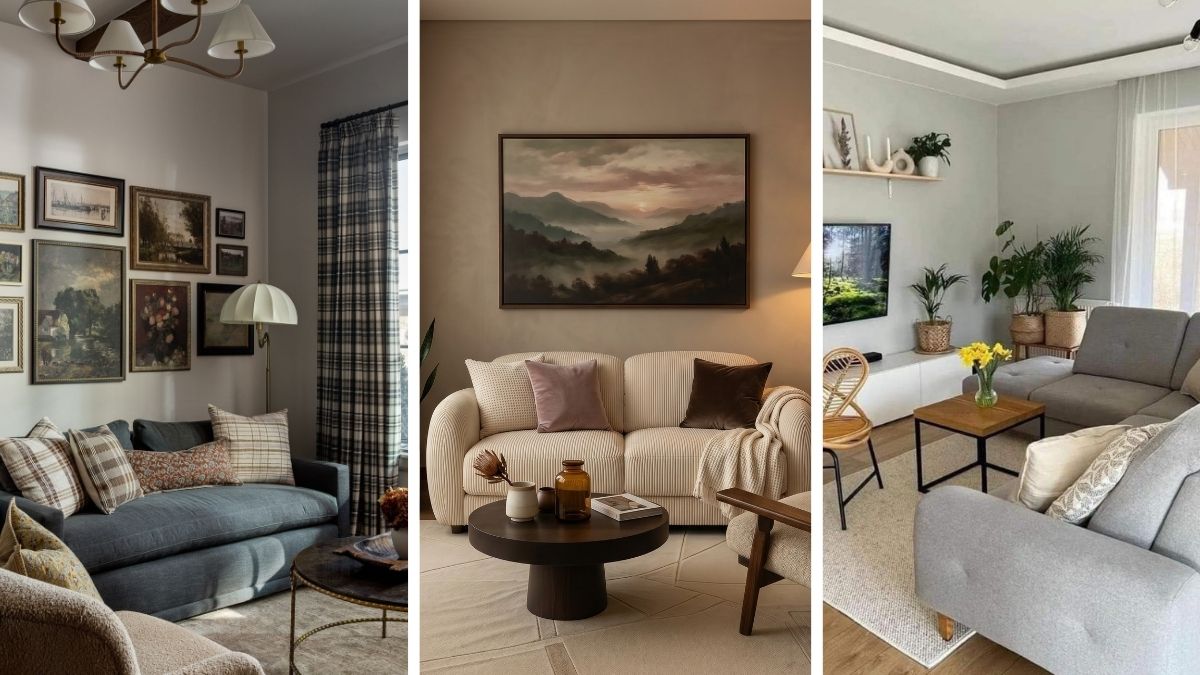
Tiny living rooms can make every extra guest feel like a math problem. The sofa eats one wall, the TV steals another, and chairs turn the walkway into a squeeze. Soon the room seats fewer people than your dining table, even though it is meant to be the main hangout.
That cramped feeling matters because seating shapes how your home hosts real life. Friends linger longer when the room feels open, grounded, and easy to use.
These tiny living room layouts show how to fit more seats without stuffing the space. Use them to build a snug room that still feels smart, warm, and ready for company.
Small Living Room Layout Rules
Thoughtful planning creates a room that feels open, comfortable, and ready for everyday living without adding unnecessary furniture.
Start With Flow
Design around the traffic path first, then arrange seating so everyone can move comfortably without squeezing between furniture.
Choose Smarter Furniture
Use slim sofas, narrow arms, raised legs, and multi-purpose seating to maximize comfort while preserving valuable floor space.
Create One Clear Anchor
Face seating toward a single focal point like a fireplace, window, media wall, or coffee table for a balanced layout.
Let The Room Breathe
Maintain negative space around furniture and layer in stools, benches, or poufs only where they add flexible seating.
1. Sunlit Narrow Living Room with Low Wood Console and Woven Stools
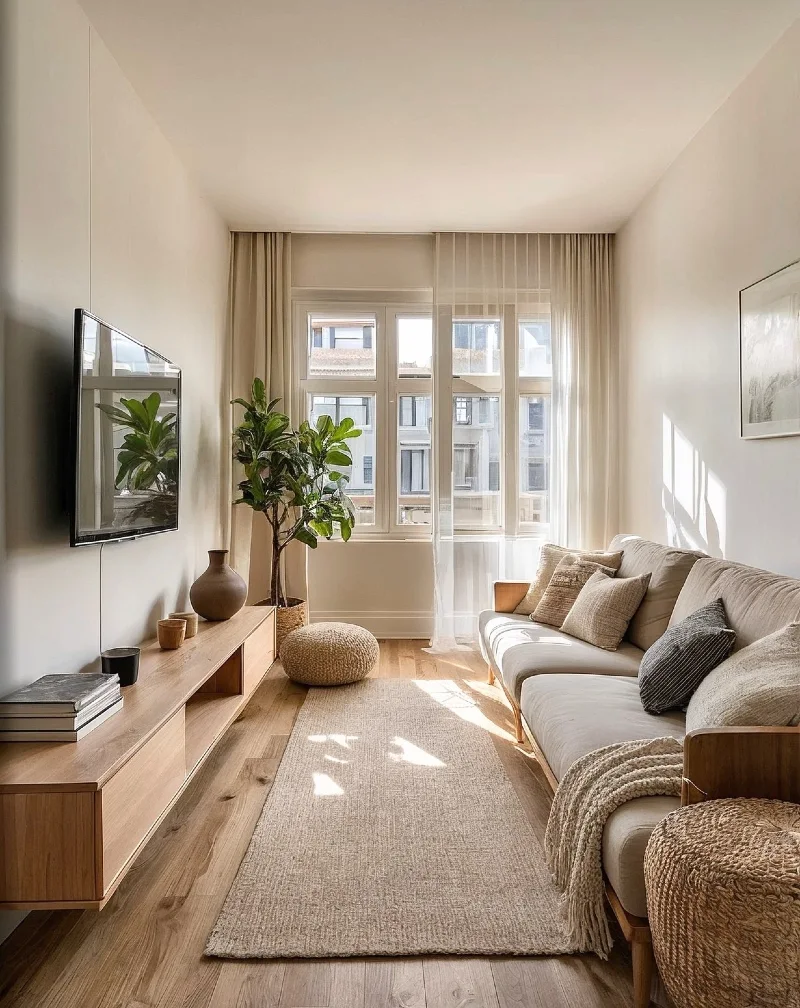
A slim cream sofa runs along the right wall, facing a wall mounted TV and a long pale wood media console. Soft sheer curtains filter the window light, while a jute rug, chunky knit pouf, woven stool, and leafy plant add warmth without crowding the walkway.
The best tiny layouts use soft extra seats that can move when the room needs to breathe.
This setup works because the main pieces stay low, light, and close to the walls, leaving a clear path through the center. Add a pouf or woven stool near the sofa for casual seating, then tuck it beside the console or window when guests leave.
2. Teal Sofa Against Picture Wall with Black Glass Bedroom Divider
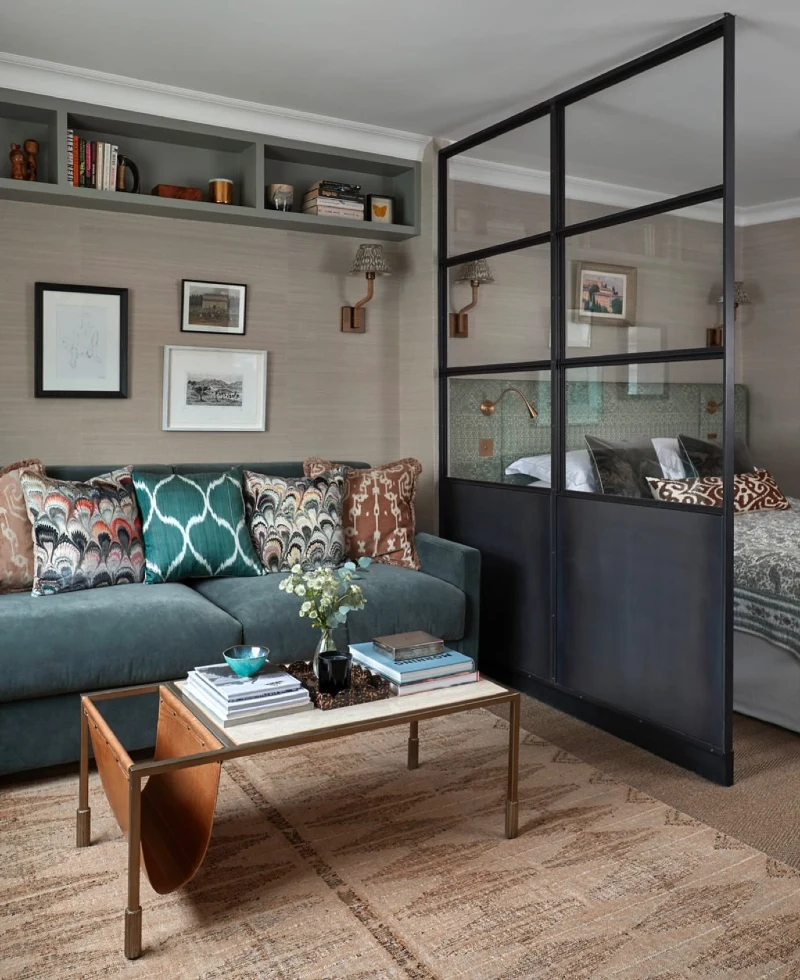
A deep teal sofa sits under floating gray cubbies, framed art, and a small wall sconce. Patterned pillows in rust, cream, turquoise, and black fill the seat, while a slim brass coffee table leaves the rug visible and keeps the room open.
A glass divider lets one tiny room hold a bedroom and living area without killing the light.
This layout seats more because the sofa stays generous, but the rest of the room stays lean. Copy the move by pairing one strong couch with a light coffee table, high storage, and one clear boundary so the lounge feels like its own zone.
3. Window Sofa with Wall Shelves, Tufted Ottoman, and Built-In Media Storage
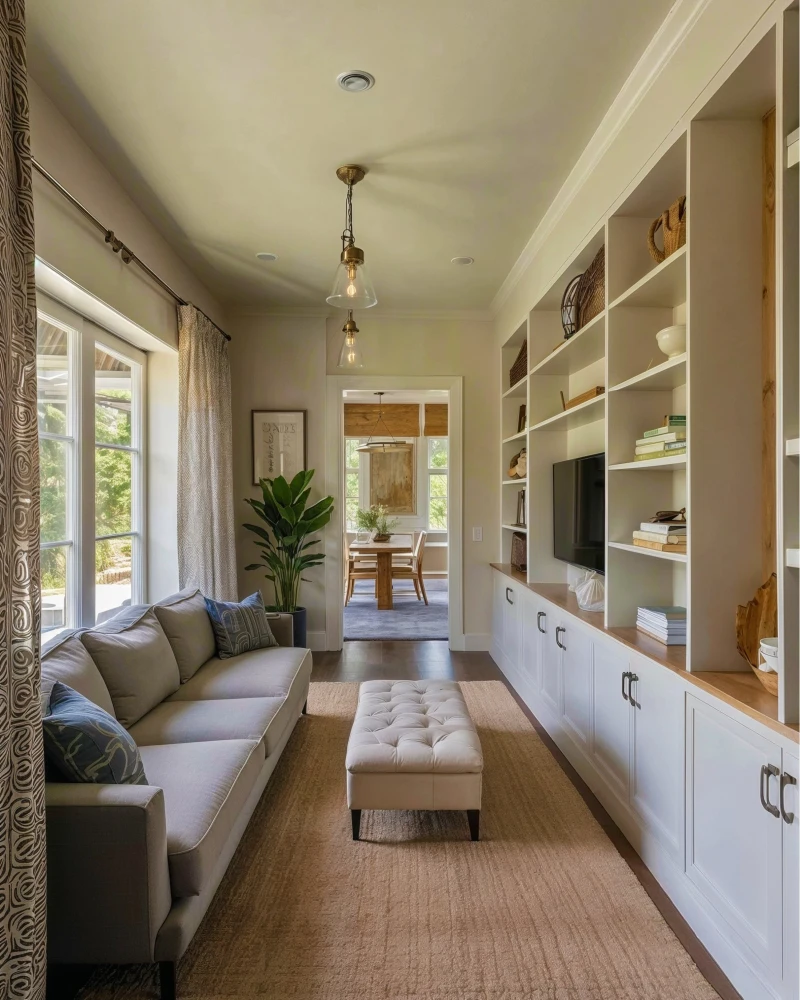
Soft gray sofa sits tight under the tall windows, with patterned curtains framing the left side and filtered daylight washing across the rug. Across from it, a full wall of white shelving and lower cabinets holds the TV, books, baskets, and decor while the tufted ottoman adds a flexible seat in the center.
When storage climbs the wall, the floor can stay open for real seating.
This room works because every major function has a clear lane. The sofa handles lounging, the ottoman doubles as a perch, and the cabinet wall keeps clutter off the floor so the narrow room still feels calm.
Why This Works
- Scale: The sofa has slim arms and a clean profile, so it seats several people without swallowing the walkway.
- Storage: Tall shelves and closed cabinets make the room useful while keeping loose items controlled.
- Lighting: Glass pendants and window light keep the long layout bright instead of heavy.
4. Green Sofa with Tree-Slice Coffee Table and Plant Shelf Glow
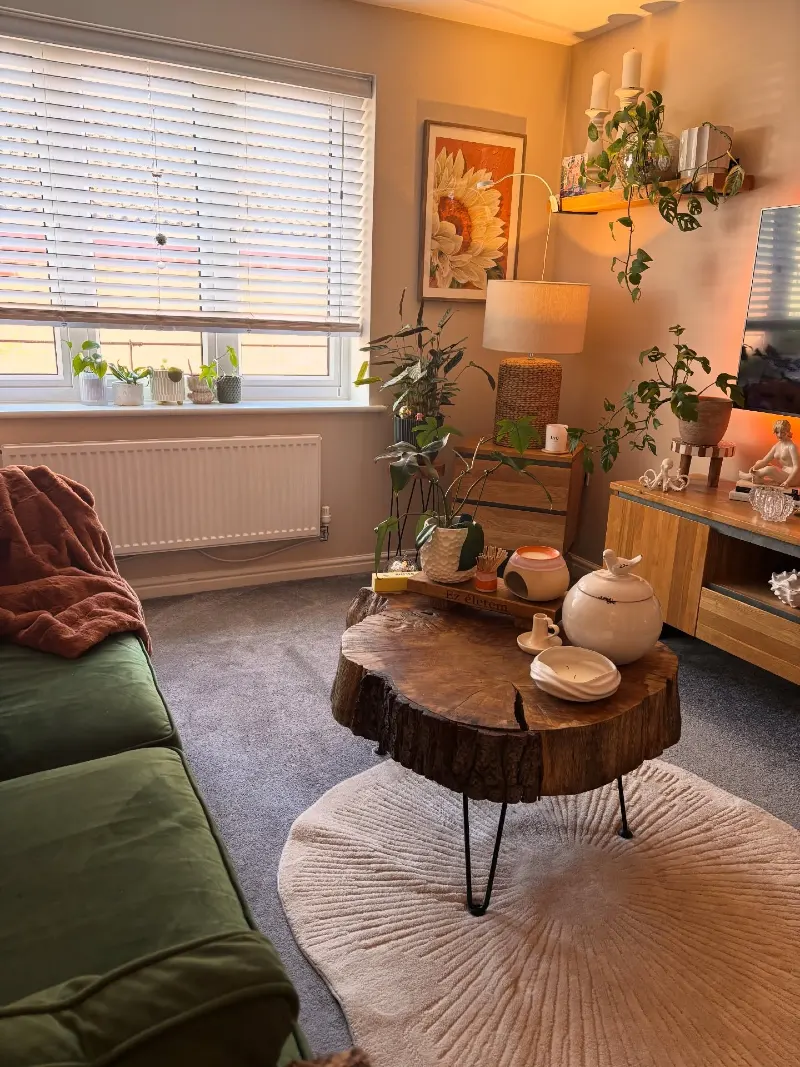
A deep green sofa sits along the left wall, softened with a rust faux fur throw and a low round rug underfoot. The raw wood coffee table brings rough bark texture into the center, while plants climb from the window ledge, TV corner, floor stand, and wall shelf.
One grounded sofa can seat more when the rest of the room stays loose, low, and movable.
This layout works because the coffee table has an open hairpin base, so it feels less bulky than a solid block. Keep the main walkway clear, then use plant stands, wall shelves, and small side surfaces instead of extra floor-heavy furniture.
5. Light Gray Sofa with Round Pouf and Slim Black Coffee Table
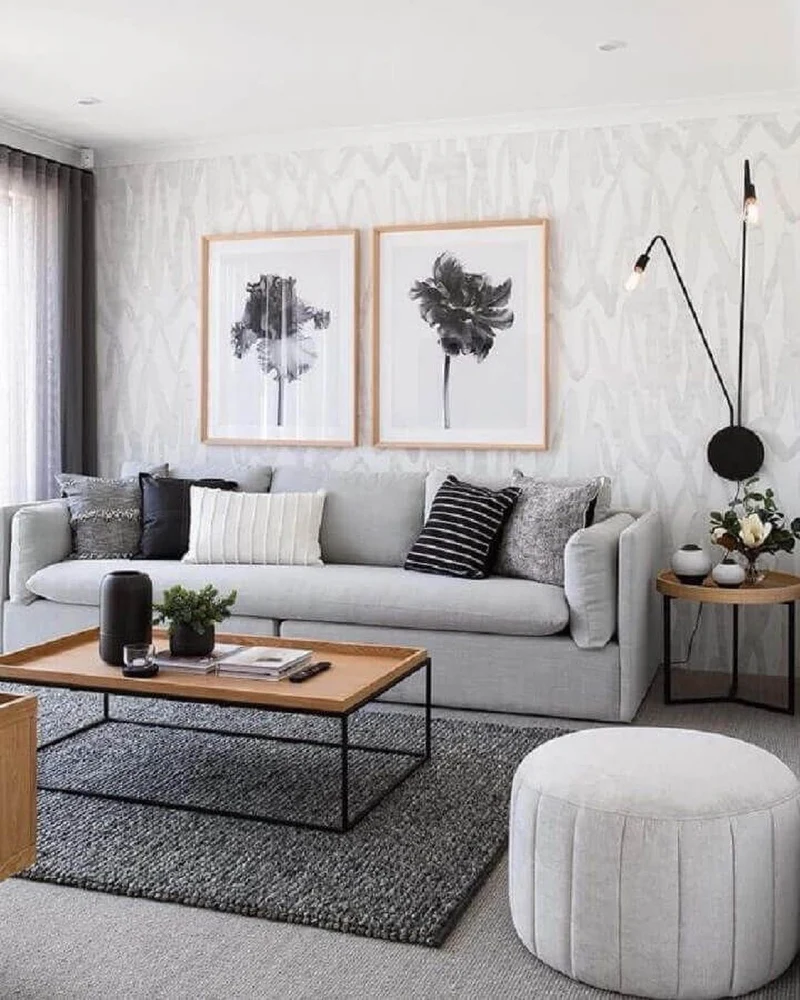
A pale gray sofa fills the back wall, layered with black, white, and textured gray pillows. Two framed flower prints sit above it, while a round pleated pouf adds an extra seat beside the slim wood and black metal coffee table.
A soft pouf gives a tiny room another place to sit without adding hard edges.
This layout feels open because the coffee table has thin legs and the pouf keeps the seating plan flexible. Use a round ottoman or pouf near the sofa when guests come over, then slide it aside so daily movement stays easy. Designers often use ottomans this way because they can act as seating, footrests, or movable fillers in small rooms.
Quick Decorating Tips
- Budget version: Choose a fabric pouf or secondhand ottoman instead of buying another chair.
- Renter tip: Use plug-in wall lights or a tall floor lamp to copy the layered glow without hardwiring.
- Pro move: Keep the coffee table visually light so the added pouf does not make the room feel packed.
6. Gray Sofa with Brick TV Wall, Round Coffee Table, and Balcony Light
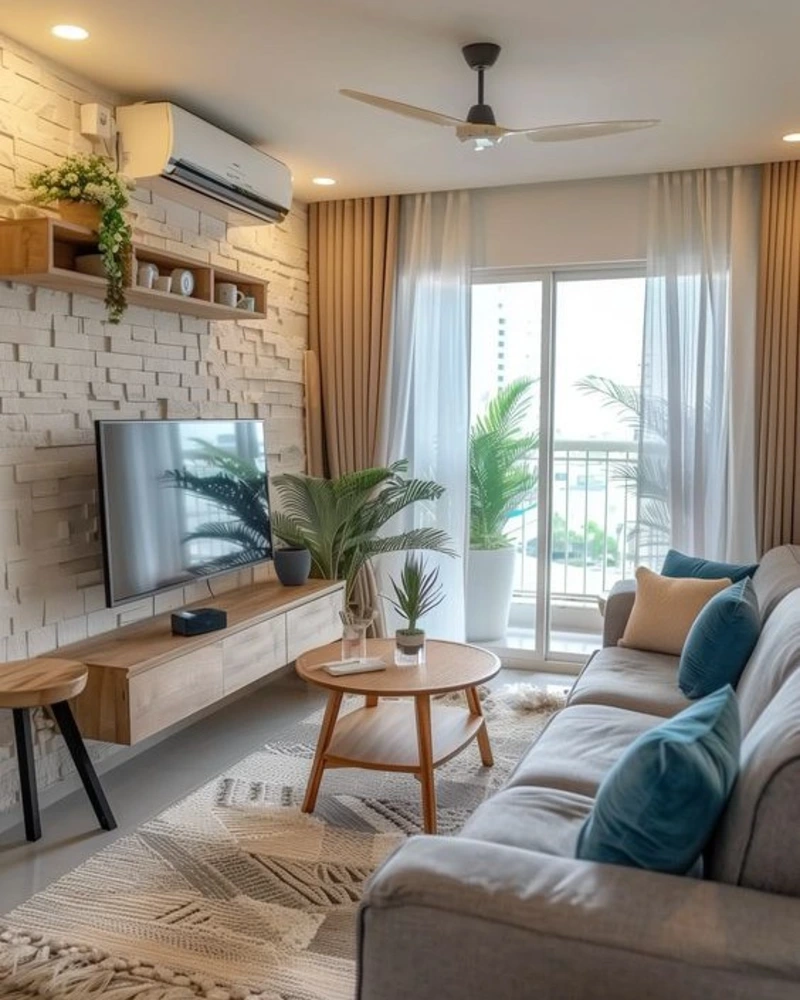
Soft gray sofa lines the right wall, filled with teal and tan pillows that pull color from the curtains and outdoor view. Across from it, a pale brick TV wall, floating wood shelf, round coffee table, and small stool create a relaxed seating zone without blocking the balcony doors.
Round tables and slim stools help a tiny living room seat more while keeping traffic smooth.
This room feels easy because each piece has a clear job. The sofa handles the main seating, the stool adds a spare perch, and the round table keeps sharp corners out of the walking path. Small spaces work best when scale and purpose guide every furniture choice.
Why This Works
- Traffic Flow: The open path to the balcony keeps the room from feeling boxed in.
- Extra Seating: The small stool gives guests another spot without adding a bulky chair.
- Texture: Brick, woven rug fibers, wood, plants, and sheer curtains make the compact layout feel layered and lived-in.
7. Bouclé Sofa with Barrel Chair and Nested Marble Coffee Tables
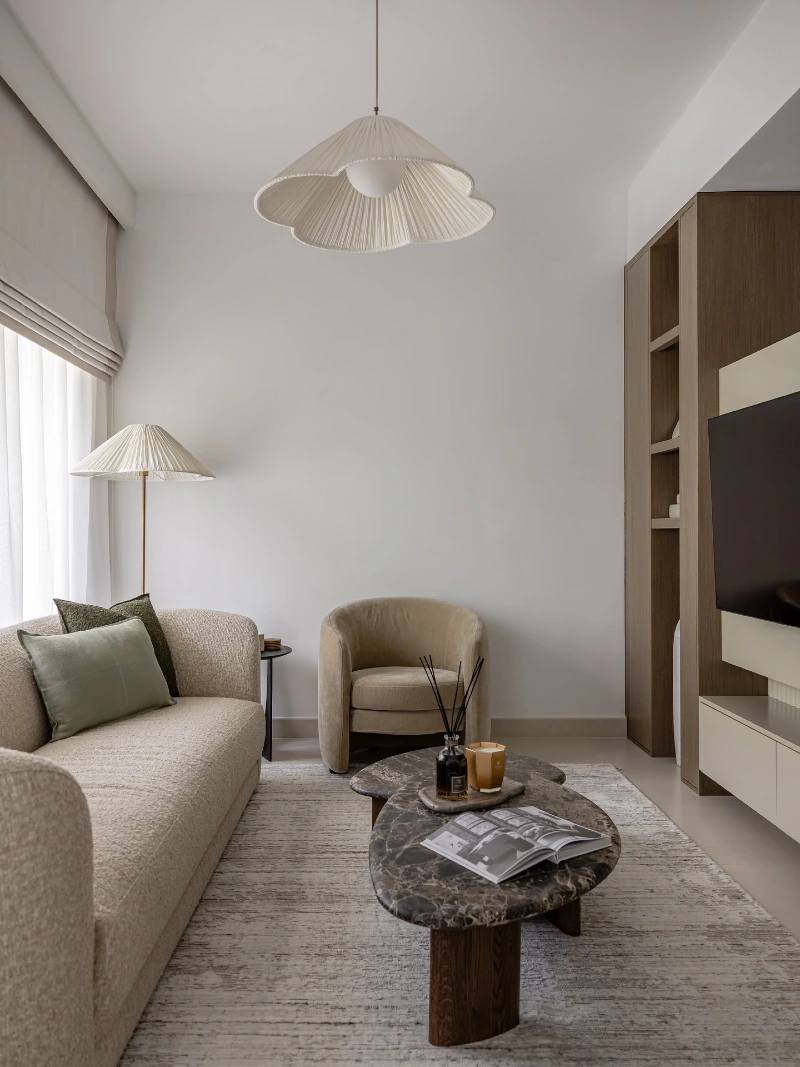
Cream bouclé sofa runs along the window wall, paired with a rounded barrel chair in the corner for one extra seat. The nested marble coffee tables sit low on a pale rug, while the wood media wall and pleated lampshades add warm texture without crowding the room.
Curved seating softens a tight layout and makes extra chairs feel less bulky.
This arrangement works because the armchair fills the corner instead of floating awkwardly in the walkway. Use one compact chair beside the sofa, then choose nested tables so the surface can expand for guests and shrink back for daily use. Rounded edges and slim profiles also help small rooms feel easier to move through.
8. Gray Sectional with Rattan Accent Chair and Plant-Lined TV Wall
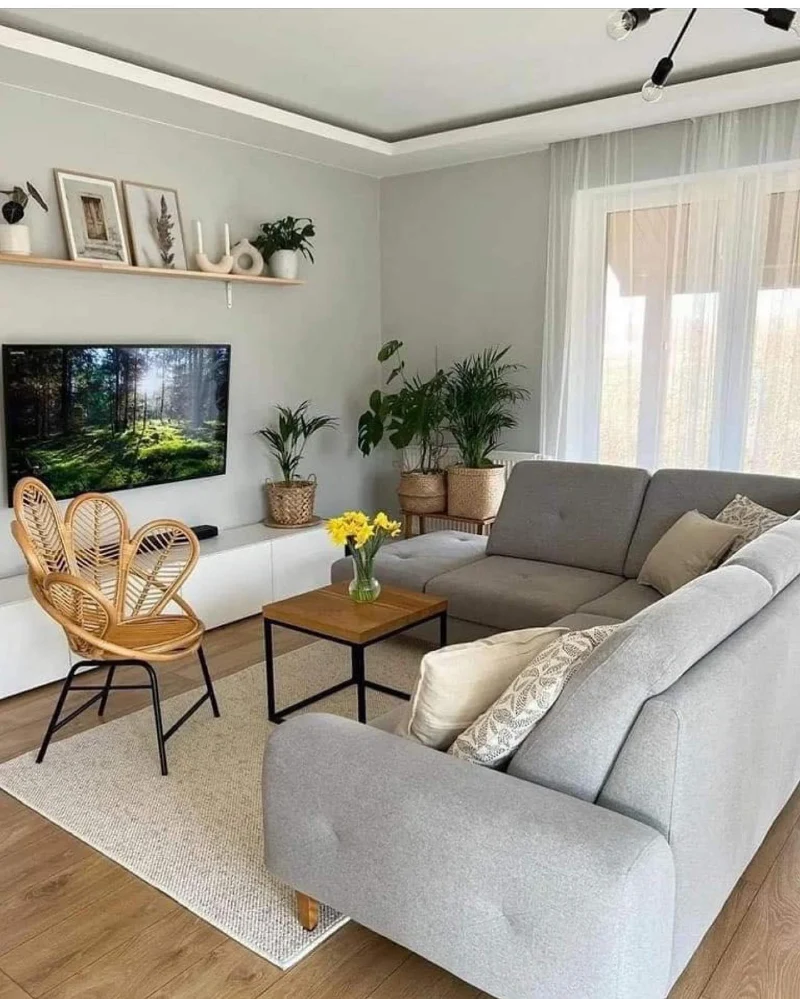
Light gray sectional wraps the right side of the room, giving the tiny living area several real seats without needing a second sofa. Across from it, a low white media cabinet, floating shelf, woven plant baskets, and a rattan chair keep the TV wall bright, earthy, and open.
A small sectional works best when the extra chair has an airy frame.
This layout seats more because the sectional hugs the corner while the rattan chair adds another spot without blocking the view across the rug. A compact L-shape can preserve walking space, and a rounded coffee table or small square table keeps movement easier in tight rooms.
9. Moody Sectional with Chaise, Black Coffee Table, and Lit Tray Ceiling
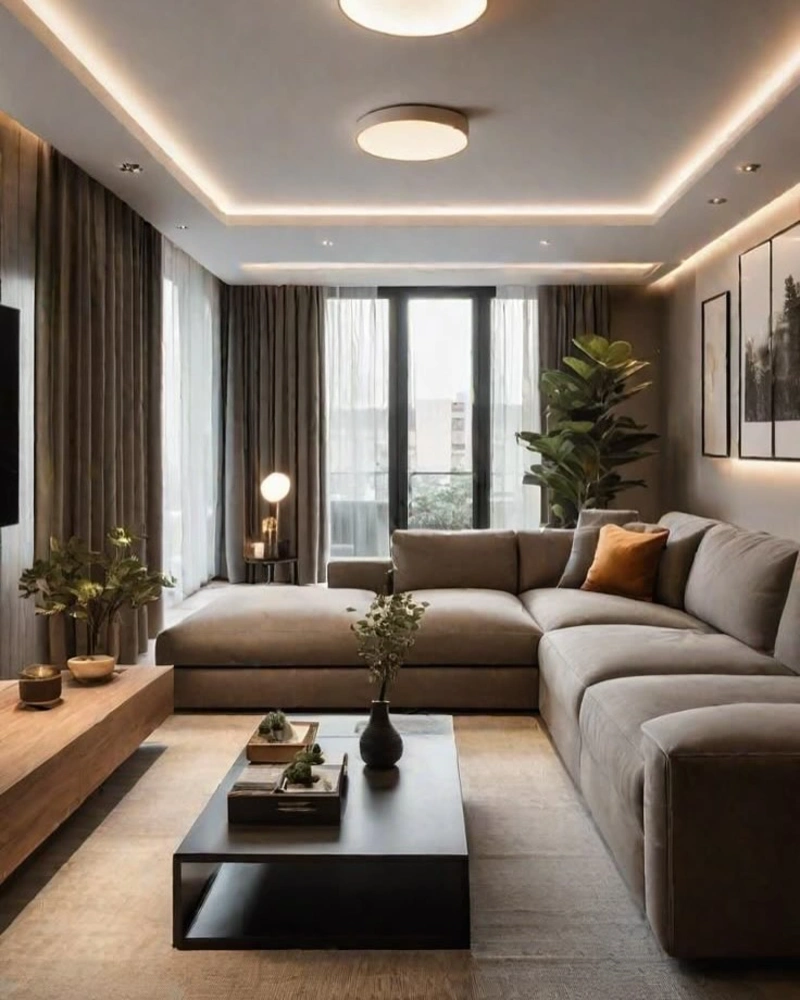
Taupe sectional wraps the right wall and extends into a chaise near the window, creating a long stretch of relaxed seating. Dark curtains, a low black coffee table, a pale rug, and warm ceiling lighting give the room a snug, lounge-like mood without adding extra chairs.
A chaise can seat more than an armchair when the room is narrow and the corner needs to work hard.
This setup uses the sectional as the main anchor, then keeps the center clean with one low table and a wide rug. The tray ceiling glow also helps because layered light can make a compact room feel deeper, softer, and more finished. Better Homes & Gardens also notes that small rooms benefit from clear focal points, light visual weight, natural light, and multi-use pieces like ottomans or coffee tables that can flex as needed.
Why This Works
- Chaise Seat: The extended section gives one person room to stretch out while still working as extra guest seating.
- Low Profile: The dark coffee table stays below the sofa line, so it does not crowd the view across the room.
- Ceiling Light: Soft perimeter lighting pulls the eye upward and keeps the compact layout from feeling flat.
10. Gray Sofa with Floor Cushions, Blue Cube Pouf, and Round White Table
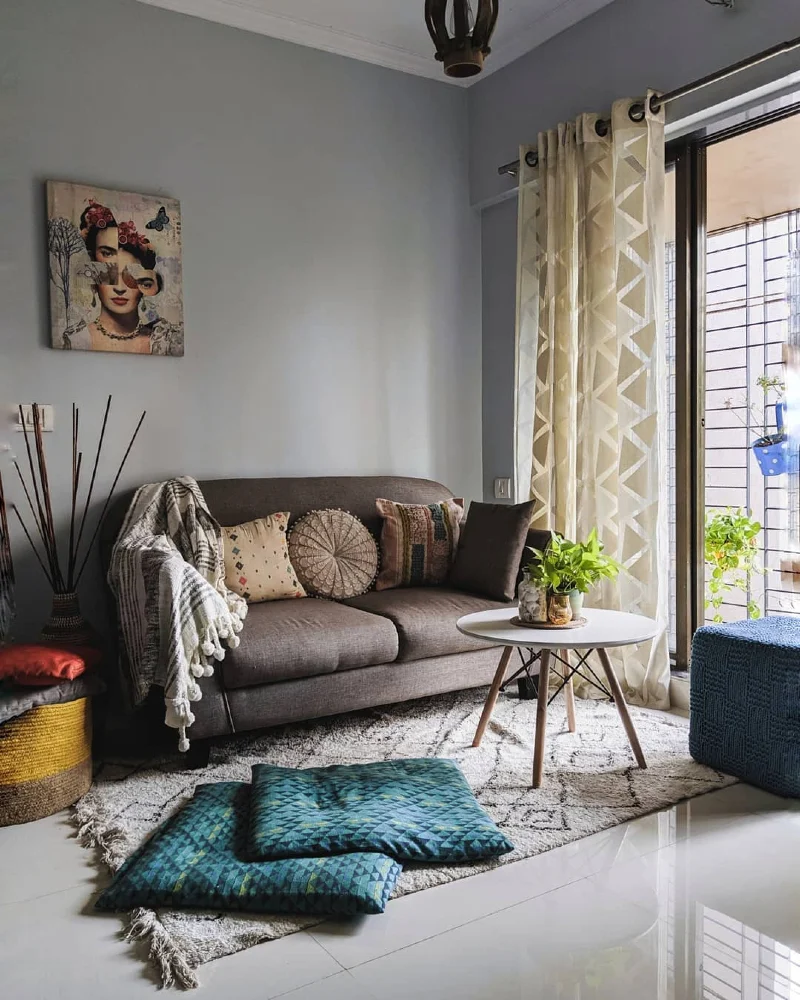
Compact gray sofa sits against the wall with a tassel throw, patterned pillows, and layered cushions that make the corner feel relaxed. In front, two teal floor cushions and a blue cube pouf add low extra seating around the round white table, while the shaggy rug keeps the setup soft underfoot.
Floor seating turns open rug space into guest seating without locking the room into one layout.
This idea works well when the room needs to host more people but cannot handle another chair. Keep the cushions thick, place them near a low table, and store them in a basket or corner stack when the room needs more walking space. Floor cushions are often used this way because they can shift between extra seat, footrest, and soft decor piece.
Quick Decorating Tips
- Budget version: Use large outdoor cushions or firm floor pillows instead of buying a new accent chair.
- Renter tip: Add movable cushions, a plug-in lamp, and curtain panels to change the room without touching the walls.
- Pro move: Repeat one cushion color in art, throws, or plants so the floor seating feels planned, not leftover.
11. Blue-Gray Sofa with Bouclé Chair, Gallery Wall, and Plaid Curtains
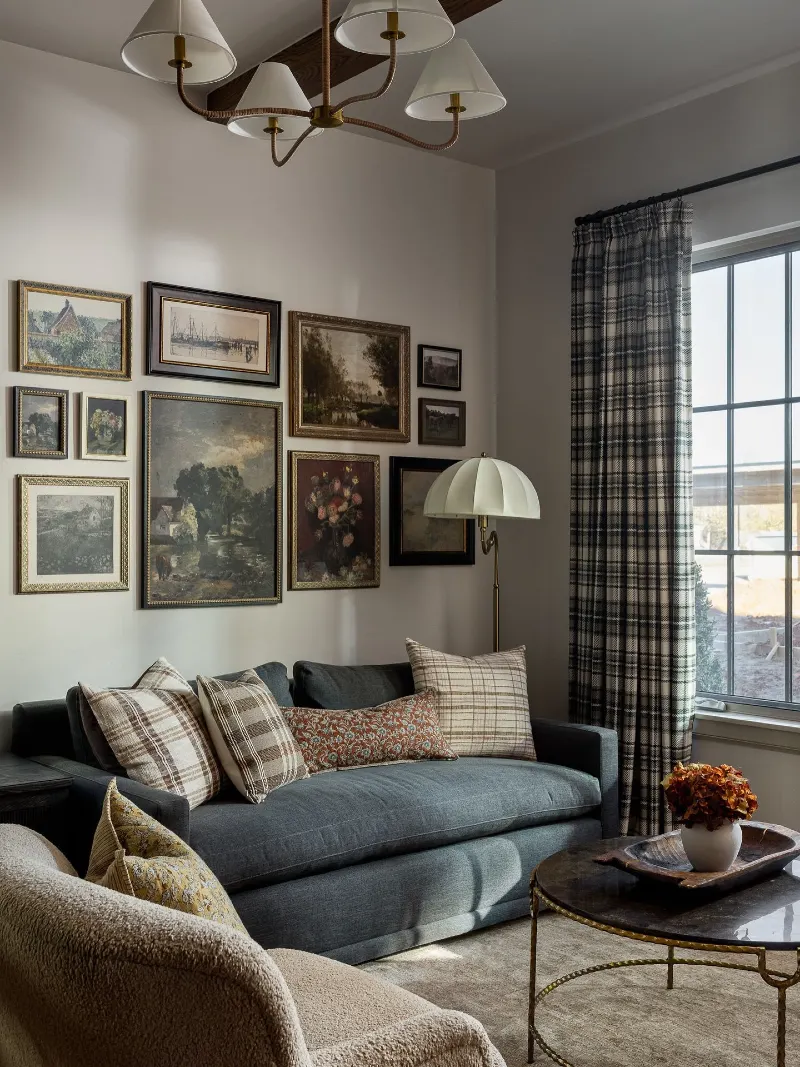
Blue-gray sofa sits under a tight gallery wall of vintage-style landscapes, florals, and framed art in warm brass and dark wood tones. A nubby bouclé chair angles in from the front, while plaid curtains, a scalloped floor lamp, and a dark oval coffee table give the seating area a rich, collected feel.
A second chair does more than add a seat; it turns a sofa wall into a conversation corner.
This layout works because the chair faces into the sofa instead of lining up beside it. Keep the accent chair compact, then let the rug and coffee table pull both seats into one shared zone. Designers often recommend flexible extra seating, like ottomans or small chairs, for tiny living rooms because it adds function without forcing in another large sofa.
12. Cream Sofa with Stone Fireplace and Two-Chair Conversation Circle
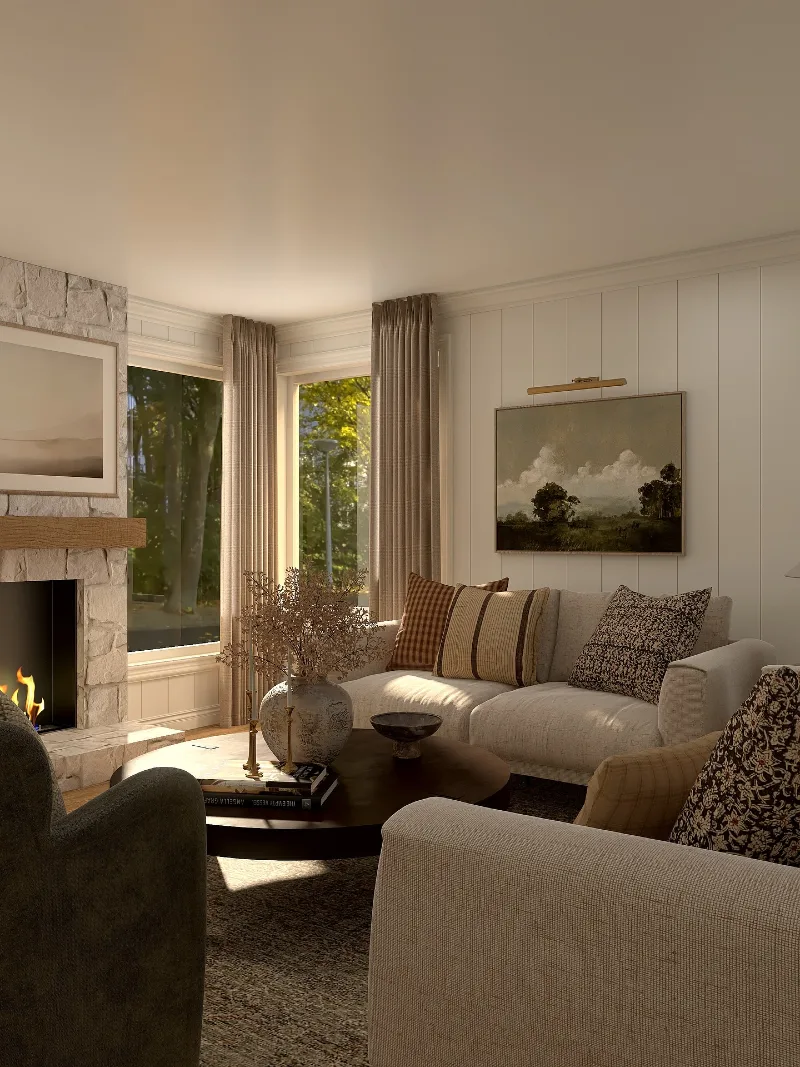
Cream sofa faces two upholstered accent chairs around a large round wood coffee table, creating a balanced seating group beside the stone fireplace. Warm sunlight pours through tall corner windows, while soft plaid curtains, paneled walls, and layered neutral pillows make the room feel calm and welcoming.
Facing seats create a stronger gathering space than lining every piece along the walls.
This layout succeeds because every seat looks toward the center instead of the television alone. The round coffee table keeps everyone within easy reach, while the paired chairs add guest seating without making the room feel crowded. Designers often recommend conversation-focused layouts because they make compact living rooms feel more social and purposeful.
Why This Works
- Conversation Layout: The sofa and chairs face one another, making the room comfortable for talking as well as relaxing.
- Round Table: The circular shape improves movement and softens the seating arrangement in a compact footprint.
- Layered Warmth: The fireplace, natural light, textured fabrics, and wood accents give the small room depth without adding clutter.
13. Curved Cream Sofa with Round Coffee Table and Mid-Century Accent Chair
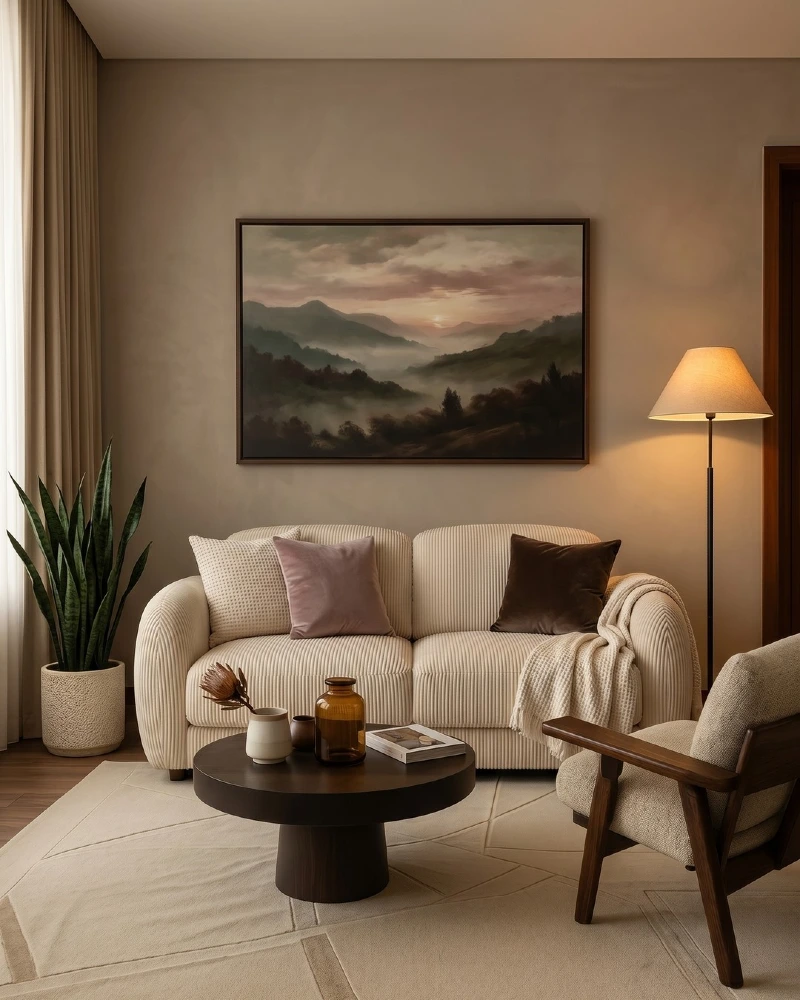
Curved cream sofa anchors the room beneath a large landscape painting, while a wood-framed accent chair completes the seating group without adding visual weight. A dark round pedestal coffee table sits in the center, balanced by a tall floor lamp, soft neutral rug, and a snake plant that brings fresh green contrast.
One sofa and one compact chair can feel surprisingly generous when every piece faces the same gathering point.
This arrangement keeps the room open because the rounded furniture softens corners and improves movement around the coffee table. The chair adds another comfortable seat without competing with the sofa, and the warm layered lighting makes the compact layout feel relaxed throughout the day. Designers also recommend round tables in small living rooms because they improve circulation and reduce visual bulk.
14. Olive Green Sectional with Round Wood Coffee Table and Layered Vintage Rug
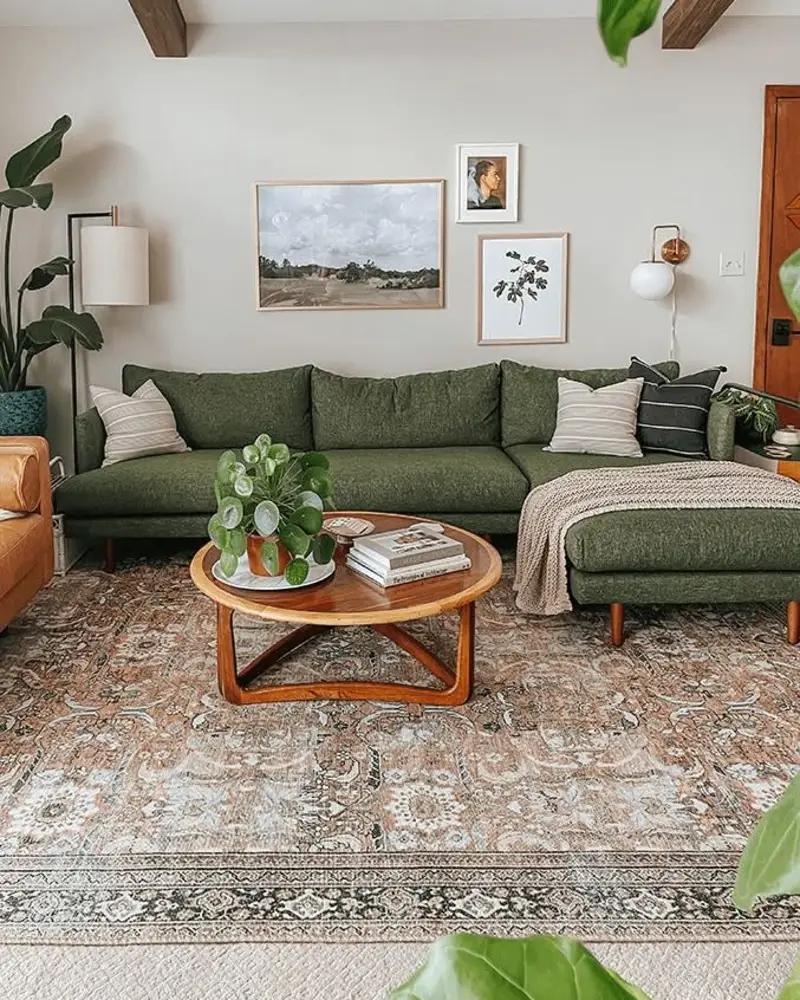
Deep olive green sectional stretches across the wall, offering generous seating without filling the room with separate chairs. A round wood coffee table anchors the center, while layered artwork, warm wood beams, leafy plants, and a faded vintage rug add texture and keep the space grounded.
One well-sized sectional can replace several small seats while keeping the layout calm and connected.
This arrangement works because the sectional hugs the perimeter, leaving the middle open for movement around the round table. The layered rug defines the seating area, while the compact coffee table keeps everyone within easy reach without interrupting the flow. Designers often recommend choosing one substantial seating piece over several mismatched chairs in compact living rooms because it creates a cleaner layout and maximizes usable seating.
15. Curved White Sofa with Round Oak Coffee Table and Soft Abstract Art
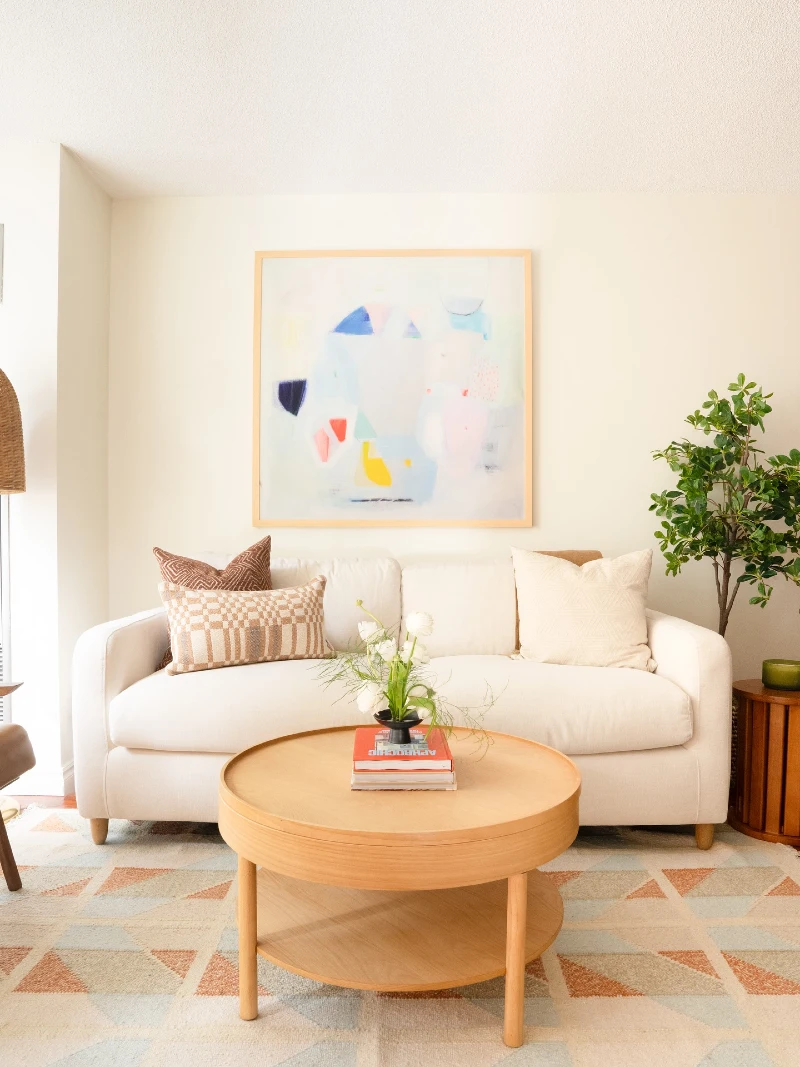
Curved white sofa sits beneath a large abstract artwork in pale pastel tones, creating a calm focal point against the light wall. A round oak coffee table, leafy indoor tree, and slim side table complete the layout, while soft neutral pillows add gentle contrast without making the room feel busy.
Rounded furniture keeps circulation easy and helps a compact seating area feel open from every angle.
This arrangement feels balanced because the curved sofa and circular coffee table echo each other, eliminating sharp corners in the main walking path. The oversized artwork also gives the eye one clear destination, allowing the rest of the room to stay clean and uncluttered. Designers often recommend round tables and lighter visual weight in small living rooms to improve flow and make every piece earn its place.
Quick Decorating Tips
- Budget version: Pair a simple cream sofa with one oversized art print instead of filling the wall with several small frames.
- Renter tip: Lean large artwork on picture ledges or use removable hanging strips to avoid permanent wall damage.
- Pro move: Keep about 18 inches between the sofa and coffee table for comfortable movement and easy reach.
16. Modular Lounge Seating with Glass Partition and Open Kitchen View
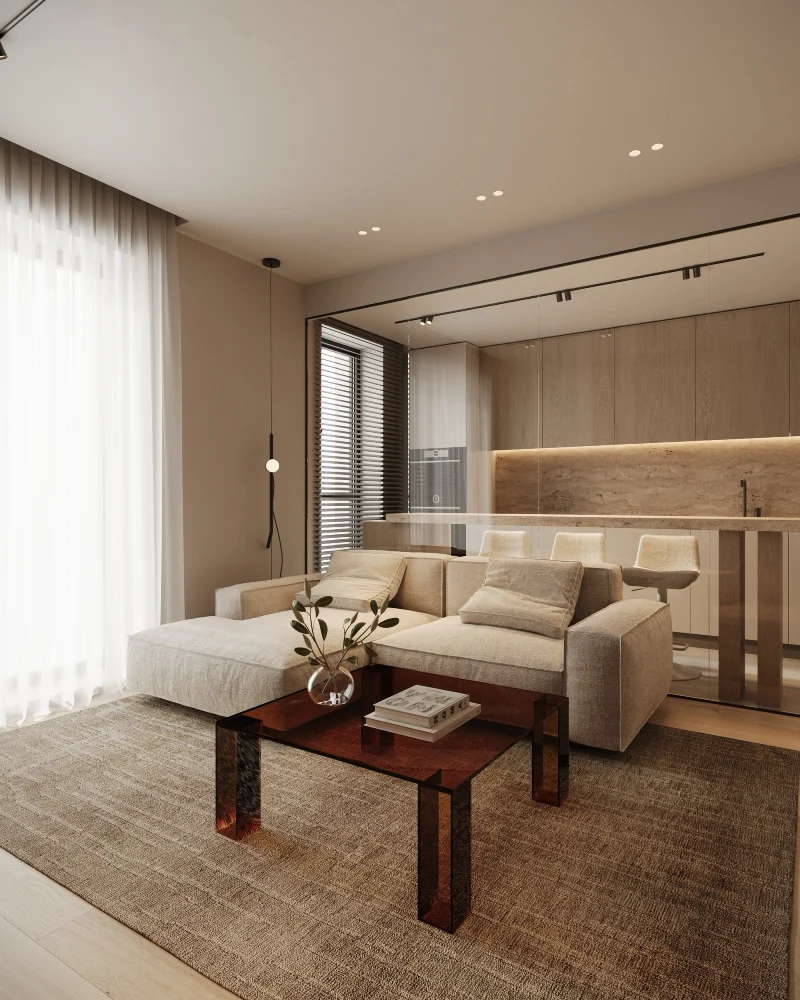
Low modular sofa with a chaise anchors the living area, while a smoked glass coffee table keeps the center visually light. Behind the seating, a full-height glass partition separates the kitchen without blocking daylight, creating two clear zones that still feel connected.
Clear zoning can make one compact room feel like two useful spaces without adding solid walls.
This layout succeeds because the sofa defines the living room, while the glass divider preserves long sightlines across the home. Keeping each zone visually connected is a common strategy in compact open-plan spaces because it improves flow while giving every area a distinct purpose. Designers also recommend using furniture placement and transparent dividers instead of heavy partitions to maintain light and openness.
17. Marble TV Wall with Curved Sofa and Lighted Display Shelves
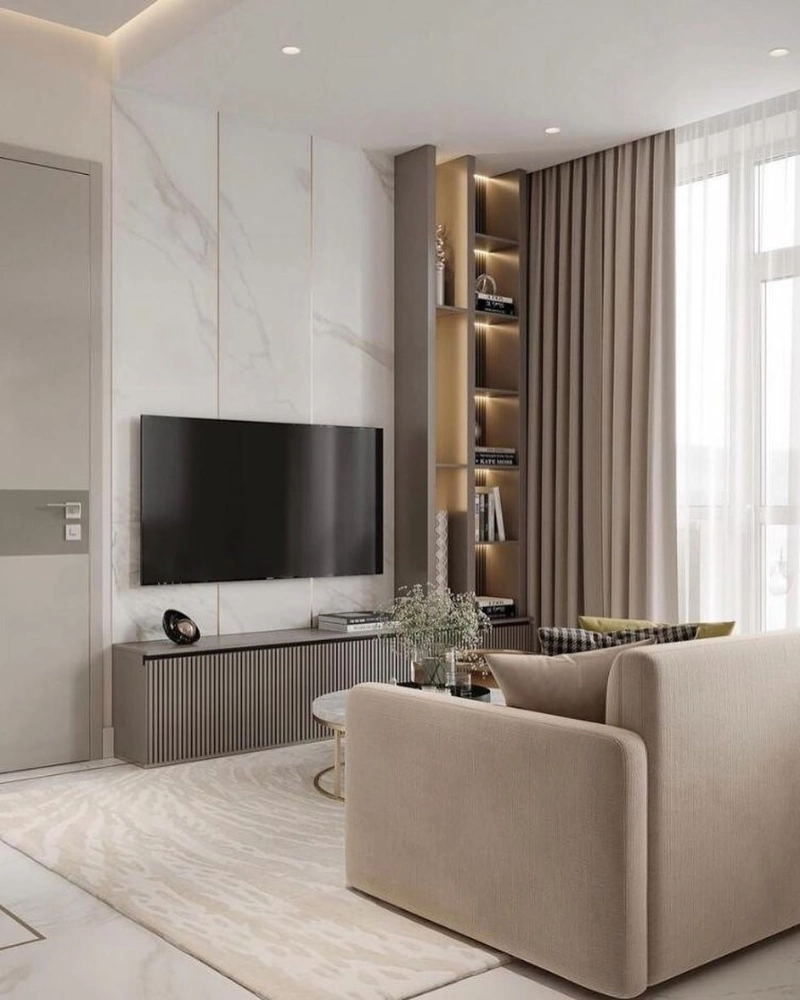
Softly curved cream sofa faces a wall-mounted TV set against large marble-look panels, while slim display shelves with warm built-in lighting frame the corner. Floor-to-ceiling curtains, a round glass coffee table, and a low media cabinet keep the room bright and uncluttered despite the compact footprint.
Built-in storage adds function without asking for more floor space.
This layout feels larger because the storage rises vertically instead of spreading across the room. The rounded sofa softens the circulation path, and the lighted shelving draws the eye upward, making the ceiling feel higher. Recent designer advice also favors built-ins and visually light furniture over bulky standalone pieces in compact living rooms.
18. Camel Sofa with Round Coffee Table and Full-Length Drapes
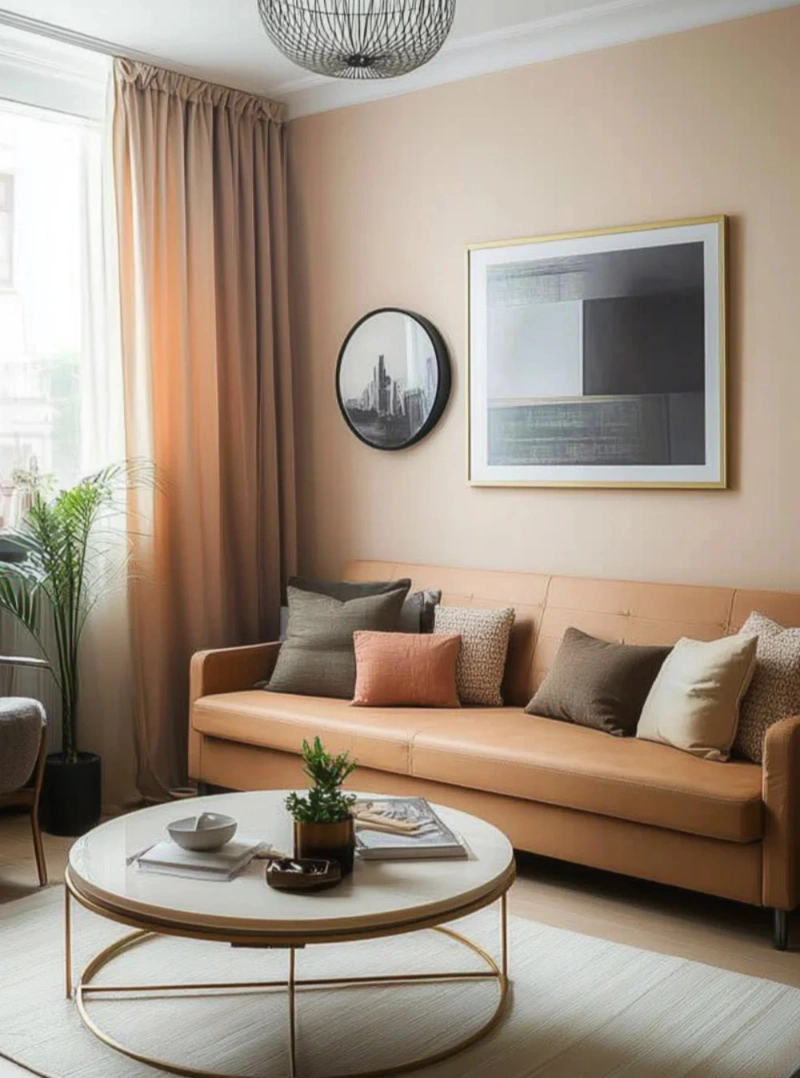
Camel leather sofa anchors the wall beneath layered artwork, while a large round coffee table with a slim metal base keeps the center light and easy to move around. Full-height drapes soften the tall window, and a small plant in the corner brings fresh color without taking up valuable floor space.
A slim sofa paired with a round table creates generous circulation in a compact room.
This layout feels open because every large piece has breathing room around it. The oversized curtains draw the eye upward, while the round table removes sharp corners from the main walkway. Design experts also recommend curved tables and furniture with lighter visual weight in small living rooms because they improve flow and reduce the feeling of crowding.
Quick Decorating Tips
- Budget version: Refresh an older sofa with warm neutral cushions instead of replacing the entire piece.
- Renter tip: Hang floor-length curtains close to the ceiling to make the room feel taller without changing the architecture.
- Pro move: Leave about 18–24 inches of walking space around the coffee table so guests can move comfortably through the seating area.
19. Fireplace Seating with Twin Armchairs and Tall Corner Windows
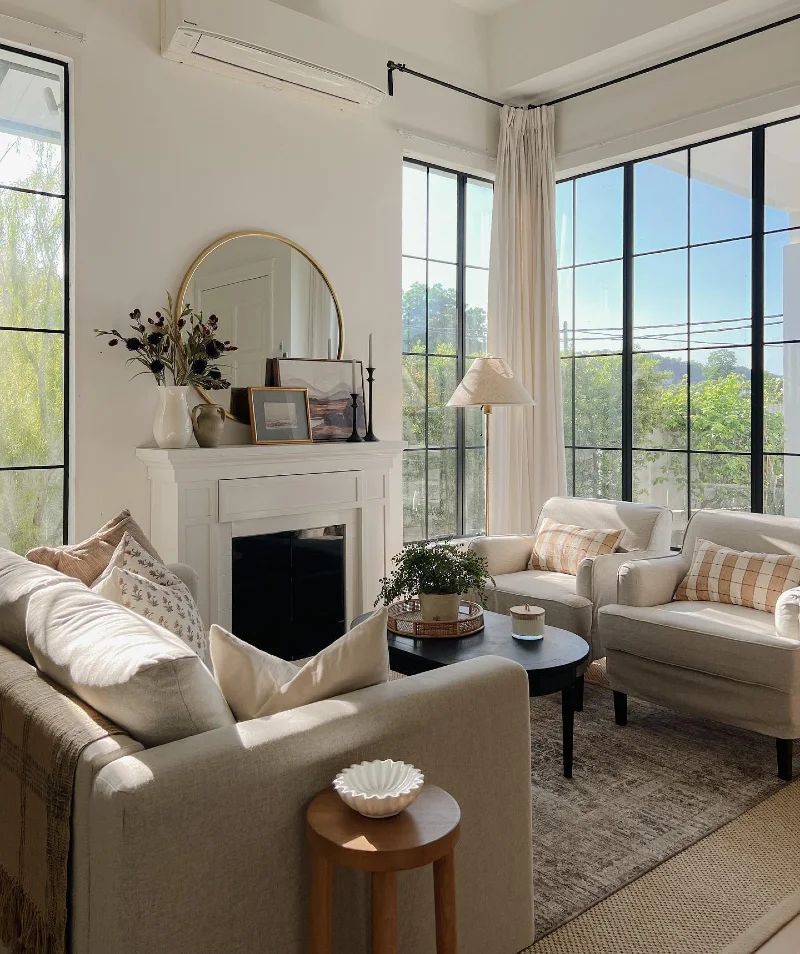
Soft neutral sofa faces two matching armchairs across a round black coffee table, creating a balanced conversation area around the fireplace. Tall black-framed corner windows flood the room with daylight, while a round mirror, layered mantel styling, and light linen curtains keep the space bright and welcoming.
Matching chairs can add generous seating without making a compact room feel crowded.
This layout succeeds because every seat faces the center, making conversation as natural as watching the fire. The round coffee table improves movement between the sofa and chairs, while the corner windows extend the view beyond the room, making the layout feel more spacious. Designers also recommend arranging furniture around a shared focal point instead of pushing every piece to the walls, which helps even small living rooms feel more connected and inviting.