
Most people stare at a blank, flat box of a room and assume they need expensive millwork to give it character. You have glared at plain drywall panels, wishing for wainscoting that a tight budget cannot cover.
Empty space feels cold without structural interest anchoring the layout. Craving a home with historic charm or modern depth is normal, yet raw construction costs force brutal compromises.
Paint gives you the power to fake expensive details using tape and a roller. These two-tone treatments deliver serious architectural impact for the cost of a few gallons.
1. Mustard Yellow Half-Painted Wall with Slim Black Console Table and Woven Baskets
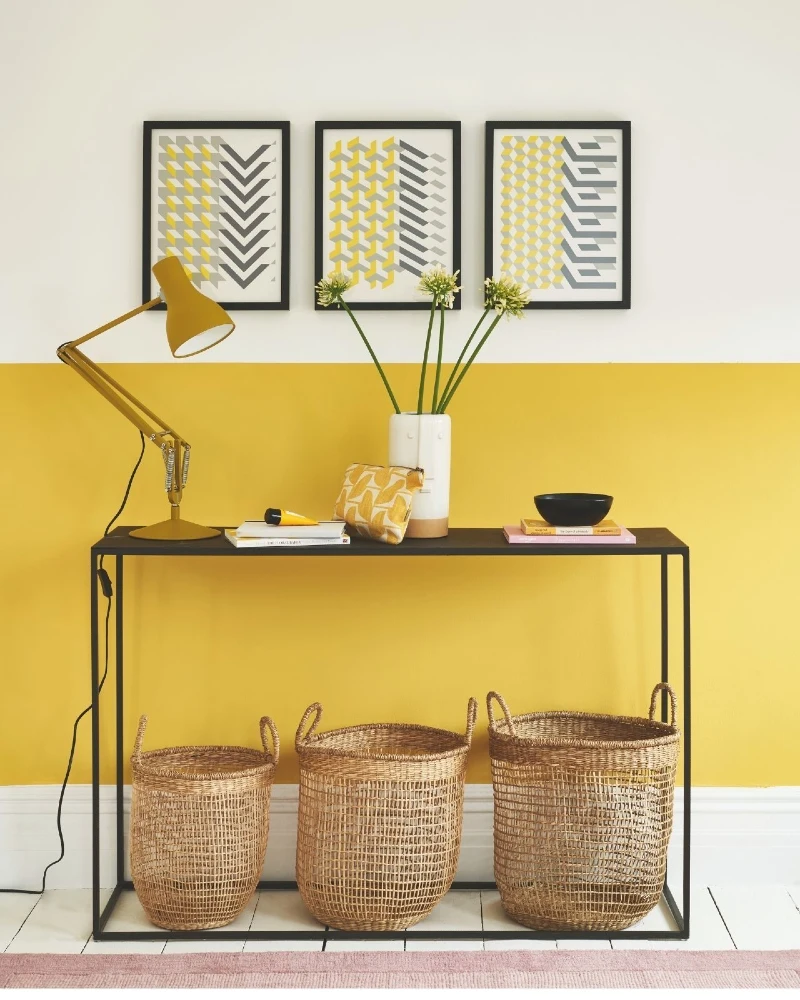
A vibrant mustard yellow paint covers the lower portion of the wall, meeting a crisp white upper section in a sharp horizontal split. A minimalist black metal frame console table rests against this sunny backdrop, housing three open woven wicker baskets underneath.
Above the dividing line, a trio of matching black frames showcases yellow and grey geometric graphic art prints that mirror the room’s color scheme.
Aligning your furniture and artwork with the paint horizon creates an immediate sense of architectural purpose.
Notice how the black console table cuts straight across the yellow block, grounding the airy space and adding clean geometric lines.
The yellow desk lamp and patterned graphic prints tie the two zones together by pulling the lower wall color upward past the dividing seam. Using woven baskets on the floor softens the harsh contrast between the bold paint line and the crisp white floorboards.
2. Pastel Pink Living Room Corner with Sage Green Painted Arch and Floating Ledges
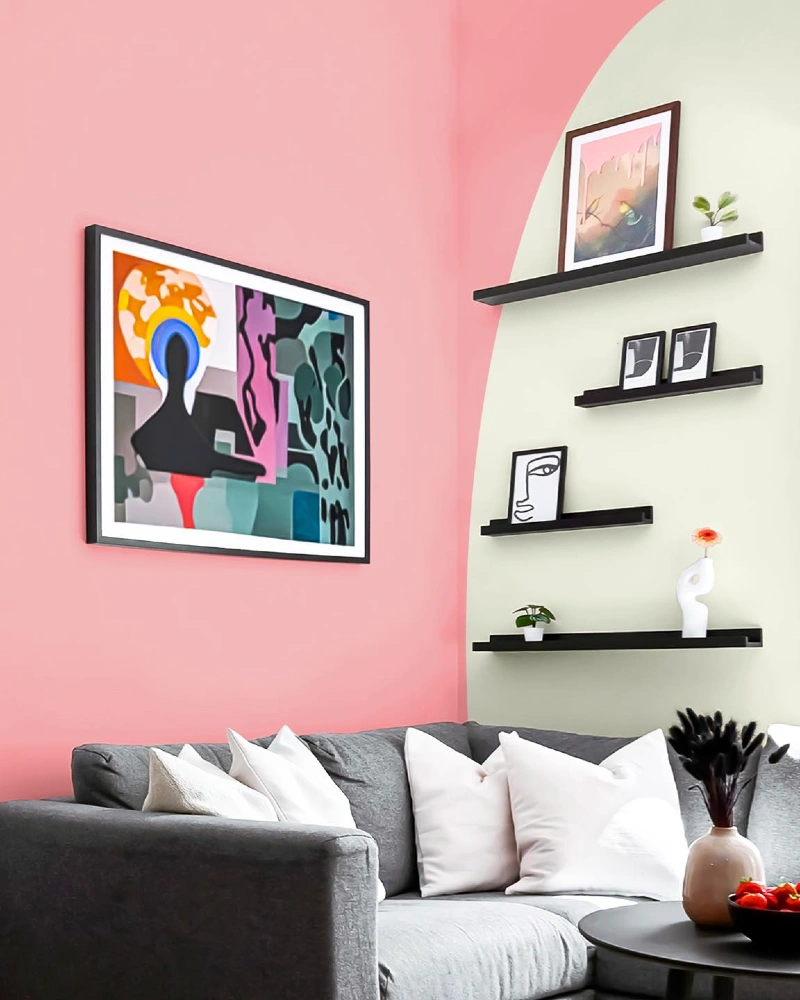
A soft pastel pink hue coats the primary living room walls, while a large sage green arch introduces a playful secondary zone right in the corner.
Four sleek black floating picture ledges ascend within the green curve, holding a mix of minimalist art frames and small potted plants. Below this display, a plush charcoal grey sectional sofa sits piled with crisp white throw pillows, anchoring the colorful vertical layout.
Stepping away from straight lines allows a painted curve to define a specific functional zone within an open space.
This arched color block acts as a faux architectural alcove, drawing the eye upward and maximizing an underutilized corner.
The black floating shelves ground the airy pastel tones by echoing the dark frame of the larger abstract art piece on the adjacent pink wall. Layering small decorative objects, like the curvy white ceramic vase and tiny green leaves, breaks up the solid paint blocks with organic shapes.
3. Terracotta and Beige Split-Color Wall with a Patterned Armchair and Painted Door
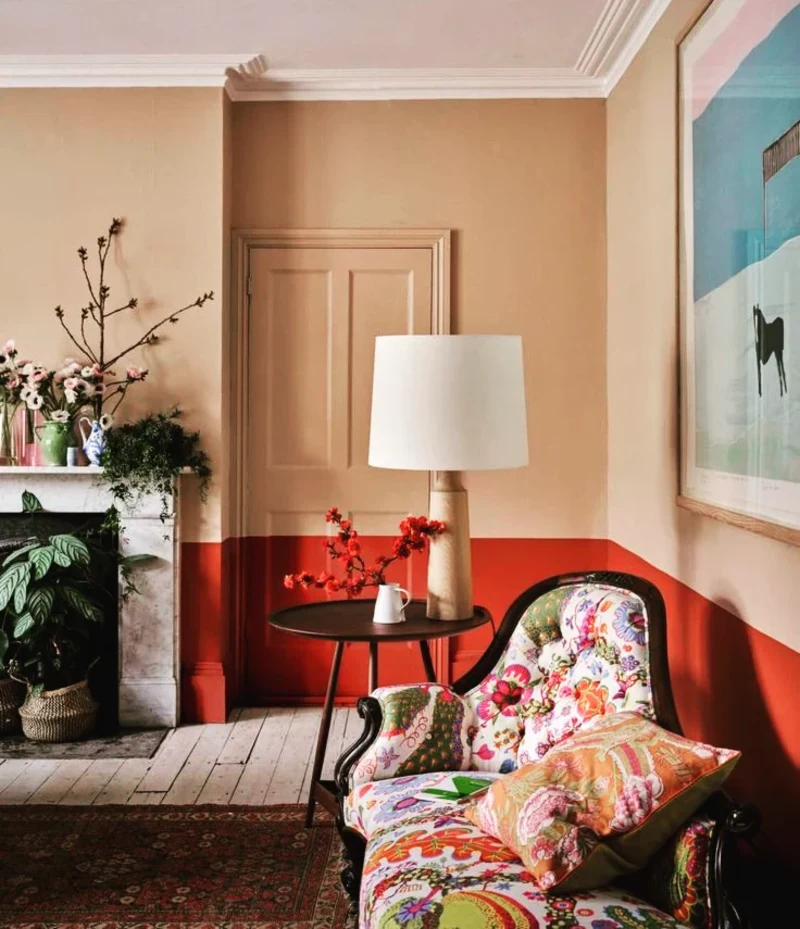
A rich terracotta red coats the lower third of this room, slicing directly across a classic paneled interior door. Above this bold anchor, a warm beige shade climbs up to meet crisp white crown molding.
A maximalist floral-print armchair sits in the foreground, accompanied by a dark wood tripod side table holding a massive ceramic table lamp.
Carrying your paint line straight across doors and trim conceals choppy architectural breaks for a unified look.
This historic living room embraces high-contrast zoning to make traditional features feel fresh and deliberate. The continuous horizontal split lowers the visual ceiling, wrapping the seating area in a cozy, grounded embrace. It proves that historic architectural elements do not always require white paint to stand out.
Why This Works
- Color Anchor: The saturated red base grounds the eccentric, multicolored textile patterns on the armchair.
- Scale: An oversized drum lamp shade balances the height of the door frame and draws the eye upward.
- Negative Space: The muted beige upper wall allows the intricate floral details and busy oriental rug to breathe.
4. Moody Charcoal and Slate Blue Split Wall with Traditional Paneled Door and Patterned Floor Tiles
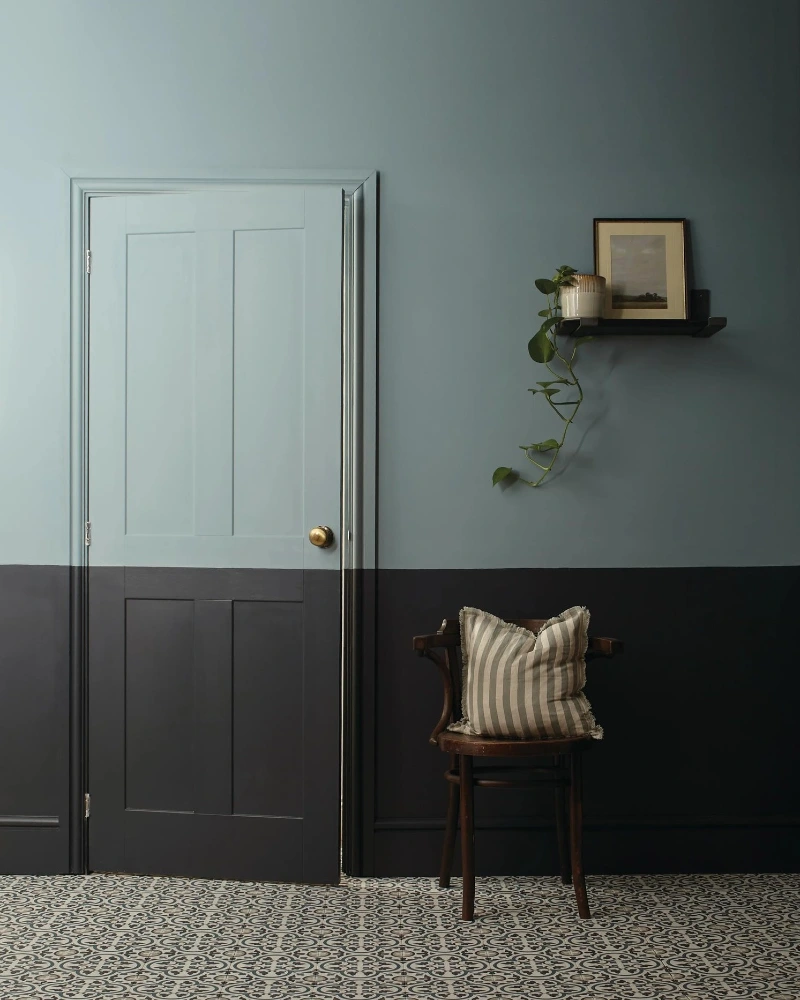
A deep charcoal black blankets the bottom third of the room, continuing across a traditional four-panel wooden door and its outer trim.
Above this dark baseline, a dusty slate blue paint extends toward the ceiling, creating a moody, shadowy backdrop. A rustic dark wood chair with a striped cushion sits against the wall, while an intricate black and white patterned tile floor spans the room.
Enclosing the lower section of a room in an ultra-dark shade hides low-set clutter and mimics traditional wainscoting.
The continuous horizon line across the door trim creates a smooth, unbroken flow around the room.
A small black floating shelf breaks up the slate blue section, hosting a framed landscape print and a trailing pothos plant that spills green leaves downward. This setup showcases how rich, cool tones work together to build a sophisticated entryway layout.
5. Muted Olive and Cream Two-Tone Wall with Brown Leather Sofa and Tiered Pendant Light
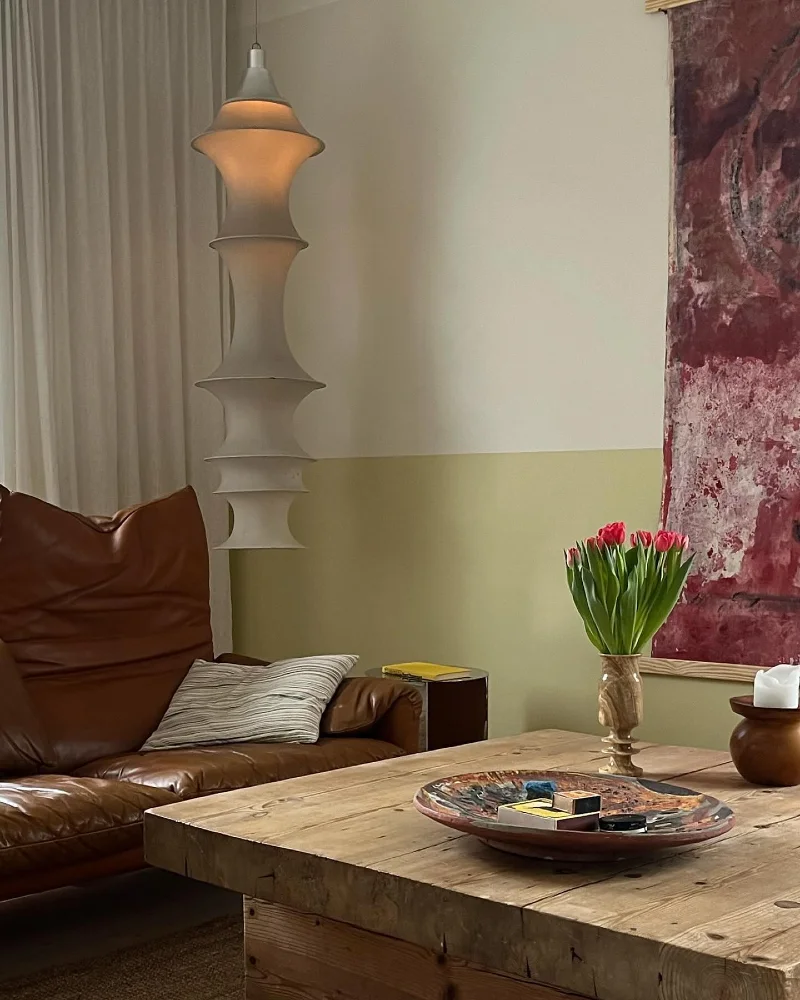
A soft, muted olive green blankets the lower section of the wall, meeting an airy cream shade in a crisp horizontal boundary.
A slouchy brown leather sofa rests in the corner, topped with a striped accent pillow and illuminated by a sculptural, multi-tiered fabric pendant light. In the foreground, a substantial raw wood coffee table holds a marbled vase filled with fresh pink tulips and a shallow decorative ceramic dish.
Soft, earthy paint combinations establish a relaxed, lived-in atmosphere that complements organic textures.
The low paint boundary keeps the focus on the cozy seating area, mimicking the height of a traditional chair rail.
A large burgundy abstract canvas hanging on the right cuts across both color zones, weaving the contrasting wall shades into a cohesive layout. Sheer cream curtains filter the incoming daylight, bathing the natural wood and leather elements in a soft, diffused glow.
Quick Decorating Tips
- Budget version: Use an affordable canvas drop cloth and fabric dye to craft a large-scale textured wall hanging yourself.
- Renter tip: Hang a tiered paper or fabric lantern using a plug-in cord and an adhesive ceiling hook to get the sculptural lighting look without hardwiring.
- Pro move: Introduce a deeply saturated accent color, like the burgundy in the artwork or the pink in the flowers, to shatter the monotony of neutral tones.
6. Lavender Half-Painted Door and Matching Patterned Lightning Bolt Wallpaper
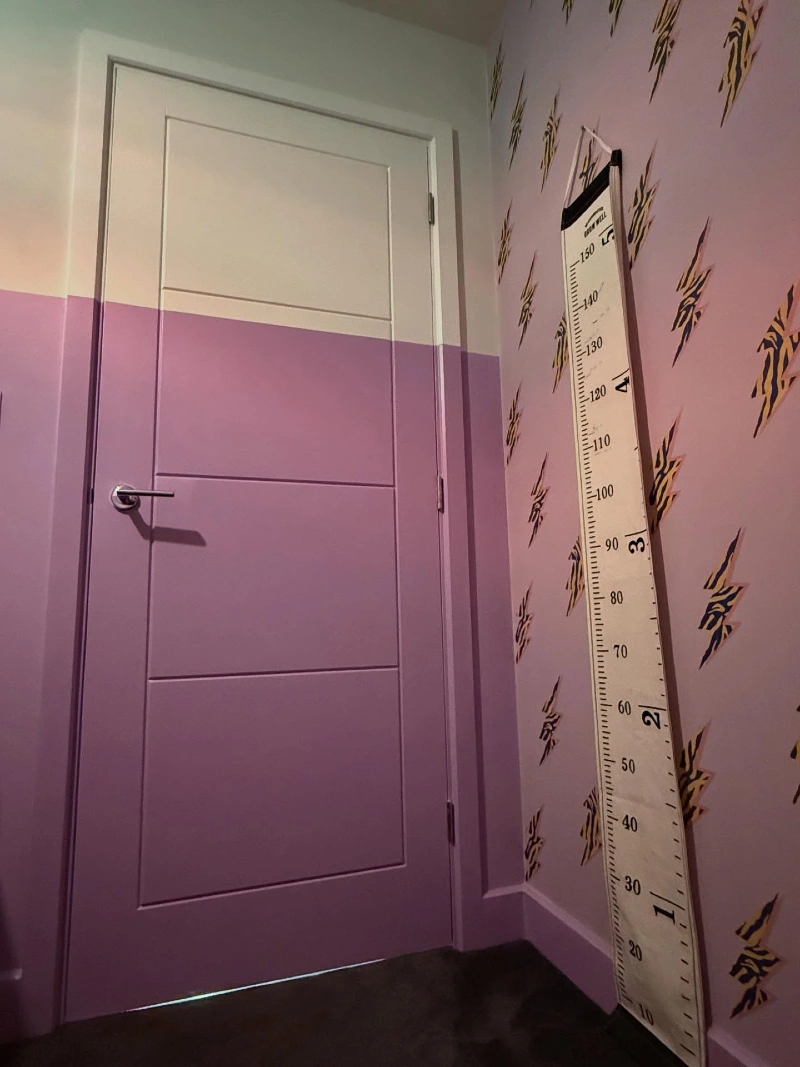
A playful lavender purple covers the lower two-thirds of a modern paneled door and its surrounding casing before cleanly transitioning to a crisp white top section. On the adjacent wall, a matching lavender background features a repeated pattern of graphic, multi-colored lightning bolts.
A long canvas growth chart with bold black measurements hangs vertically against this patterned surface, resting right above the dark carpeted floor.
Matching your paint height across multiple walls and doors brings structured alignment to playful spaces.
Slicing a solid block of color across the door minimizes the visual clutter of frames and hinges in a tight hallway or bedroom entry.
This design choice uses the block of lavender to establish a clear baseline, allowing the busy wallpaper pattern beside it to feel grounded rather than chaotic. Soft, filtered light casts gentle shadows that highlight the geometric panels of the door without washing out the whimsical pastel tones.
7. Teal Coastal Half-Painted Wall with Scalloped Blue Sideboard and Woven Rattan Lamp
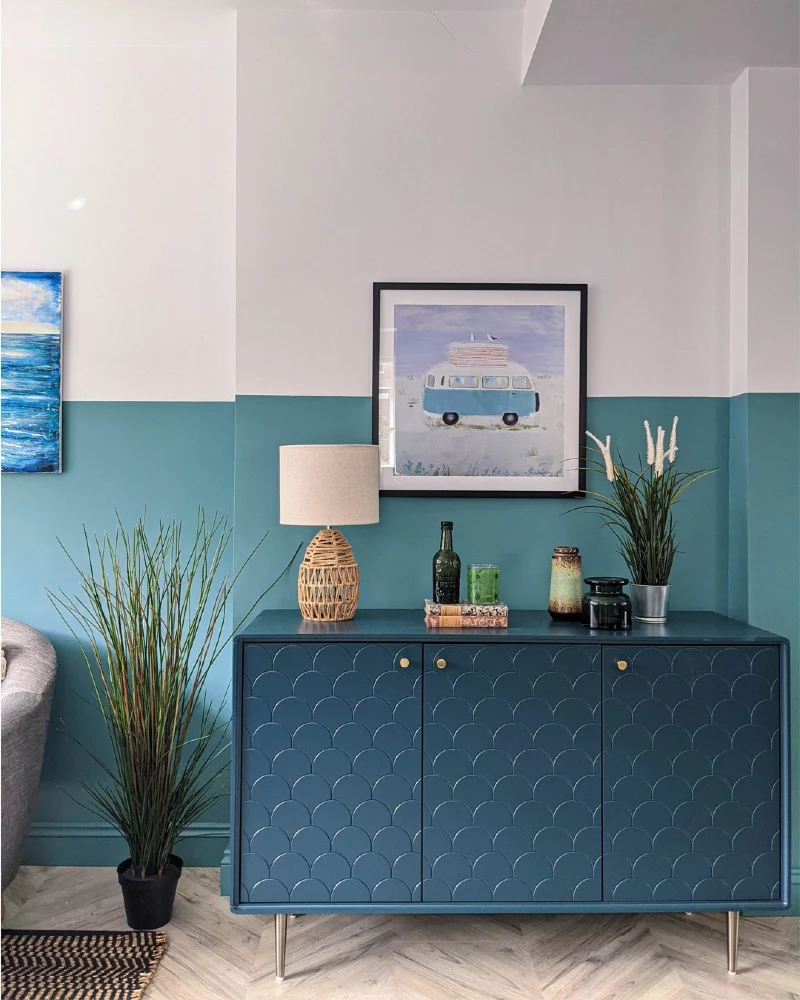
A soft teal hue covers the lower half of the wall, meeting a crisp white upper portion in a straight horizontal line.
A deep blue credenza featuring an intricate scalloped pattern rests against this backdrop, styled with a woven rattan table lamp, stack of vintage books, and small decorative bottles. Right above the color split, a black-framed art print of a blue van perfectly bridges the two wall shades.
Layering furniture that is slightly darker than your wall paint builds a rich, monochromatic depth without crowding the space.
The hard horizontal line creates a faux chair rail that grounds the tall console setup. Tall, airy potted grasses flank the sideboard, introducing organic movement that breaks up the rigid geometry of the painted boundary.
Natural light streams across the herringbone wood floors, softening the cool blue and green tones with a breezy, coastal warmth.
8. Rose Pink Half-Painted Wall with Round Brass Dining Table and Quilted Tan Chairs
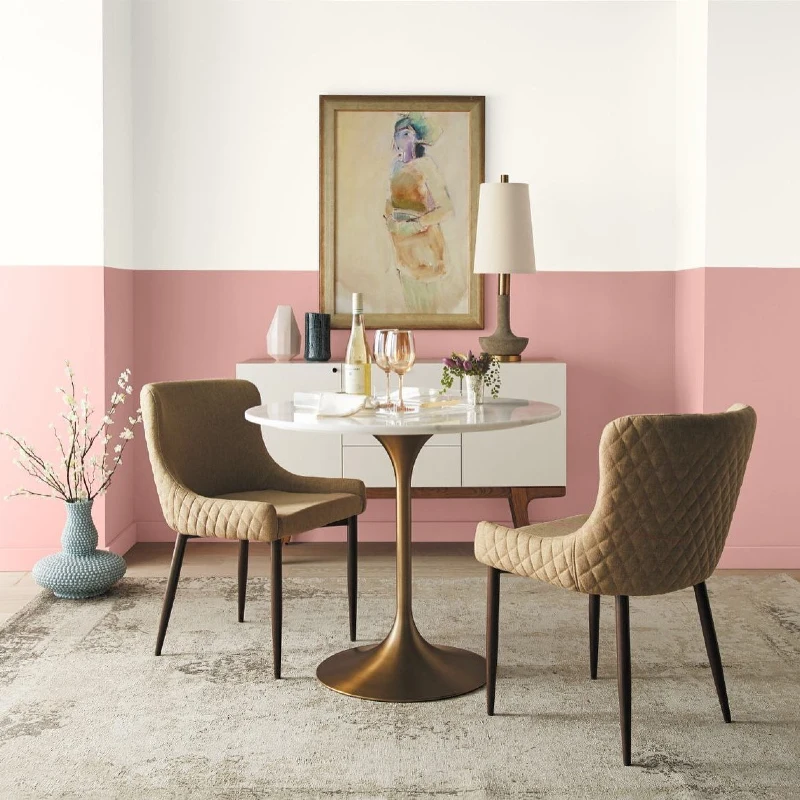
A dusty rose pink coats the lower half of the dining room, ending at a precise midway point beneath a bright white upper wall.
Centered in the space, a round marble-topped table features a sweeping brass pedestal base. Two tan dining chairs with intricate diamond quilting flank the table, resting on a faded grey vintage area rug.
Splitting color right at the midpoint of a portrait pulls disparate furniture heights into a singular, balanced composition.
A large framed figurative painting hangs on the wall, intentionally crossing the sharp line where pink meets white.
This positioning anchors the white sideboard underneath, preventing the storage piece from looking detached from the rest of the layout. Soft light washes over the textured surfaces, accentuating the quilted velvet fabric and the metallic sheen of the table base.
Why This Works
- Focal Point: The framed artwork spans both paint colors to smoothly connect the upper and lower halves of the room.
- Texture: Diamond-quilted stitching on the dining chairs adds geometric grit to the smooth plaster walls.
- Scale: A low white credenza mimics the horizontal paint line, making the ceilings feel taller than they are.
9. Terracotta Zellige Squares and White Brick Tile Bathroom with Curved Sage Vanity
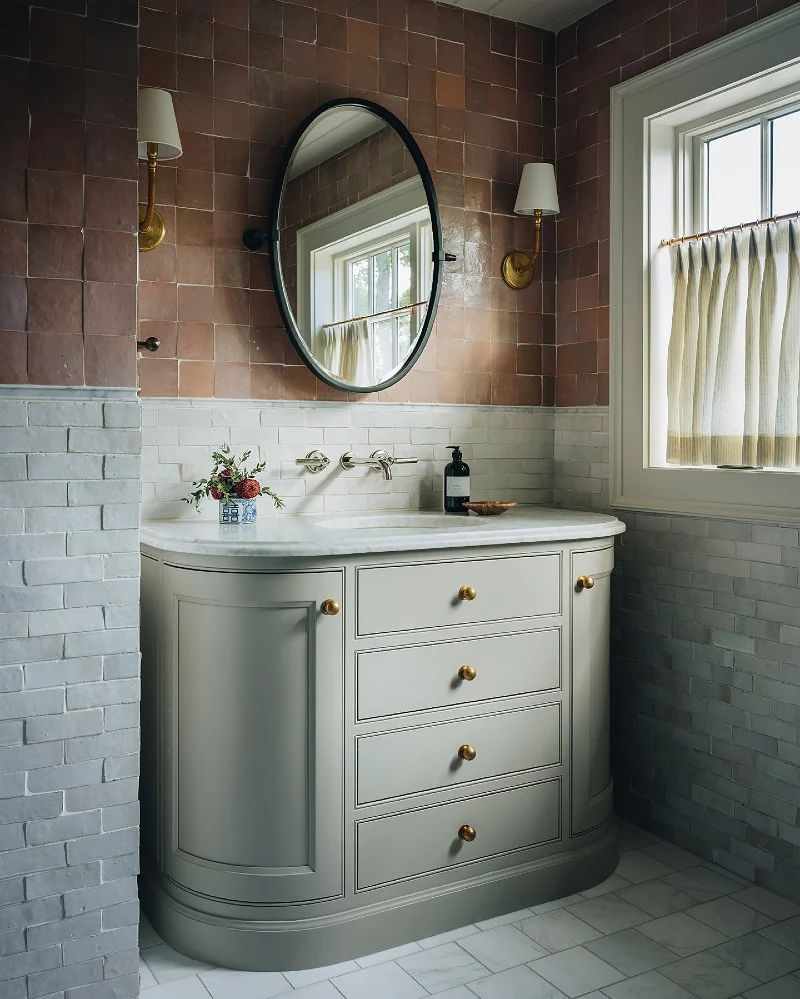
A split-material wall features earthy, variegated terracotta square tiles on the upper half and glazed white brick-style tiles below. A curved sage green vanity with brass knobs sits flush against the masonry, topped with a white marble counter and a wall-mounted silver faucet.
An oval black-framed mirror hangs centered between two traditional brass wall sconces topped with crisp fabric shades.
Mixing tile shapes and textures instead of paint colors introduces real structural permanence and old-world grit.
Breaking bathroom walls horizontally with distinct materials creates a durable, wipeable boundary that replaces the need for crown trim.
The rounded contours of the vanity break up the rigid grid lines of the masonry, making a compact washroom feel spacious and custom-built. Filtered light from the window glances off the glazed surfaces, highlighting the rich variations in the handmade clay.
10. Mint Green Half-Painted Walls with Pink Curtains and White Spindle Bed
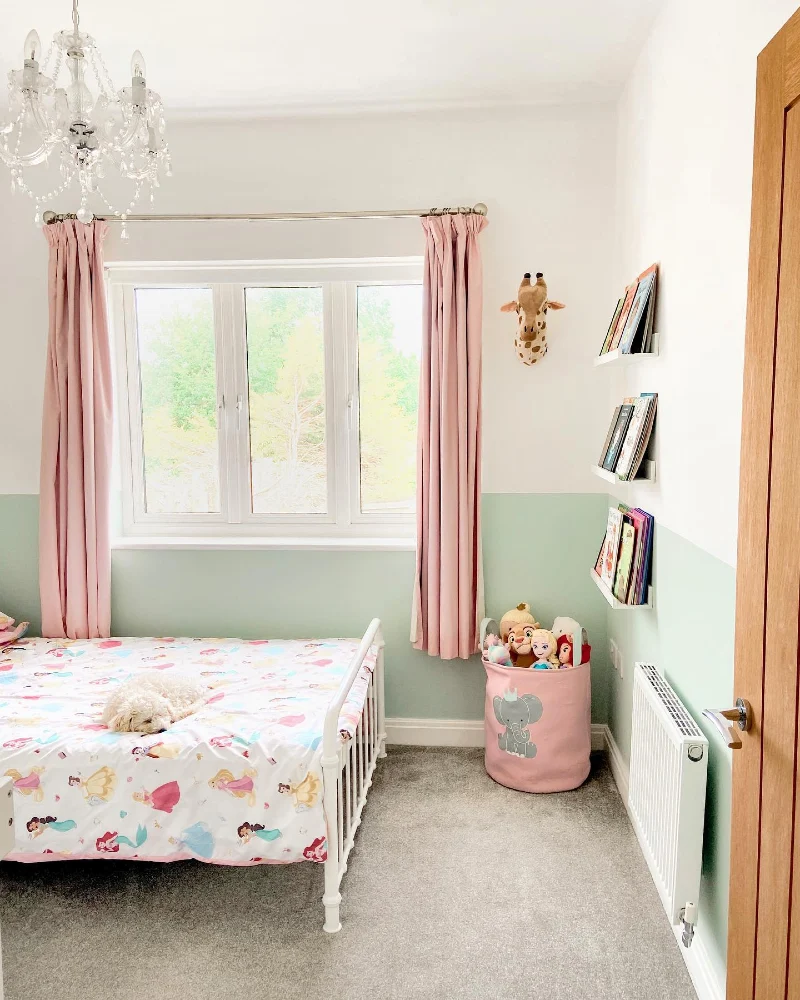
A soft mint green blankets the lower half of this whimsical child’s bedroom, meeting a bright white top section right at the window sill line.
Blush pink curtains drape elegantly around a large white-framed window, while a white metal spindle bed features colorful patterned bedding. A crystal chandelier hangs from the ceiling, and stacked white floating ledges display colorful storybooks along the side wall.
Splitting a bedroom wall at window-sill level creates a calming perimeter that scales a high ceiling down to a child’s perspective.
The mint green baseline acts as a quiet anchor for the busier elements, like the graphic book covers and a toy-filled storage bin.
Hanging a plush giraffe head and floating shelves higher up on the white plaster section utilizes vertical space without making the room feel crowded. Soft textures like the plush gray carpet and flowing drapery filter the morning light into a warm, inviting glow.
Quick Decorating Tips
- Budget version: Purchase plain fabric storage bins and use fabric paint to stencil custom animal silhouettes yourself.
- Renter tip: Mount lightweight plastic book ledges using heavy-duty adhesive strips to display colorful illustrations without drilling into the drywall.
- Pro move: Install a crystal chandelier to inject unexpected vintage drama and elegant sparkle into a playful pastel layout.
11. Mid-Tone Blue and Cream Split-Color Painted Bedroom with White Trimmed Windows
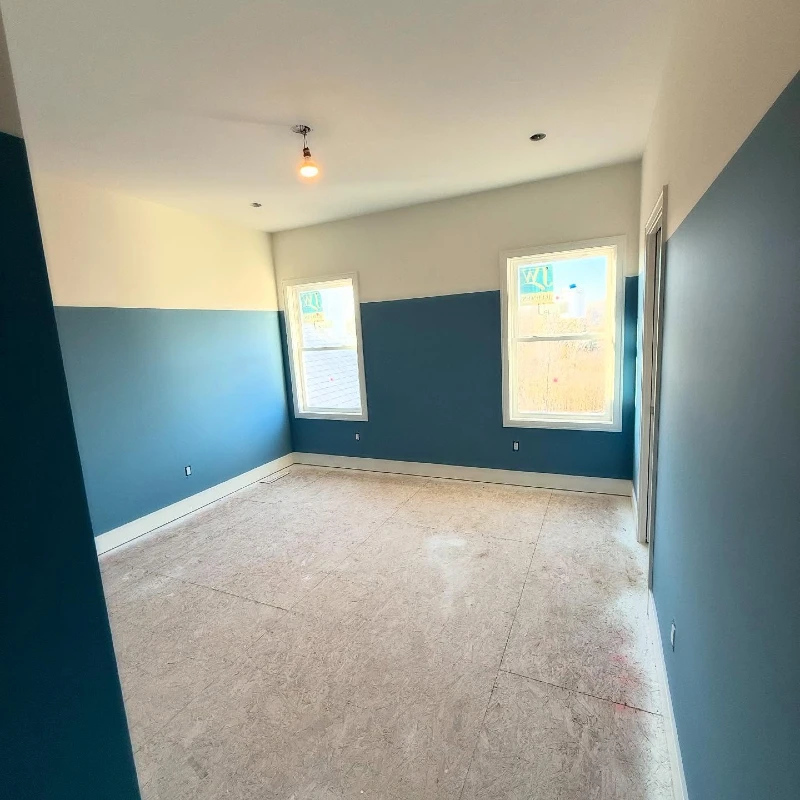
A solid block of mid-tone slate blue covers the lower three-quarters of an empty room, wrapping continuously across corners and doorways. Above this deep color line, a warm cream paint stretches upward to meet a flat white ceiling.
Two large windows with crisp white frames slice through the blue zone, revealing open outdoor views through their glass panes while raw plywood subflooring lines the ground below.
Wrapping a dark shade well above the halfway mark of a wall mimics a high chair rail and adds historical scale to flat drywall.
This configuration uses white window molding to break up the solid blue perimeter, creating clean geometric contrast. The cream upper band prevents a deeply saturated wall from making the bedroom layout feel like a dark cavern.
Soft, filtered sunlight streams in through the dual windows, casting subtle, diffused shadows that highlight the matte finish of the newly painted surfaces.
12. Deep Maroon Diagonal Split Staircase Wall with White Handrail and Beige Upper Section
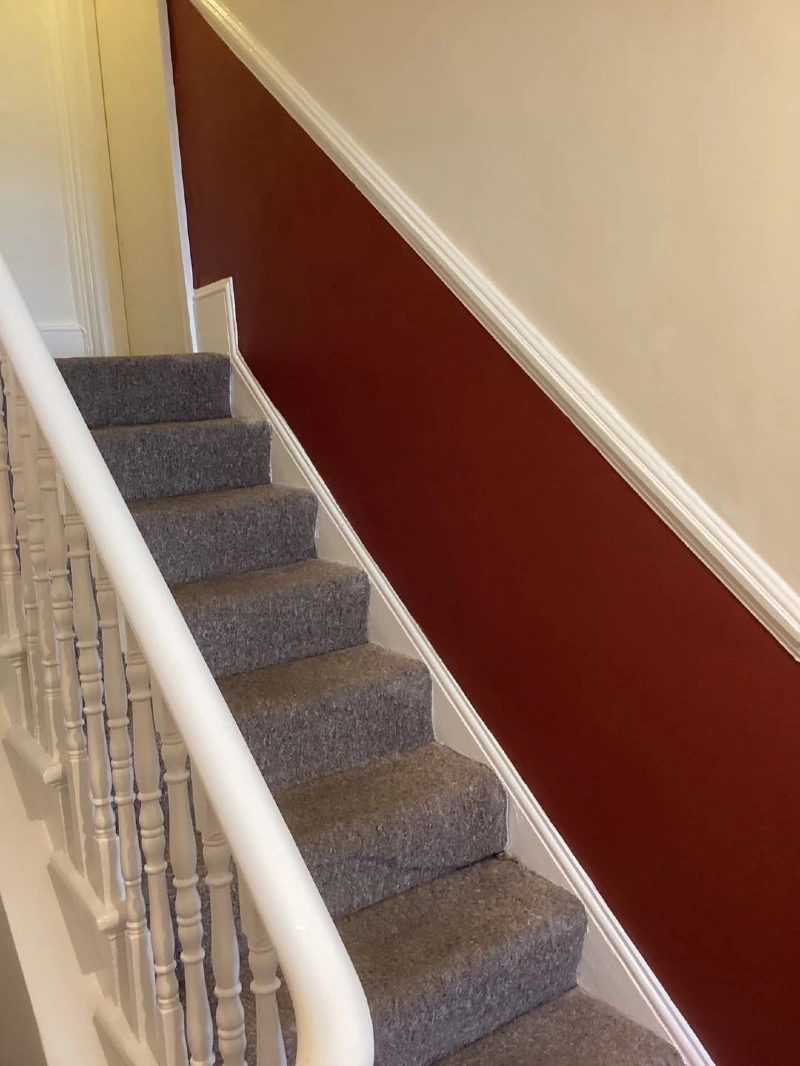
A rich, deep maroon paint runs diagonally along the staircase wall, following the upward slope of the steps. This bold color block is separated from a warm beige upper section by a crisp, white wooden chair rail molding.
Grey plush carpeting covers each stair tread, while a traditional white-painted wooden handrail with turned spindles borders the opposite side of the flight.
Tracing the natural angle of a staircase with a saturated color band gives a dynamic sense of movement to transition zones.
The diagonal lines created by the paint and molding mimic the physical architecture of the stairs, turning a plain hallway into a structured focal point. The white handrail and white trim piece slice through the warm hues, providing a clean geometric frame that separates the two wall shades.
Soft, warm indoor light casts a gentle glow across the matte painted surfaces, highlighting the rich contrast between the dark maroon baseline and the light beige plaster.
13. Grass Green Painted Central Column and Matching Ceiling Medallion
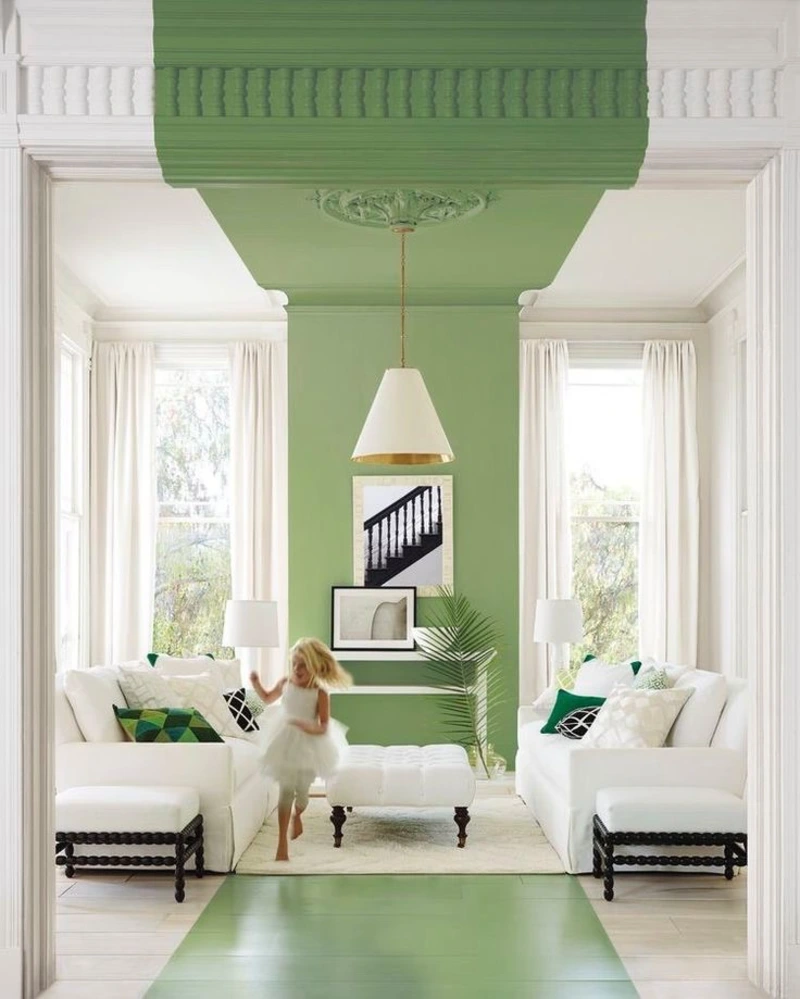
A rich grass green paint covers a central wall column, continuing upward to wrap around a decorative ceiling rose and crown molding. This bold stripe extends downward to create a painted runner across the white floorboards, effectively slicing the room into two balanced seating zones.
Crisp white sofas and floor-to-ceiling curtains frame the intense green anchor, softening the graphic impact.
Extending a single paint color across floors, walls, and ceilings builds a sculptural frame that defines the architecture of a room.
Using paint to connect the floor and ceiling creates a cohesive spine that pulls the eye directly through the center of the space.
This technique works best in symmetrical layouts where the central colored element acts as a visual anchor. Subtle gold accents in the pendant light and molding highlight the warm undertones of the green shade.
Why This Works
- Visual Spine: The central stripe acts as a fixed point that organizes the furniture and defines the flow of the room.
- Height Illusion: Carrying the paint across the ceiling draws the eye upward and emphasizes the scale of the crown molding.
- Zoning: Painting a floor runner separates the two white sofas into distinct conversational areas while maintaining a bright, open feel.
14. Blush Pink and Crisp White Split Wall with Olive Velvet Sofas and Graphic Art Prints
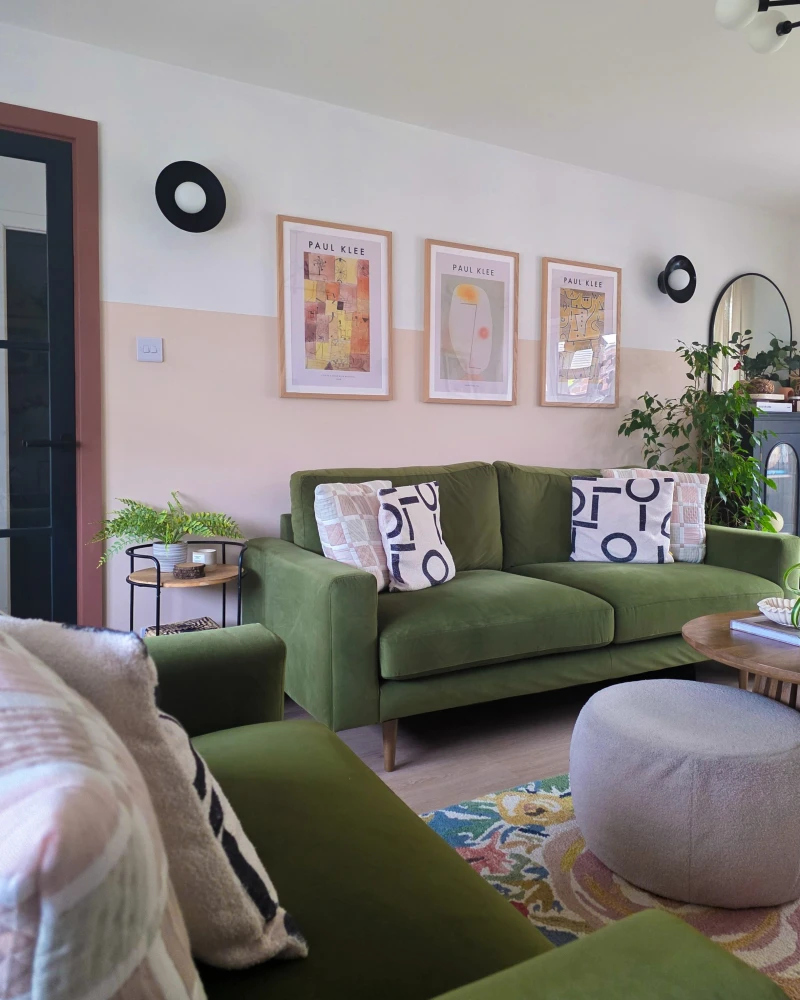
A pale blush pink blankets the lower two-thirds of the living room wall, meeting a clean white upper section in a sharp horizontal line.
A plush olive green velvet sofa sits against this delicate backdrop, adorned with black and white geometric graphic pillows and light checkered cushions. Three matching light wood frames showcasing abstract art prints are mounted directly across the color split, flanked by two circular black wall sconces.
Positioning your gallery frames to straddle the paint horizon seamlessly bridges the contrasting upper and lower wall shades.
The dusty pink baseline wraps around the room and extends onto the frame of a glass paneled door, unifying the layout.
A round wooden coffee table and a textured grey pouf rest on a vibrant, multi-colored floral area rug that echoes the warm tones of the walls. Soft morning light washes across the space, highlighting the matte wall finishes and the plush, dense texture of the green velvet upholstery.
15. Geometric Tri-Color Diagonal Painted Wall with Black Framed Botanical Prints
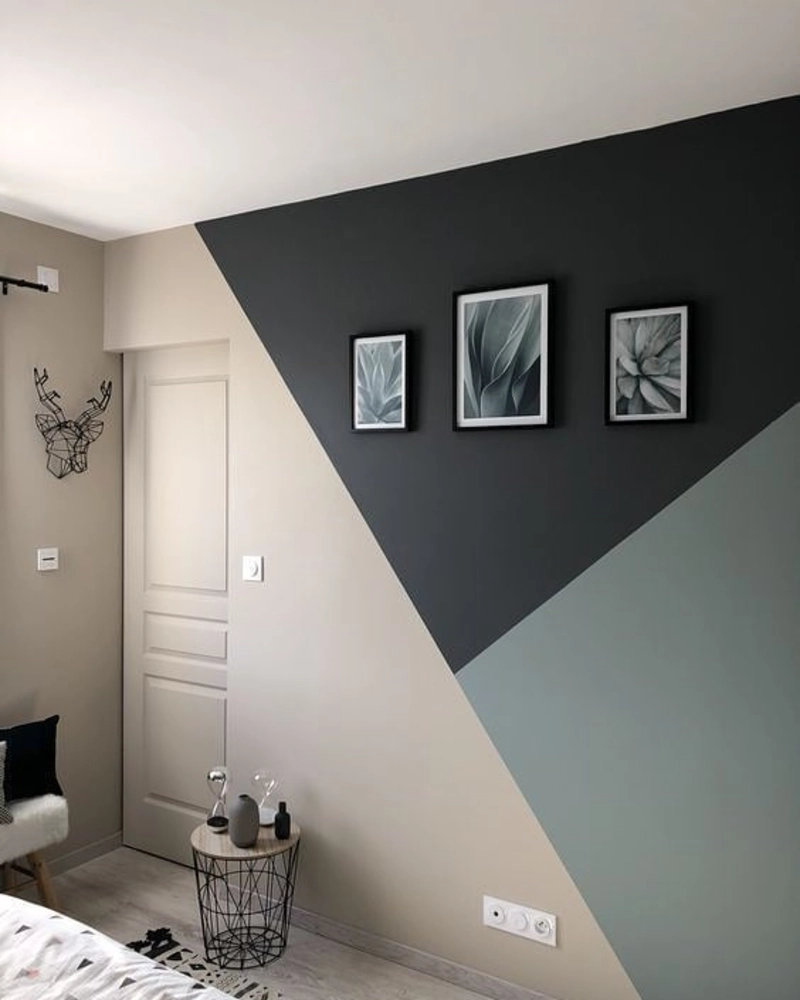
Large, sharp diagonal color blocks in charcoal grey, dusty sage green, and warm beige intersect across the primary bedroom wall.
Three matching black-framed monochromatic succulent prints line up horizontally within the dark upper triangle. A round wire basket side table with a wooden top sits near a classic white paneled door on the light beige section.
Steering away from standard horizontal splits into bold, sharp geometric blocks introduces high-contrast energy to a plain bedroom wall.
Clustering your art frames exclusively inside the darkest paint block makes the prints pop while keeping the surrounding lighter sections completely clean.
This geometric layout creates an optical illusion that draws your focus toward the center of the room. A black wire deer head sculpture hangs on the adjacent wall, echoing the crisp graphic lines of the painted triangles.
Quick Decorating Tips
- Budget version: Map out your geometric shapes with low-tack painter tape and thin pencil lines before buying a single sample pot.
- Renter tip: Use large geometric removable wall decals to form a sharp color-blocked accent corner without altering the landlord’s neutral plaster.
- Pro move: Paint your light switches and outlet covers to exactly match the specific color block they sit in to keep the visual planes clean.
16. Muted Pink Striped Wallpaper and Cream Wainscoting Hallway with Olive Green Banister
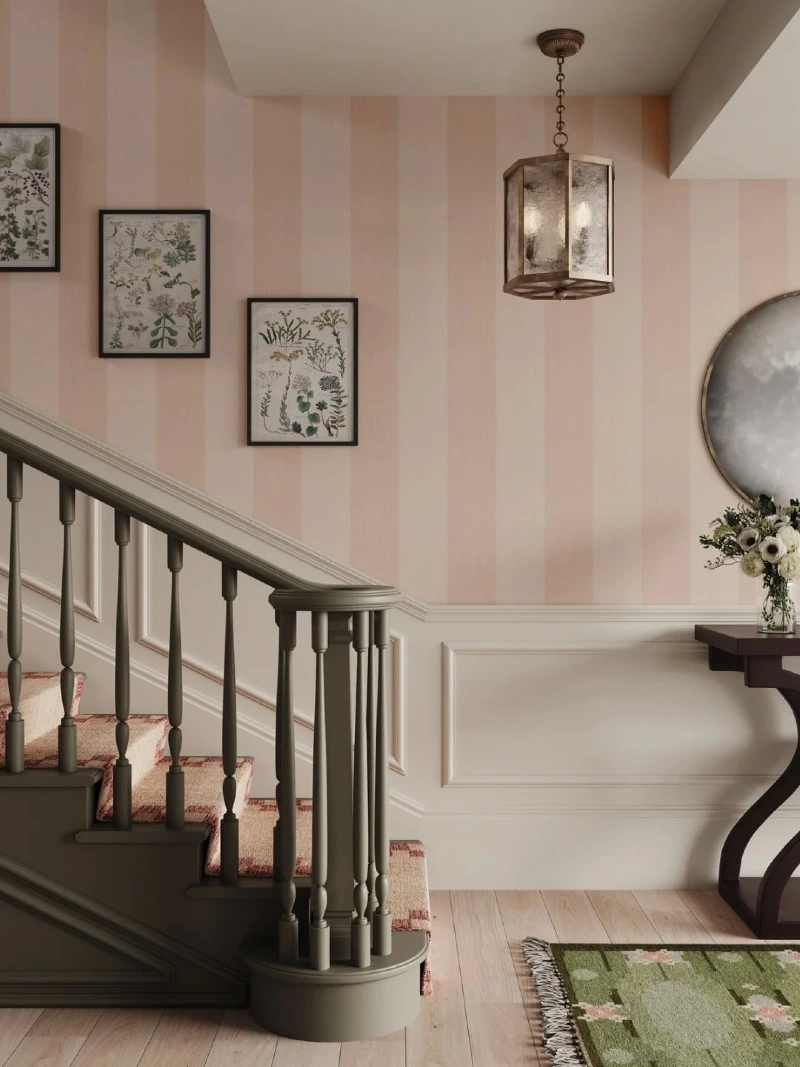
A muted pink and cream vertical striped wallpaper covers the upper portion of the entry hall, contrasted by crisp cream wainscoting with classic picture frame molding below.
A traditional wooden staircase features a muddy olive green banister and spindles, paired with a patterned red and cream carpet runner. Three black-framed vintage botanical prints ascend along the wall line, while a bronze hexagonal glass lantern hangs from the ceiling.
Grounding a whimsical striped wallpaper with solid architectural millwork prevents the patterns from overwhelming a transitional foyer.
The horizontal boundary of the chair rail establishes a structural anchor that cuts across the vertical movement of the wall stripes.
Choosing a deep olive green for the staircase banister introduces an organic, grounding contrast that breaks up the soft pastel color palette. Moody, filtered light from an overhead source catches the textured glass of the lantern, casting a soft glow across the light hardwood floors.
17. Terracotta Striped Accent Alcove and Solid Matte Bedroom Walls with Tufted Pink Bedding
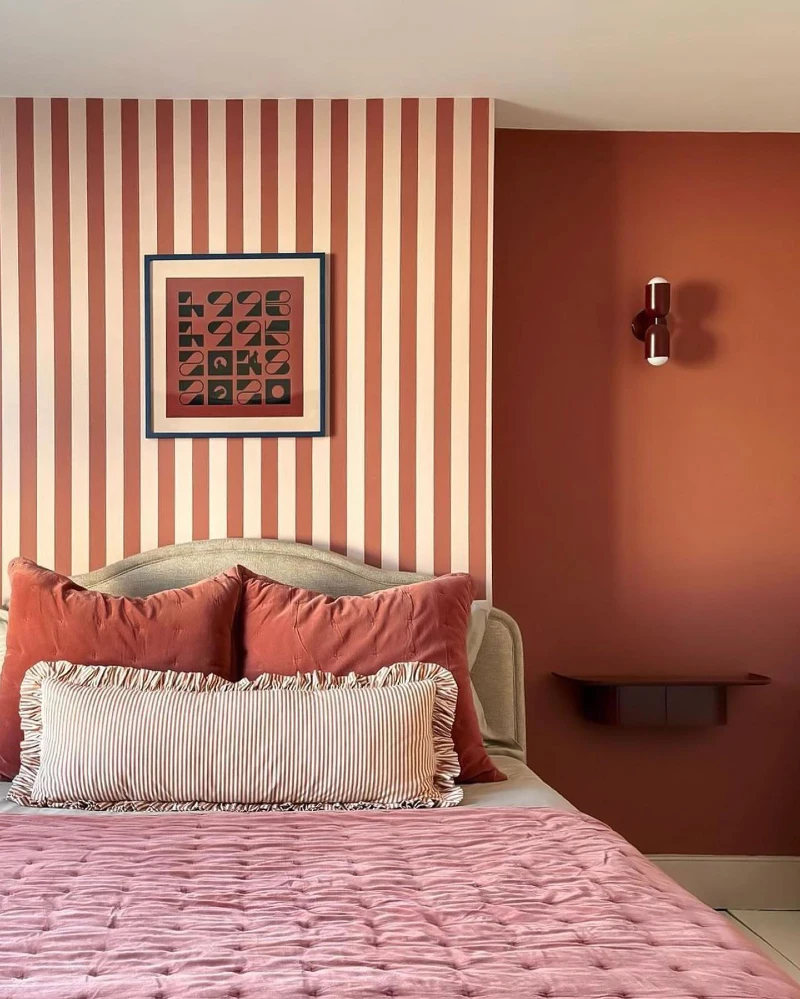
A bold terracotta red and cream striped wallpaper covers a prominent bed alcove column, creating a textured backdrop for a grey upholstered headboard. The adjacent recessed wall section features a solid, velvety coat of the same rich terracotta paint, styled with a floating black bedside ledge and a modern tubular wall sconce.
On the bed, plush terracotta velvet pillows pair with a striped bolster cushion and a quilted pink coverlet.
Mixing a solid paint color with its exact wallpaper counterpart isolates architectural features without fragmenting the room.
The vertical stripes in the bed nook pull the eye upward, acting as an integrated, faux fabric headboard statement.
A square graphic art print with a dark blue frame hangs directly inside the patterned column, breaking up the linear design with geometric blocks. Moody, diffused light sweeps over the bed layout, accentuating the rich, soft textures of the velvet textiles against the smooth plaster finishes.
Why This Works
- Visual Spine: The striped wallpaper column creates a dedicated architectural frame that anchors the center of the sleeping area.
- Texture: Mixing flat matte walls with plush velvet fabrics and quilted stitched bedding builds a complex, inviting sensory layout.
- Negative Space: Coating the recessed nook in a solid, matching terracotta hue prevents the vertical stripes from overwhelming the small corner.