
Blank walls change how a room feels. Soft light hits them first in the morning. At night, they reflect shadows and sound. A temporary accent wall lets you shift that mood without commitment. It sets the tone for everything else in the room.
This approach works for renters and restless decorators. You can test color, texture, and pattern without drilling or paint mess. No long projects, no damage. It also keeps cleanup fast when you want a fresh reset.
Below are ideas that use peel panels, fabric, decals, and removable systems. Each one can be taken down in minutes, leaving the wall clean and ready for something new. They are simple, flexible, and budget-friendly.
Peel & Stick Panels
Lighting
Soft natural light reveals texture depth without harsh reflections.
Texture
Wood and linen finishes add tactile richness to flat surfaces.
Color Anchor
Muted tones keep the wall calm and visually grounded.
Statement Piece
The wall becomes a backdrop that frames furniture naturally.
1. Arched Niche Accent Wall with Line Art Mural
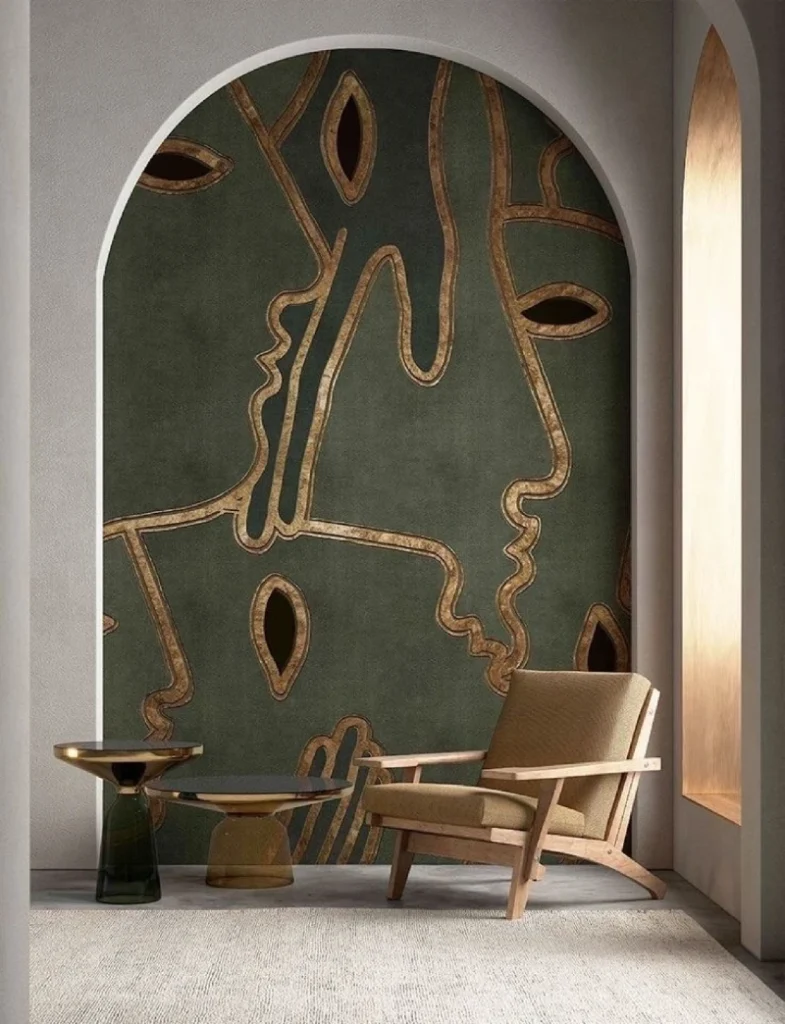
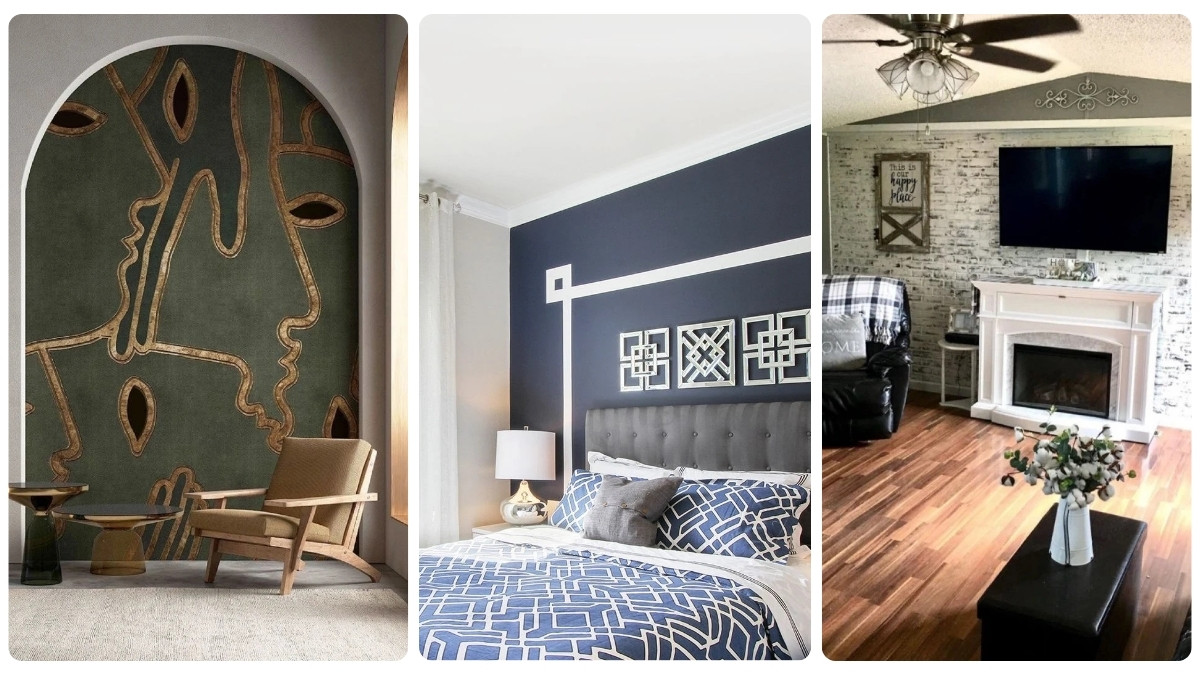
The image shows a soft arched wall niche filled with a deep green backdrop and abstract face line art in warm gold tones. The curved architecture frames the artwork like a built-in gallery, while a light wood lounge chair and small sculptural tables sit quietly in front.
An arched cutout instantly becomes a focal point when you treat it like a framed art surface.
This look works because the wall itself becomes the artwork instead of just holding it. The green and gold pairing adds depth without needing heavy decor, while the curved edge naturally draws the eye inward. It feels intentional but still flexible enough to change out.
Why This Works
- Framing Effect: The arch naturally contains the design so it feels like a built-in feature.
- Color Contrast: Deep green against warm gold creates visual depth without clutter.
- Furniture Balance: Minimal seating keeps attention on the wall instead of competing with it.
2. Layered Boho Shelf Wall with Patterned Wallpaper and Plants
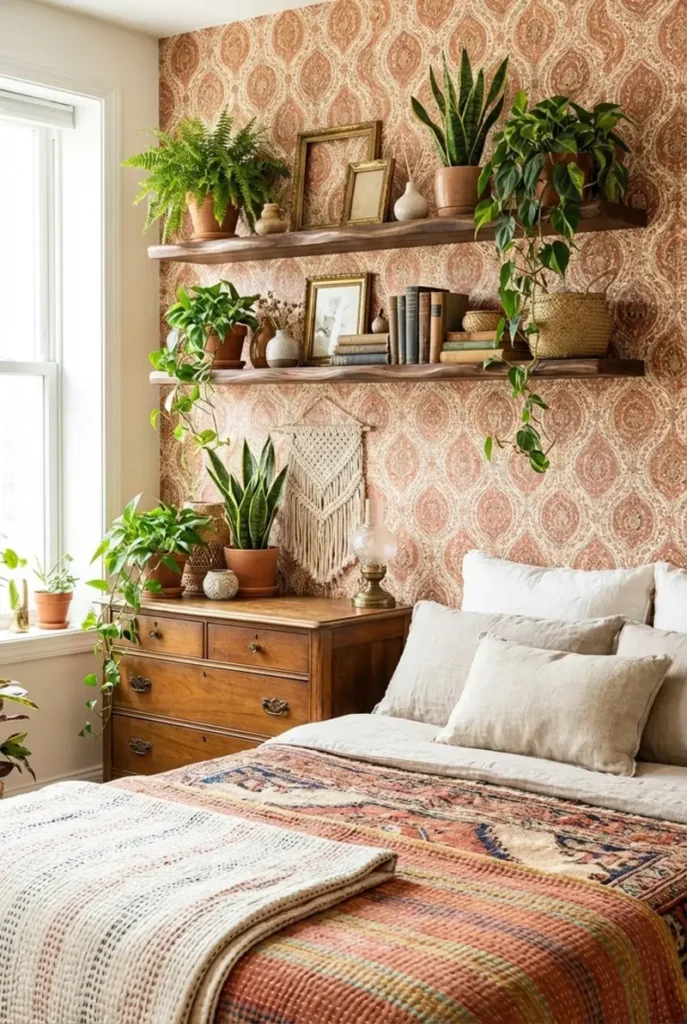
A warm patterned wallpaper fills the entire wall with a soft terracotta and cream motif. Two floating wooden shelves run across it, styled with books, ceramic vases, framed art, and trailing green plants that spill downward.
Open shelving turns a busy wall into a lived-in story when every object has breathing space.
This setup works because the wallpaper sets a strong visual base while the shelves break it into calm layers. Plants soften the geometry and stop the pattern from feeling heavy. The mix of wood, fabric, and greenery keeps everything grounded and warm without feeling staged.
3. Whitewashed Brick TV Wall with Fireplace Mantel Styling
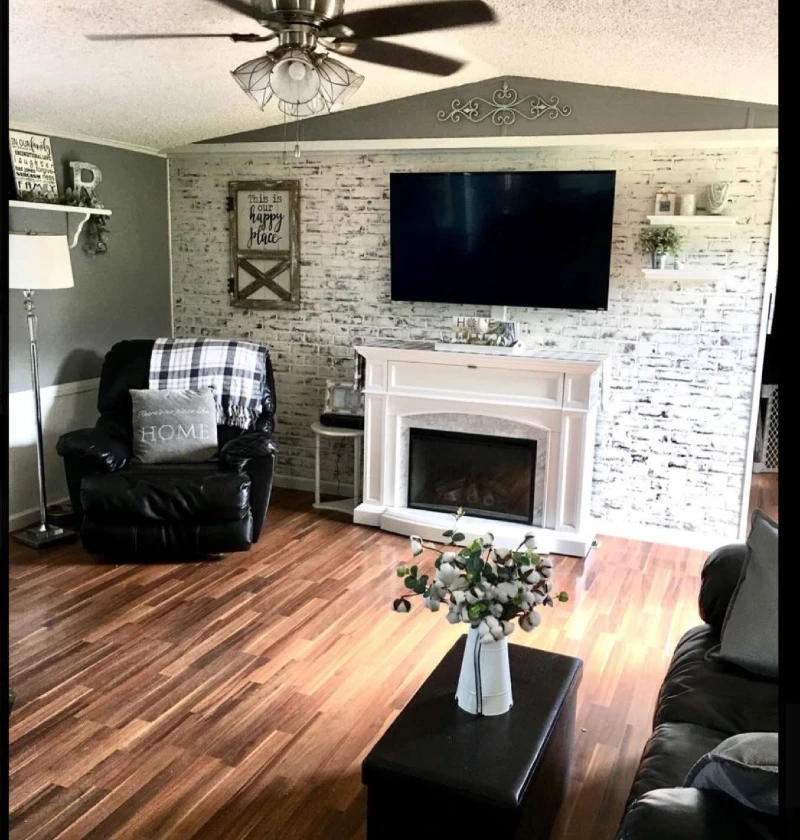
A white brick wall stretches across the living room, acting as a textured backdrop for a large wall-mounted TV. Below it, a soft white fireplace mantel adds structure, while small framed signs and greenery sit lightly on the surface. Warm wood flooring and black leather seating balance the bright wall with contrast and weight.
A textured brick surface behind the TV turns a blank media wall into a grounded focal point.
This setup works because the brick pattern adds depth without needing paint or heavy decoration. The fireplace breaks up the wall visually, so the TV does not dominate the space. Small décor pieces keep the surface flexible, which makes it easy to restyle without commitment.
Why This Works
- Texture Layering: Brick detail creates natural shadow play that removes flatness from the wall.
- Visual Balance: Fireplace and TV share the wall so neither element feels overpowering.
- Soft Styling: Minimal décor keeps the surface adaptable for seasonal or quick changes.
4. Geometric Square Decal Wall in Soft Neutral Hallway
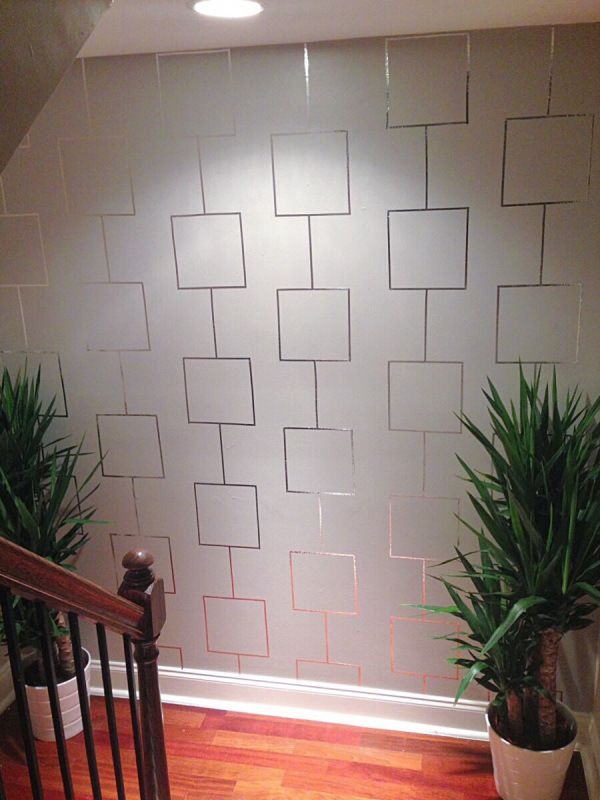
A soft neutral wall is covered with evenly spaced square outline decals, creating a quiet geometric rhythm from floor to ceiling. The design sits in a hallway space with a staircase railing on one side and tall leafy plants in white pots placed symmetrically near the base.
Simple geometric decals can turn a plain passage wall into a structured visual moment without any paint.
This idea works because the repeated square spacing creates movement while still feeling controlled. The vertical alignment naturally guides the eye upward, which makes narrow spaces feel more intentional. Since everything sits on a smooth surface, it can be removed cleanly without leaving marks.
5. Navy Geometric Tape Wall with Angular Line Layout in Progress
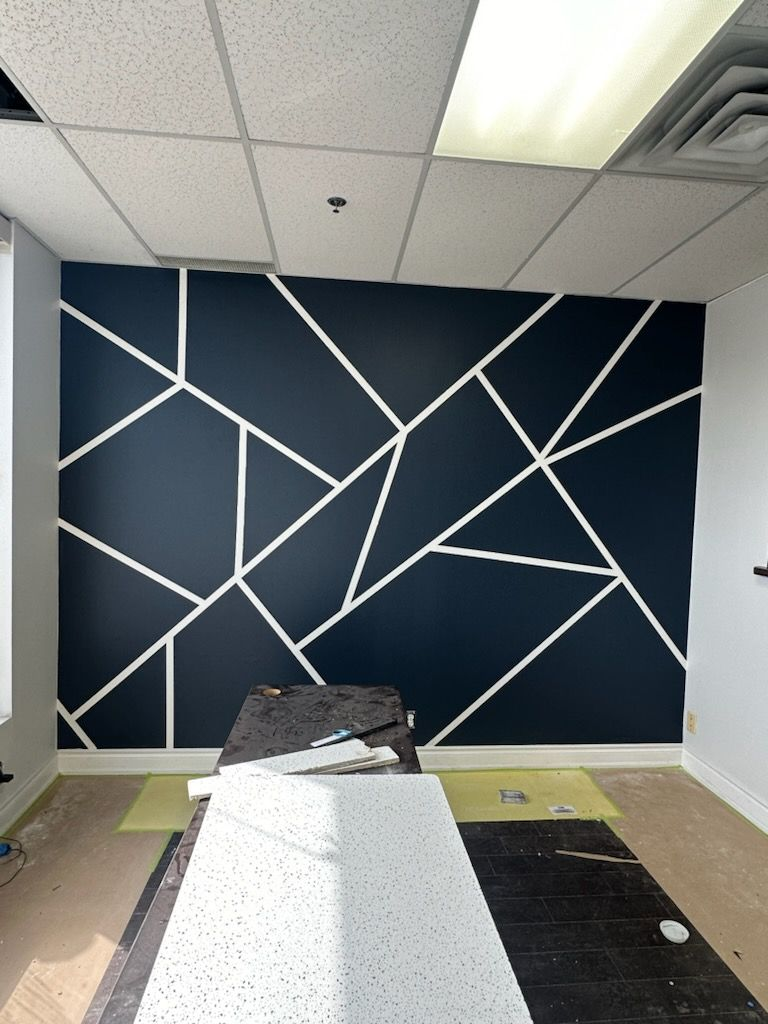
A deep navy wall is mapped with bold white tape lines forming sharp intersecting angles. The pattern stretches across the entire surface like a planned mural still in progress, with visible construction elements around the room. Ceiling tiles, floor protection sheets, and tools in the foreground make the space feel mid-transformation.
Painter’s tape becomes a design tool when you treat the wall like a large-scale sketch.
This approach works because it lets you test a high-impact geometric design without committing to paint. The contrast between dark base and white lines creates instant depth, even in a simple room. It feels controlled yet flexible, since everything can be removed in minutes.
Quick Styling Tips
- Budget version: Use standard painter’s tape over a matte painted wall for the same graphic effect.
- Renter tip: Keep tape lightly applied so it lifts cleanly without pulling paint underneath.
- Pro move: Switch to thin metallic tape for a more refined light-catching finish after testing the layout.
6. Framed Navy Accent Wall with Floating Double Border Lines
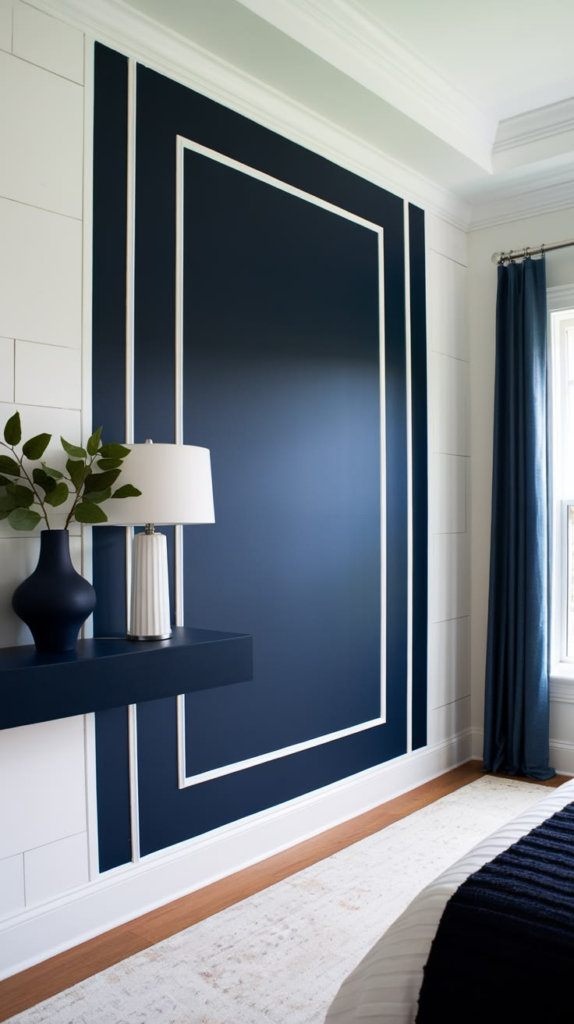
Soft daylight enters from the right, hitting the blue curtain and light rug, which keeps the space calm and balanced. A deep navy panel sits inside a crisp white border design that forms layered rectangular frames on the wall.
Layered border tape turns a flat wall into a framed focal point without changing the structure at all.
This idea works because the double outline creates depth through contrast rather than color or texture. The eye naturally lands inside the framed section, which makes the bed wall feel intentional and anchored. Since it is usually done with removable tape or temporary paint, it can be taken down without damage.
7. Navy Bedroom Accent Wall with White Line Geometry and Framed Art Grid
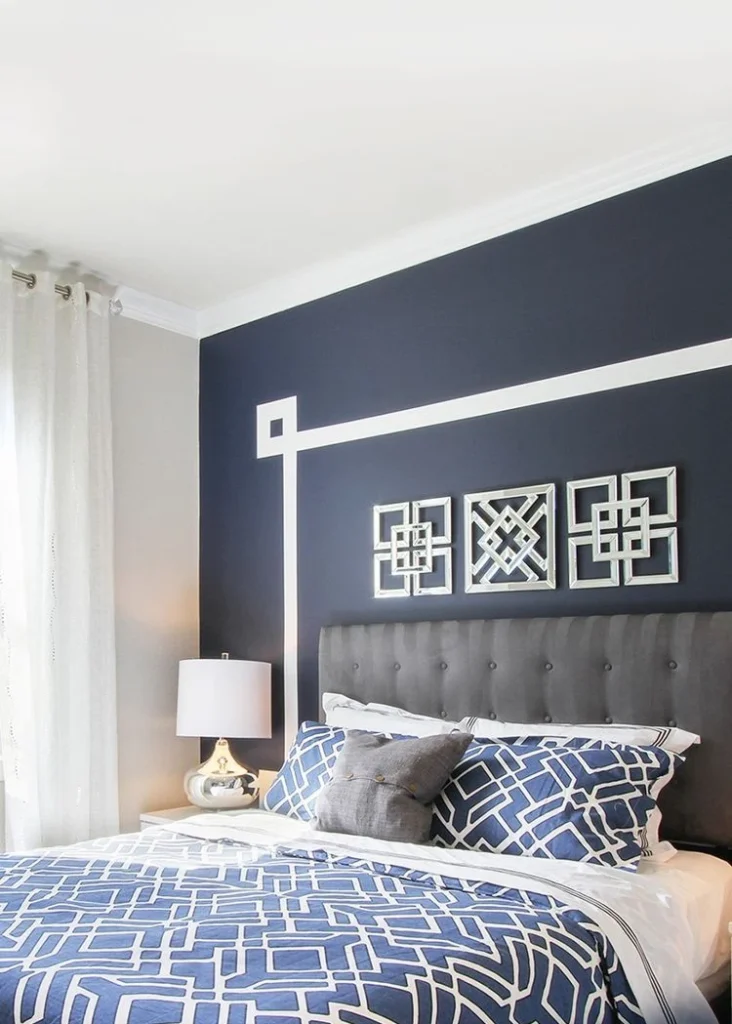
Blue patterned bedding repeats the same geometric language, tying the whole space together in a calm, structured way. A deep navy wall sits behind a tufted grey headboard, broken by bold white lines that run in clean horizontal and vertical paths.
Strong linear tape designs can pull a bedroom wall into focus without adding clutter or bulk.
This setup works because the white lines act like a built-in frame that guides the eye across the entire wall. The dark base color makes every object in front of it stand out, especially the metallic artwork. Since the design is purely surface-level, it can be recreated or removed without affecting the wall underneath.
8. Corner Bedroom Wall with Black Geometric Tape Explosion
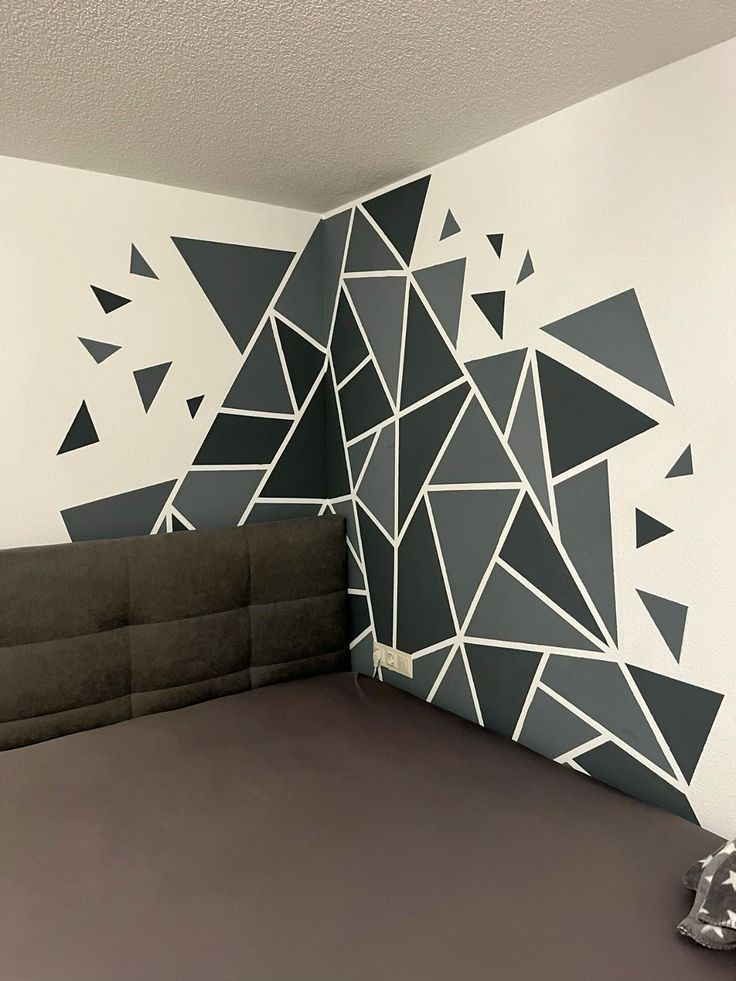
A sharp black geometric design spreads across two adjoining white walls, converging at the corner like a fractured mosaic. Thick and thin tape lines form angular triangles and irregular shapes that radiate outward from the center point.
Corner walls become the strongest focal point when geometry is allowed to break past straight boundaries.
This layout works because the corner naturally amplifies direction, so every line feels like it is expanding the room. The contrast between black shapes and white wall keeps the design bold without needing any texture or paint. Since it is built with removable tape or decals, it can be peeled away cleanly when the look no longer fits.
9. Teal Bedroom Accent Wall with Gold Geometric Tape Lines Behind Minimal Bed Setup
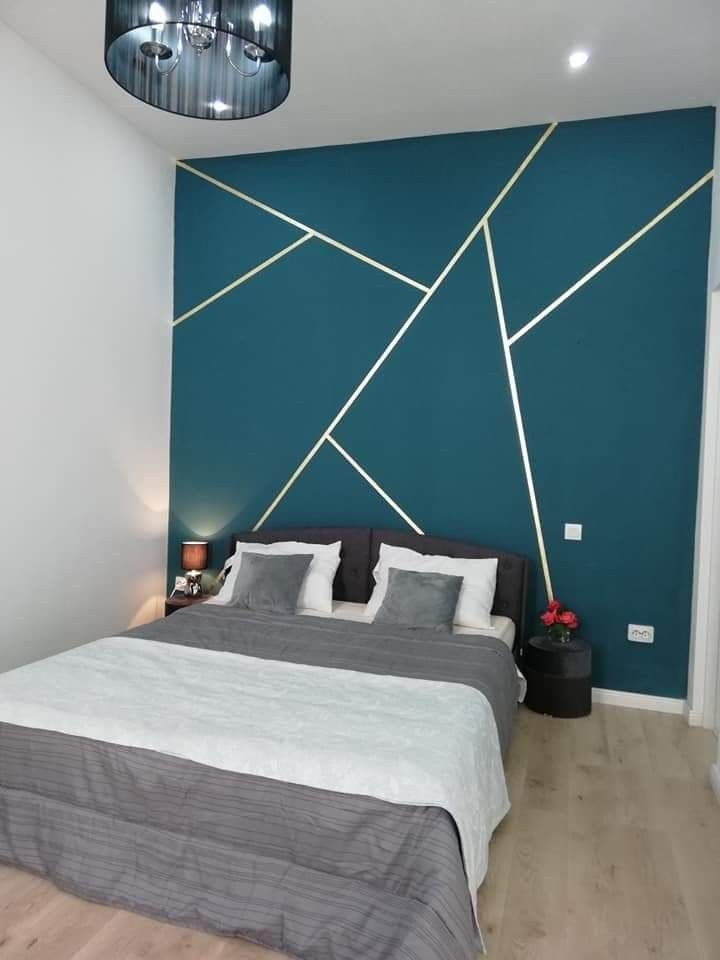
On each side, small round bedside tables hold minimal décor, while a modern ceiling light adds a soft reflective glow to the space. A rich teal wall fills the entire bedroom backdrop, broken by thin gold tape lines that form sharp intersecting angles across the surface. =
Gold lines against a deep colored wall create instant structure without adding any physical bulk.
This design works because the metallic tape catches light differently throughout the day, so the wall never feels flat. The geometric pattern adds movement while the solid teal keeps everything grounded and calm. Since it is purely surface detailing, it can be removed quickly without affecting the paint underneath.
10. Floating Frame Grid Wall with Painted Tree Silhouettes in Graphic Hallway
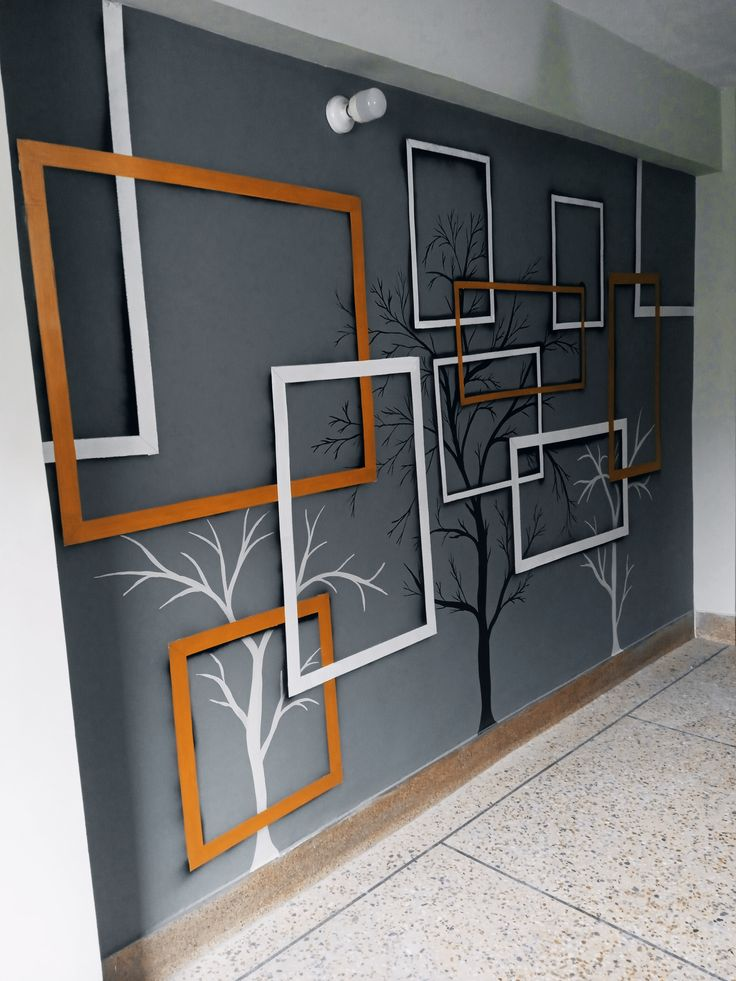
A dark grey hallway wall is layered with painted tree silhouettes in black and white, stretching across the surface like a quiet mural. On top of it, multiple empty rectangular frames in white and warm wood float at different angles, creating a dimensional collage effect. .
Empty frames over mural art turn a flat hallway into a shifting gallery without a single nail-heavy display.
This design works because it blends two layers—painted art and physical structure—so the wall never feels static. The offset frames create depth and movement, while the tree lines soften the geometry with organic flow. Since everything is modular, you can remove or reposition the frames without affecting the mural base.
Quick Styling Tips
- Budget version: Use lightweight plastic or MDF frames with removable adhesive hooks instead of hardware.
- Renter tip: Stick to peel-safe mounting strips so the wall paint stays untouched.
- Pro move: Mix matte black and warm wood frames to balance softness with contrast for a richer layered effect.
11. Forest Green Corner Accent Wall with White Geometric Tape Split Design
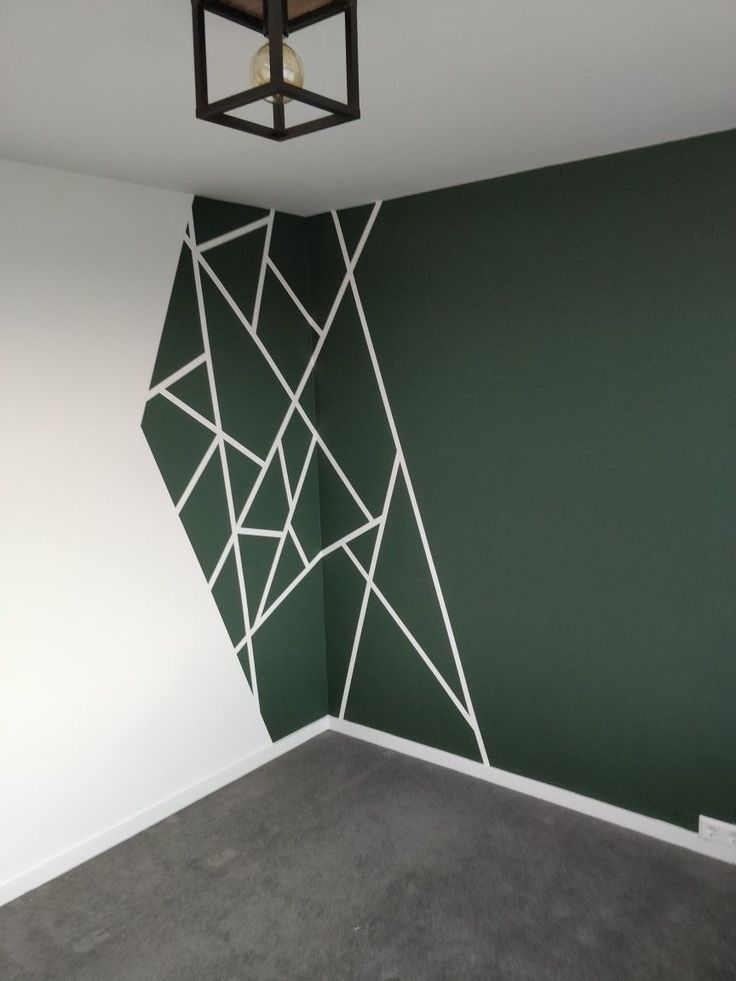
A deep forest green wall wraps around a corner, interrupted by sharp white tape lines that break the surface into angular shards. The design starts narrow on the left wall and expands across the main wall, making the corner feel like the center of movement.
Diagonal tape lines across a corner wall make the space feel wider and more dynamic without adding any furniture.
This works because the corner becomes the origin point of the design, so the eye naturally spreads outward along the angles. The dark green base adds depth while the white lines create structure and contrast. Since everything sits on the surface, it can be removed easily without damaging the paint underneath.
12. Diagonal Split Color Block Wall in Soft Green Kitchen Corner
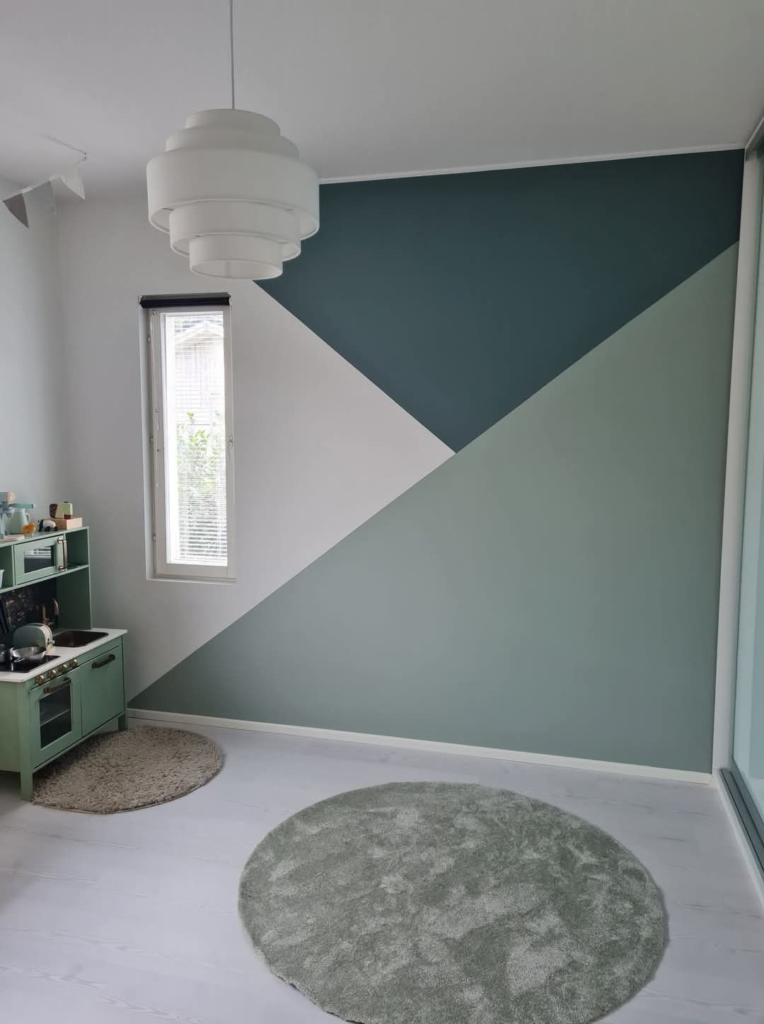
A muted kitchen corner features a bold diagonal paint composition in layered greens and white. Large triangular shapes stretch across the wall, meeting at sharp angles that guide the eye from floor to ceiling. A compact mint-toned kitchen unit sits on the left, while circular rugs soften the clean lines on the floor.
Big diagonal color blocks turn even a small kitchen wall into a strong architectural statement without adding decor.
This works because the angled paint layout creates movement in a space that would otherwise feel flat. The contrast between soft green tones keeps it calm, while the white section breaks the wall visually so it does not feel heavy.
13. Tropical Palm Mural Accent Wall Behind Neutral Modular Sofa
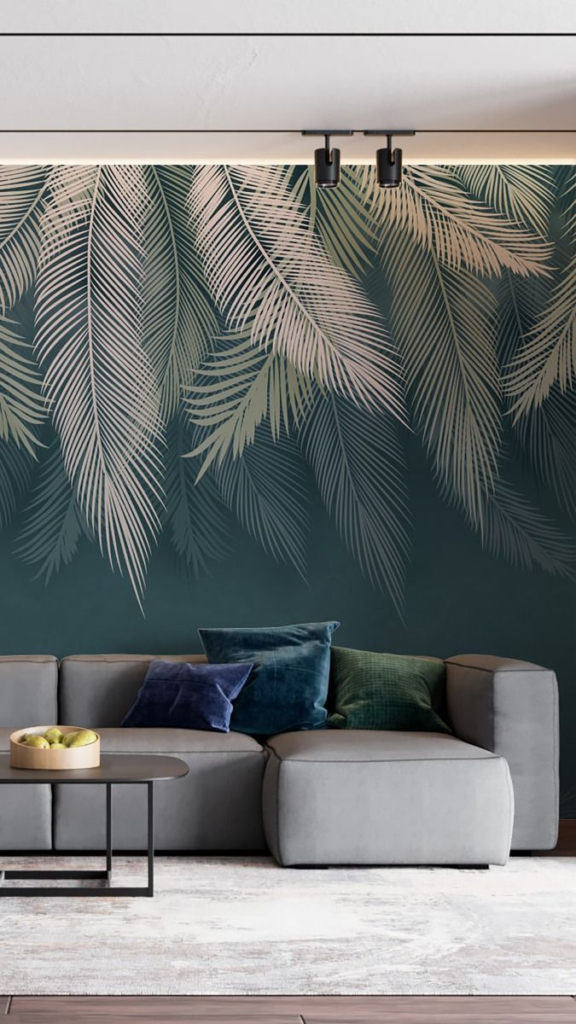
Velvet cushions in navy, forest green, and deep blue add quiet color depth, while a slim black coffee table keeps the foreground minimal and grounded. A deep teal wall is covered with oversized palm leaf graphics in soft beige and muted green tones.
Large-scale botanical murals turn a living room wall into a natural focal point without adding physical decor.
This works because the repeated leaf direction creates movement that draws the eye across the entire wall. The dark base color holds the composition together, so the pattern feels rich instead of busy. Everything in front stays simple, which allows the mural to act as the main visual anchor.
Why This Works
- Scale Impact: Oversized leaves make the wall feel intentional rather than decorative clutter.
- Color Depth: Layered greens and neutrals create a calm, immersive backdrop.
- Minimal Foreground: Simple furniture prevents visual competition with the mural detail.
14. Gold Outline Palm Mural Wall with Deep Teal Backdrop and Warm Accent Sofa
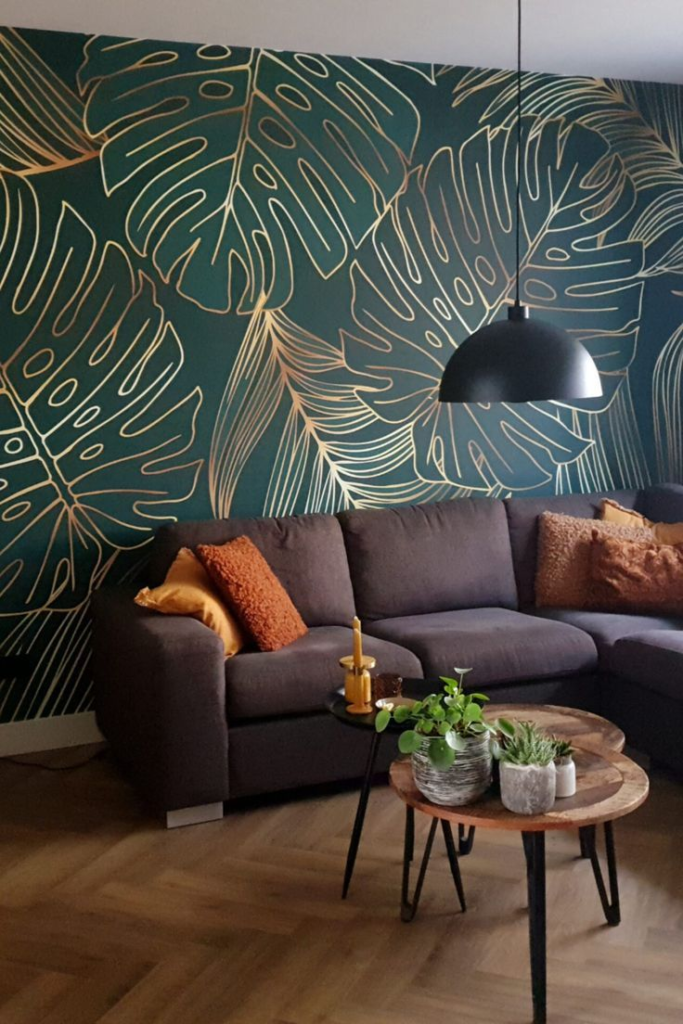
A deep teal feature wall is covered with oversized palm leaves drawn in fine gold outlines, creating a layered botanical pattern that spreads across the entire surface. In front, a dark grey sectional sofa sits low and grounded, styled with burnt orange and ochre cushions that echo the warmth of the wall details.
Metallic line murals turn flat paint into a shifting decorative surface that feels both graphic and organic.
This wall works because the gold outlines catch light differently throughout the day, making the pattern feel alive without changing the base color. The large leaf scale prevents visual clutter, while the dark teal background holds everything together. Furniture stays simple and muted so the wall remains the main visual story.
Why This Works
- Metallic Contrast: Gold detailing reflects light and adds subtle movement across the wall.
- Organic Scale: Oversized leaf shapes keep the pattern readable from a distance.
- Color Harmony: Warm cushions balance the cool teal base and prevent the space from feeling cold.
15. Deep Blue Tropical Hallway Mural with Layered Botanical Leaf Pattern
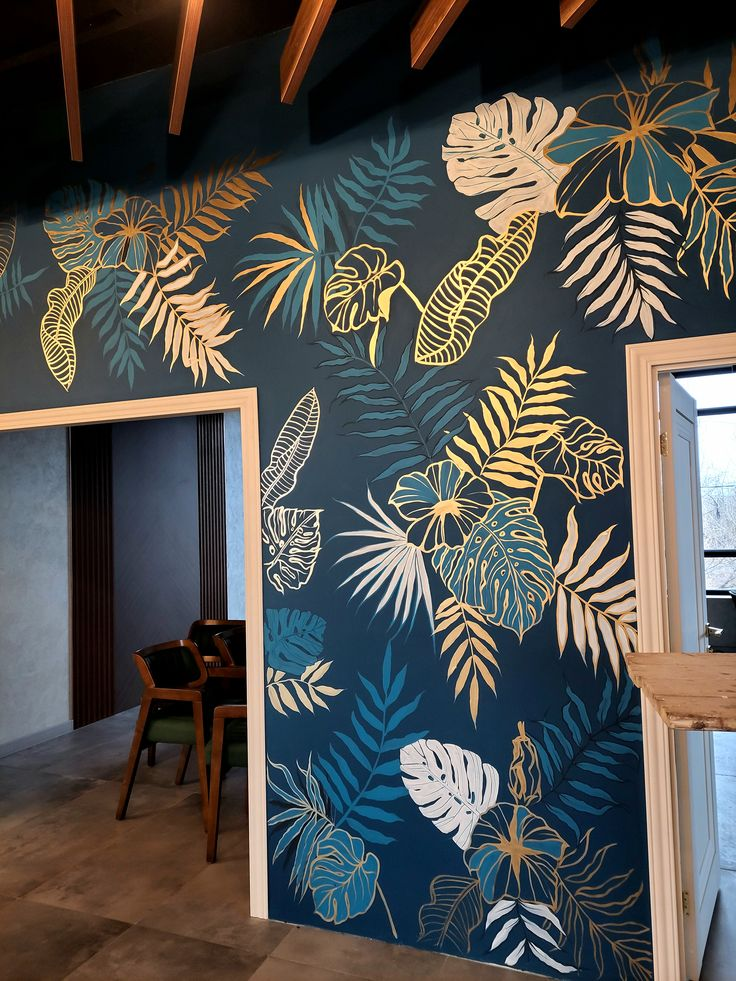
A deep navy hallway wall is filled with oversized tropical leaves painted in layered tones of gold, teal, cream, and soft green. The mural stretches across multiple sections of the wall, flowing around door openings and creating a continuous botanical scene.
Bold botanical murals can turn transitional hallways into immersive design moments instead of empty pass-through zones.
This design works because the overlapping leaf shapes create depth that pulls the eye forward through the corridor. The mix of warm and cool tones prevents the dark base from feeling heavy, while the large scale keeps the pattern readable in motion. Since it is purely painted surface work, it can be changed later with a fresh coat or simplified overlay.
Quick Styling Tips
- Budget version: Use large botanical wall decals instead of hand painting for faster application.
- Renter tip: Stick to removable mural panels or peel vinyl sheets that lift cleanly.
- Pro move: Limit the palette to 2–3 tones so the hallway feels cohesive instead of visually crowded.
16. Compact Work Nook with Blue Palm Accent Wall and Light Wood Storage Wall
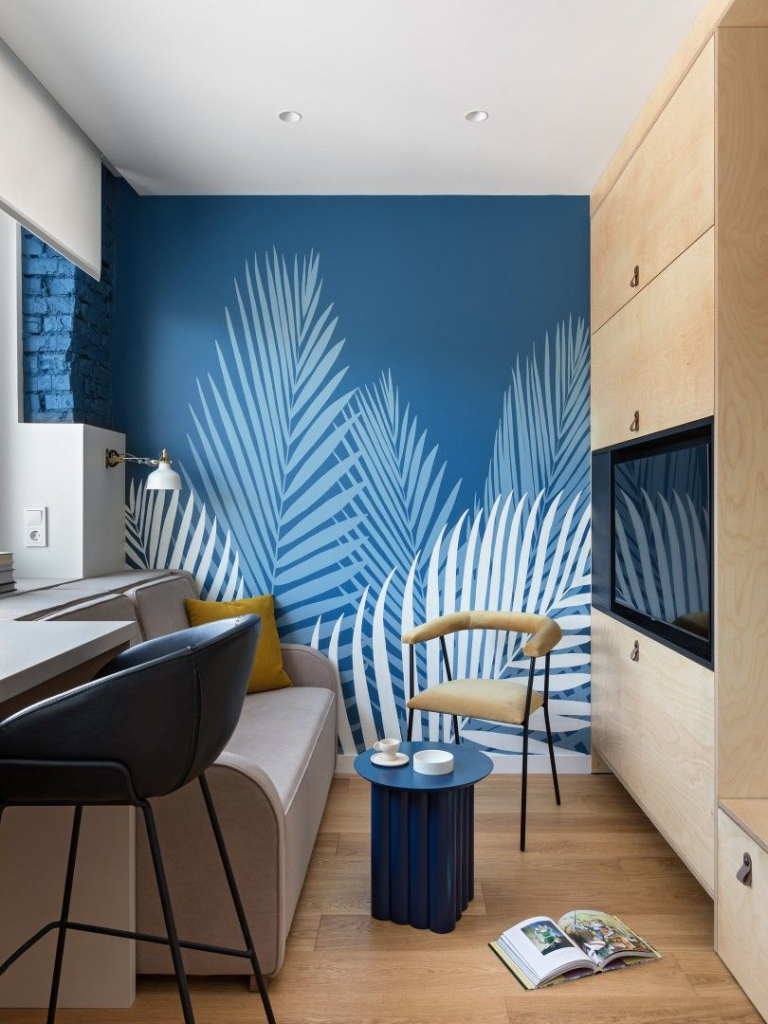
A small office corner features a deep blue accent wall filled with oversized white palm silhouettes rising from the base. On the opposite side, pale wood cabinetry runs vertically with clean handles and a built-in screen surface.
A bold mural in a tight space turns a work nook into a focused zone without needing extra square footage.
This design works because the strong wall pattern defines the workspace instantly, separating it from the rest of the room. The light wood balances the dark blue so the area does not feel enclosed. Every piece of furniture stays low-profile, letting the wall carry most of the visual weight.
- Lighting: Recessed ceiling lights keep the mural evenly visible without harsh shadows.
- Color Anchor: Deep blue wall sets a clear boundary for the work zone.
- Texture: Smooth cabinetry contrasts with the organic palm shapes for balance.
- Space Control: Minimal furniture keeps the small nook from feeling crowded.
17. Gold Bird Flight Mural on Deep Blue Wall Above Soft Bed Headboard
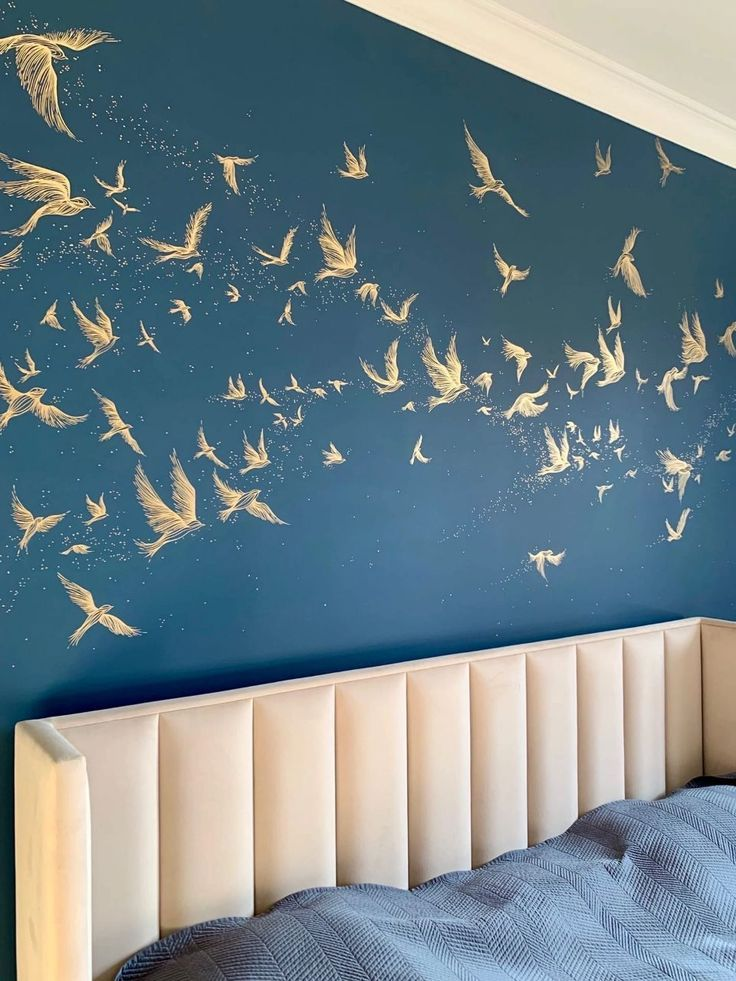
A deep blue wall is filled with delicate gold birds scattered in a flowing upward motion, as if caught mid-flight across the surface. The birds vary in size and direction, creating a light, airy movement that spreads across the entire bedroom wall. Below, a soft upholstered cream headboard sits quietly, letting the artwork stay in full focus.
Floating bird motifs add motion to a wall without adding any physical depth or clutter.
This design works because the scattered placement creates a natural rhythm that feels organic instead of patterned. The gold tones stand out against the rich blue base, giving the wall a soft glow that changes with light. The simple bedding and clean headboard keep the space calm so the mural can breathe.
Why This Works
- Movement Effect: The flying direction draws the eye upward and makes the room feel taller.
- Color Contrast: Gold on deep blue creates a soft luminous effect without harsh brightness.
- Minimal Foreground: Simple furniture ensures the mural remains the main visual layer.